
How to Set Up a Montessori Playroom at Home
Modern childhood is often filled with noise, clutter, and constant stimulation. Toys overflow from shelves, bright colours compete for attention, and children move rapidly from one activity to another without fully settling into play. Many parents eventually notice something surprising: despite having more toys than ever, children often seem less focused, less independent, and more easily overwhelmed.
This is one reason Montessori-inspired playrooms have become increasingly popular among families seeking calmer and more intentional environments for their children.
A Montessori playroom is not simply about aesthetics or minimalist design trends. It is based on a deeper philosophy of childhood development. The goal is to create an environment that supports independence, concentration, creativity, emotional regulation, and purposeful play.
Instead of overwhelming children with endless stimulation, Montessori spaces are designed to help children engage more deeply with fewer, more meaningful experiences.
At its core, the Montessori approach recognises something important:
The environment shapes behaviour.
When children are surrounded by calm, organised, and accessible spaces, they often become calmer, more focused, and more independent.
Creating a Montessori playroom at home does not require expensive renovations or perfectly styled interiors. In many cases, small intentional changes make the biggest difference.
Understanding the Montessori Philosophy
Before setting up a Montessori playroom, it helps to understand the philosophy behind it.
The Montessori method, developed by Dr Maria Montessori, focuses on supporting children’s natural development through independence, exploration, and self-directed learning. Rather than controlling every activity, the environment is designed to encourage children to explore confidently on their own.
In a Montessori-inspired space, children are encouraged to:
- make choices independently
- access materials freely
- focus deeply without interruption
- care for their environment
- engage in purposeful activity
The room itself becomes part of the learning experience.
Everything is arranged intentionally to support calmness, curiosity, and independence.
Why Environment Matters So Much
Children absorb information from their surroundings constantly. The environment influences attention, behaviour, emotional regulation, and even confidence.
Highly cluttered playrooms can overwhelm young nervous systems. When too many toys compete for attention at once, children may struggle to focus deeply on any single activity. This often leads to rapid toy switching, overstimulation, and shorter play sessions.
Montessori environments work differently.
They reduce unnecessary distractions and create spaces where children can engage more fully in meaningful play.
A calmer environment often encourages:
- longer concentration spans
- independent play
- emotional regulation
- creativity
- problem-solving
- confidence in decision-making
Children frequently behave differently when the environment itself feels manageable and peaceful.

Start With Decluttering
One of the biggest shifts in a Montessori playroom is reducing excess.
Modern playrooms often contain far more toys than children can engage with meaningfully. Too many choices can overwhelm attention and reduce the quality of play.
Instead of displaying everything at once, Montessori-inspired spaces focus on fewer, carefully selected materials.
This does not mean children should have fewer opportunities for play. It means the environment becomes more intentional.
When decluttering, focus on keeping toys that:
- encourage imagination
- support open-ended play
- allow creativity
- can be used in multiple ways
- grow alongside the child
Toys that rely heavily on flashing lights, loud sounds, or fixed interactions are often less engaging long-term because they leave little room for imagination.
Open-ended materials tend to support deeper and more meaningful play experiences.
Use Low, Accessible Shelving
Accessibility is central to Montessori design.
Children should be able to access their toys and materials independently without constantly relying on adults. This encourages confidence, autonomy, and decision-making skills.
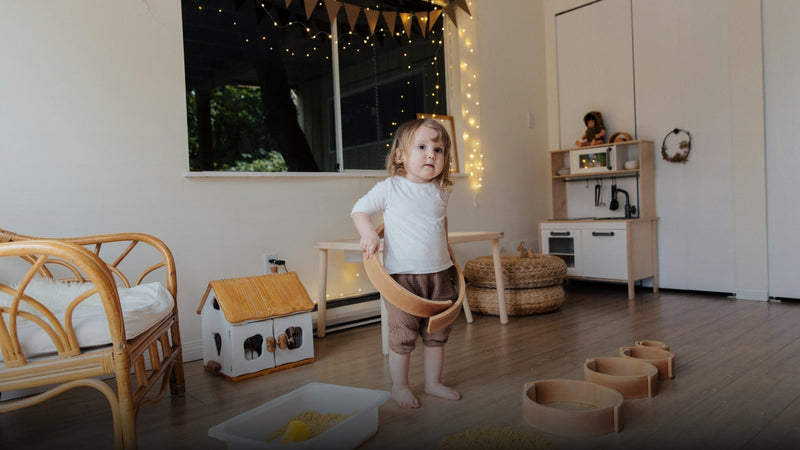
Low open shelving works particularly well because children can clearly see available options without becoming overwhelmed.
Instead of overflowing toy bins, Montessori shelves typically display:
- a small number of activities
- neatly organised materials
- clearly visible toys
- calm visual arrangements
This presentation helps children focus more intentionally.
When materials are visible and accessible, children are also more likely to care for them responsibly and return them after use.
Choose Open-Ended Toys
Montessori playrooms prioritise toys that encourage creativity rather than passive entertainment.
Open-ended toys allow children to invent their own stories and possibilities. These toys adapt as the child grows, which keeps engagement lasting much longer.
Examples include:
- wooden blocks
- figurines
- stacking toys
- art materials
- pretend play objects
- sensory materials
- puzzles
- books
- imaginative play spaces
Children often engage more deeply with toys that require participation and imagination rather than constant stimulation.
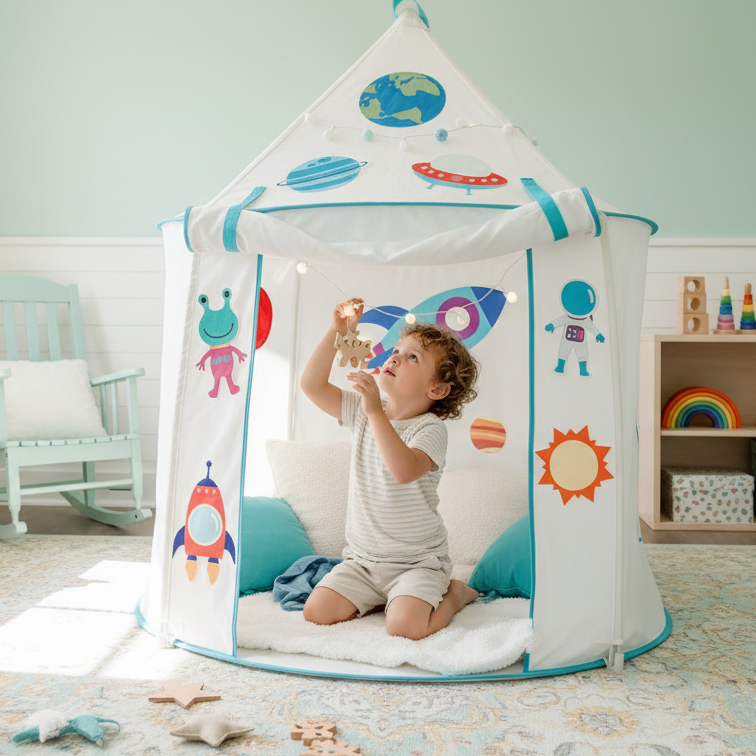
Flexible imaginative environments such as ZeeZee Adventures fit naturally into Montessori-inspired spaces because they support independent storytelling, reading, quiet retreat, and open-ended play rather than fixed interaction. Instead of directing the child’s play, the environment becomes something the child transforms through creativity and exploration.
Create Calm Colour Palettes
Montessori environments are intentionally calm.
Bright colours and excessive visual stimulation can overwhelm children’s attention, particularly in spaces designed for concentration and independent play.
Soft neutral tones, natural textures, and calming colours help create an emotionally regulated atmosphere.
This does not mean children’s spaces should feel cold or empty.
Instead, the goal is balance.
Natural materials such as:
- wood
- cotton
- linen
- woven textures
- soft lighting
often help create warmth without overwhelming the senses.
Calmer environments frequently encourage children to settle into deeper play more naturally.
Prioritise Natural Light
Lighting significantly affects mood, focus, and emotional regulation.
Whenever possible, Montessori playrooms maximise natural light. Bright but gentle daylight creates a calmer and more inviting atmosphere than harsh artificial lighting.
Soft lighting also supports concentration and emotional comfort.
If natural light is limited, warm ambient lighting often works better than overly bright overhead lights.
The emotional tone of the environment matters just as much as the physical layout.
Create Defined Play Areas
Montessori spaces often include small, defined zones rather than one large, chaotic playroom.
Each area serves a gentle purpose.
For example:
- a reading corner
- an art space
- a building area
- a sensory play section
- a quiet retreat area
Defined spaces help children understand how to engage with the environment more calmly and intentionally.
Children often feel emotionally safer in environments that feel organised and predictable.
Include Cozy Spaces for Quiet Play
Children need spaces where they can retreat, regulate emotions, and engage in quiet concentration.
A cosy reading nook, small fort, or imaginative hideaway can become one of the most valuable parts of the room.
These spaces encourage:
- independent reading
- emotional regulation
- imaginative thinking
- quiet play
- relaxation
Many children naturally seek enclosed environments because they create a sense of safety and comfort.
Small imaginative spaces often become places where storytelling and creativity unfold most deeply.
Rotate Toys Regularly
Toy rotation is one of the simplest and most effective Montessori strategies.
Instead of displaying every toy at once, only a smaller selection remains available while others are stored away temporarily.
This approach offers several benefits:
- reduced overstimulation
- increased focus
- renewed interest in familiar toys
- calmer play environments
When toys reappear after some time away, they often feel new and engaging again without requiring constant new purchases.
Toy rotation also helps maintain a cleaner and more organised environment.
Encourage Independent Play
One of the main goals of a Montessori playroom is to support independent engagement.
Children benefit enormously from learning how to explore, create, and focus without constant adult direction.
Independent play strengthens:
- concentration
- creativity
- confidence
- emotional resilience
- problem-solving
The environment itself plays a major role in encouraging this.
When children can access materials independently and the space feels calm and manageable, they are more likely to remain engaged for longer periods.
Avoid Overstimulation
Modern playrooms often unintentionally overwhelm children.
Flashing lights, noisy electronic toys, cluttered shelves, and excessive decoration can make it difficult for children to settle into deep play.
Montessori-inspired spaces reduce unnecessary sensory input intentionally.
This does not mean removing all colour or excitement.
It means creating balance so children can focus, imagine, and regulate themselves more effectively.
Calm environments support nervous system regulation in ways many parents underestimate.
Include Real-Life Activities
Montessori philosophy values practical life activities because they help children feel capable and involved in the real world.
Simple child-accessible activities might include:
- organising shelves
- watering plants
- folding blankets
- pouring water
- tidying materials
- caring for books and toys
These experiences build independence and responsibility naturally.
Children often gain confidence when trusted with meaningful participation.
Why Simplicity Supports Creativity
One of the biggest misconceptions about children’s spaces is that more stimulation automatically creates more creativity.
In reality, creativity often flourishes best in calmer environments.
When everything in a room competes for attention, children may struggle to focus deeply enough for imagination to fully unfold.
Simpler environments allow the mind to become more active internally.
A quiet corner may become:
- a spaceship
- a castle
- a reading sanctuary
- a secret cave
Imagination grows strongest when children have room to create rather than simply consume stimulation.
The Emotional Benefits of Montessori Spaces
Montessori-inspired playrooms support more than learning.
They also support emotional wellbeing.
Children often feel calmer and more emotionally regulated in environments that are:
- organised
- predictable
- accessible
- visually balanced
- emotionally safe
A calmer environment can reduce overwhelm and support deeper concentration naturally.
This is especially important in modern childhood, where children are frequently exposed to high levels of stimulation throughout the day.
Montessori Is About Intention, Not Perfection
Many parents worry that creating a Montessori playroom requires achieving a perfectly styled aesthetic.
But Montessori is not about perfection.
It is about intentionality.
Even small changes can create meaningful differences:
- reducing clutter
- organising toys accessibly
- adding calming textures
- encouraging independent play
- creating quieter spaces
The goal is not to create a picture-perfect room.
The goal is to create an environment where children feel calm, capable, creative, and emotionally secure.
A Different Way to Think About Playrooms
Many traditional playrooms are designed around entertainment.
Montessori-inspired spaces are designed around development.
Instead of overwhelming children with constant stimulation, they create opportunities for:
- imagination
- concentration
- independence
- emotional regulation
- creativity
- meaningful play
Children do not necessarily need more toys.
Often, they need calmer spaces and more room for imagination to grow.
Because ultimately, the most valuable playrooms are not always the loudest or most visually exciting.
They are the spaces where children feel free to explore, create, focus, and become deeply engaged in their own ideas.
Frequently Asked Questions
What is a Montessori playroom?
A Montessori playroom is a calm, organised, child-accessible environment designed to support independence, concentration, creativity, and self-directed play.
What toys work best in a Montessori playroom?
Open-ended toys such as blocks, art materials, figurines, puzzles, books, and imaginative play items work particularly well because they encourage creativity and exploration.
Why are Montessori playrooms usually minimalist?
Minimalist environments reduce overstimulation and help children focus more deeply on meaningful play experiences.
Do Montessori playrooms need neutral colours?
Not necessarily, but calm and balanced colour palettes often support concentration and emotional regulation better than highly stimulating environments.
What is toy rotation?
Toy rotation involves displaying only a smaller selection of toys at a time while storing others away temporarily to reduce clutter and renew engagement.
How does a Montessori playroom encourage independent play?
By making materials accessible and organised, children can choose activities independently and engage more confidently without constant adult assistance.
Are electronic toys allowed in Montessori spaces?
Montessori spaces typically prioritise open-ended and imaginative play over highly stimulating electronic toys, though families can adapt the approach to suit their own values.
Why do cosy play spaces help children focus?
Small enclosed environments often create feelings of safety and comfort, helping children relax into deeper imaginative play and concentration.
- Baby Registry
- Baby Shower
- Best gifts
- best play tent
- Best toys
- Best toys 2025
- birthday gift ideas for 3 year old
- Blog
- calming toys
- child development
- children
- christmas gift ideas
- customizable play tent
- Holidaygiftguide
- jeanpiaget
- kids play tent
- Montesoori
- montessori
- Montessori Gifts
- Montessori play
- open-endedplay
- openendedplay
- parenting
- parents
- play tent
- Play Tents
- playroom inspo
- pretend play
- sahm
- Sensory Play
- sensory play gifts
- teepee play tent
- toddler toys
- tonies
- toyclutter
- toys
- ZeeZee
- ZeeZee Adventure
- ZeeZee Adventure Tent
- ZeeZee Adventures





Comment (0)