

Waldorf Education Explained: A Complete Guide for Parents
There comes a point for many parents when the question shifts from “Is my child learning?” to something deeper:
“Is my child learning in the right way?”
Not just academically, but emotionally, creatively, and in a way that feels sustainable.
In today’s fast-paced world, where children are often surrounded by constant stimulation, many families are beginning to explore alternatives. Waldorf education is one of the approaches that continues to draw attention, not because it is new, but because it offers something that feels increasingly rare—space.
This guide is meant to help you understand what Waldorf education is, how it works, and what it might look like for your child.
What Waldorf Education Really Is
Waldorf education is built on the idea that learning should support the whole child, not just their academic progress.
Founded by Rudolf Steiner, it focuses on the connection between thinking, feeling, and doing. Rather than prioritizing early academic performance, Waldorf takes a longer view of development.
The goal is not to accelerate learning, but to deepen it.
Children are encouraged to engage with the world through imagination, movement, creativity, and real-life experiences. The emphasis is on understanding, rather than memorization.
Understanding the Stages of Childhood
One of the defining aspects of Waldorf education is its recognition of developmental stages.
In the early years, typically up to age seven, children learn primarily through imitation and sensory experience. This is why play is taken so seriously. It is not seen as a break from learning, but as the foundation of it.
During this stage, you will not see formal academics introduced in a structured way. Instead, children engage in storytelling, movement, music, and hands-on activities that build a sense of connection to their environment.
As children grow, learning begins to take on more structure, but it is still delivered through stories, creativity, and experience. Even subjects like mathematics and science are introduced in ways that feel tangible and meaningful.
By adolescence, the focus shifts toward critical thinking, independence, and forming one’s own perspective.
What Makes Waldorf Feel Different
If you were to walk into a Waldorf classroom, you would likely notice a difference immediately.
The space feels calm. The pace feels slower. There is less noise, both literal and visual.
This is intentional.
Waldorf education places importance on the environment, not just the content. The idea is that children are deeply influenced by the spaces they spend time in.
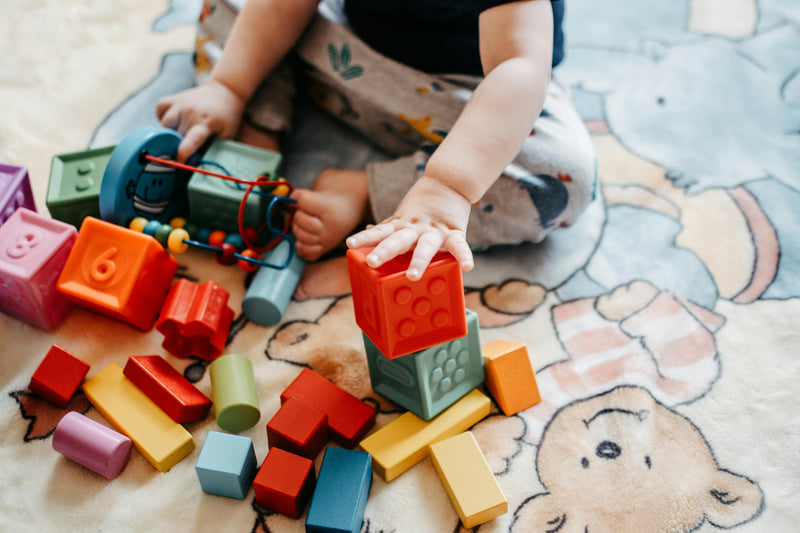
There is often an emphasis on natural materials, simple design, and open-ended resources. Toys are not overly defined. They invite interpretation.
This allows children to bring their own ideas into play, rather than simply following instructions.
The Role of Imagination
One of the central beliefs in Waldorf education is that imagination is not something extra—it is essential.
When children are given the space to imagine, they are not just playing. They are practicing problem-solving, storytelling, and creative thinking.
A simple object can become anything. A quiet moment can turn into a narrative.
These experiences build skills that are difficult to measure, but incredibly important over time.
Why Screens Are Limited Early On
Waldorf education is often associated with minimal screen use, especially in the early years.
This is not because technology is seen as harmful in itself, but because of timing.
Young children learn best through direct, physical, and social experiences. Screens, by their nature, are passive.
Waldorf encourages building a strong foundation first—through movement, interaction, and imagination—before introducing digital tools.
Bringing Waldorf Principles Into the Home
You do not need to follow Waldorf education in a formal setting to apply its principles.
In many ways, it begins with small changes.
The first is often simplifying the environment. When children are surrounded by too many options, they can become overwhelmed. Reducing the number of toys, while choosing more open-ended ones, can lead to longer and more focused play.
Another shift is allowing more independence. This can feel uncomfortable at first, especially when a child asks for constant engagement. But when given time, children often begin to initiate their own activities.
It does not happen instantly. It builds gradually.
Addressing Common Concerns
It is natural for parents to have questions about Waldorf education.
One concern is whether children fall behind academically. In reality, many children develop strong academic skills later, because their early learning has been rooted in understanding rather than repetition.
Another concern is structure. Waldorf may appear unstructured from the outside, but it follows a thoughtful rhythm. Days and weeks have a predictable flow, which helps children feel secure.
There is also the question of technology. Waldorf does not reject it entirely. It simply delays its introduction until children are developmentally ready to use it in a more intentional way.
Why Many Parents Are Drawn to Waldorf
The appeal of Waldorf education often comes down to how it feels.
It feels calmer. More connected. Less rushed.
Children are not constantly being directed or evaluated. They are given space to explore, to make mistakes, and to discover things on their own.
Over time, this can lead to stronger focus, greater independence, and a more grounded sense of confidence.
A Thoughtful Starting Point
You do not need to make dramatic changes to begin.
Start by observing your child. Notice when they are most engaged. Notice when they seem overwhelmed.
Then make small adjustments.
Reduce background noise. Offer fewer choices. Allow moments of boredom to last a little longer.
These shifts may seem simple, but they create space for something deeper to emerge.
Final Reflection
Waldorf education is not about following a strict set of rules.
It is about rethinking how children learn and what they truly need in order to grow.
In many cases, it is not more stimulation, more structure, or more input.
It is less.
Less noise.
Less pressure.
Less interruption.
And in that space, something important begins to take shape.
Not all at once. Not always visibly.
But steadily, and in a way that lasts.
FAQs
What is Waldorf education in simple terms?
Waldorf education is an approach that focuses on the overall development of a child—emotionally, creatively, and intellectually. It emphasizes learning through play, imagination, and real-life experiences rather than early academic pressure.
Is Waldorf education suitable for every child?
It depends on the child and the family’s values. Children who enjoy creative play, slower-paced learning, and hands-on experiences often thrive in this environment. It may not suit families who prefer highly structured or academically driven early education.
Does Waldorf education delay academics?
Waldorf introduces formal academics later than traditional systems, especially in early childhood. However, the focus on deep understanding and creativity often supports strong learning outcomes over time.
Why are screens limited in Waldorf education?
The goal is to allow young children to develop through real-world experiences first—movement, interaction, and imagination. Screens are introduced later, once a strong developmental foundation is in place.
Can I follow Waldorf principles at home?
Yes, many parents do. You can start by simplifying your child’s environment, encouraging independent play, reducing screen time, and creating more space for creativity and imagination.
Does Waldorf education support independence?
Yes, independence is a key part of Waldorf philosophy. Children are encouraged to explore, make decisions, and engage in self-directed play, which helps build confidence over time.
What kind of toys are used in Waldorf-inspired play?
Waldorf-inspired play typically includes simple, open-ended toys made from natural materials. These allow children to use their imagination rather than relying on predefined functions.
Is Waldorf education anti-technology?
Not exactly. It focuses on introducing technology at the right stage, rather than eliminating it entirely. The idea is to prioritize foundational development first.






Comment (0)