

The Overstimulated Child: Signs Most Parents Miss
Walk into a modern home and it’s easy to feel like everything is working exactly as it should. Toys are within reach, colors are vibrant, screens occasionally glow in the background, and the room feels alive with activity. It looks like an environment designed for growth, curiosity, and engagement.
But beneath that sense of abundance, something quieter is happening—something that doesn’t always announce itself clearly.
Many children today are not just stimulated. They are overstimulated.
And the challenge is that overstimulation rarely looks like distress in the way adults expect. It doesn’t always present as withdrawal or visible anxiety. More often, it shows up as restlessness, irritability, short attention spans, or a constant need for new stimulation. Behaviors that are easily misinterpreted as personality traits or developmental phases.
Yet in many cases, these are not traits. They are signals.
Understanding Overstimulation in a Modern Context
At its core, overstimulation occurs when a child’s nervous system is exposed to more sensory input than it can comfortably process. This input is not limited to noise or visual clutter—it includes everything from fast-paced digital content to crowded play environments and even the sheer number of choices available during play.
Unlike adults, children are still developing the ability to filter and prioritize information. Their brains are highly receptive, constantly absorbing and interpreting the world around them. When that input becomes excessive, the brain doesn’t simply adapt—it struggles.
And when the brain struggles to process input efficiently, behavior begins to shift.
What makes overstimulation particularly complex is that it often builds gradually. It is not caused by a single factor, but by layers of sensory input accumulating over time. A bright room here, background noise there, a quick video, a new toy, another activity—all individually harmless, but collectively overwhelming.
Why It Often Goes Unnoticed
One of the reasons overstimulation is so widely overlooked is that it can resemble positive engagement.
A child who is constantly active may be seen as energetic.
A child who quickly moves between toys may appear curious.
A child who resists quiet time may be labeled playful or high-spirited.
In isolation, these interpretations make sense. But when these behaviors occur consistently—and especially when they are accompanied by difficulty focusing or regulating emotions—they often point to something deeper.
The modern environment has normalized constant stimulation to such an extent that its effects are no longer easily recognized.
The Subtle Signs Parents Often Miss
Overstimulation rarely presents as a single, obvious issue. Instead, it reveals itself through patterns—small, repeated behaviors that are easy to overlook when viewed individually.
Restlessness That Never Settles
Many overstimulated children find it difficult to remain engaged in one activity for long. Their attention shifts rapidly, not because they lack interest, but because their brain is struggling to process competing inputs.
This creates a sense of constant motion—physically and mentally—where nothing feels fully absorbing.
Shallow, Fragmented Play
Deep play requires focus, and focus requires mental space. In environments where stimulation is high, that space becomes limited.
Children may pick up a toy, interact with it briefly, and then move on. Over time, this pattern creates shorter play cycles and reduces opportunities for imaginative exploration.
Heightened Emotional Reactivity
A child who becomes easily frustrated or overwhelmed by small challenges may be operating with an already taxed nervous system.
When sensory input is high, the capacity to handle additional stress decreases. What seems like an overreaction is often a reflection of internal overload.
Difficulty Transitioning to Rest
One of the clearest indicators of overstimulation appears at the end of the day. Children who have been exposed to constant input often struggle to wind down.
Even when physically tired, their minds remain active. Bedtime resistance, restlessness, or delayed sleep can all be connected to a lack of mental downtime.
A Growing Dependence on External Input
Over time, overstimulation can shift a child’s baseline. Quiet moments may begin to feel uncomfortable. Slower activities may feel less engaging.
This can lead to an increased reliance on screens, fast-paced toys, or constant interaction—not because children prefer them, but because they have become accustomed to that level of input.
The Role of Today’s Environment
To understand why overstimulation is increasingly common, it helps to look at how childhood environments have evolved.
Today’s children are surrounded by:
-
visually complex play areas with multiple stimuli competing for attention
-
toys designed with lights, sounds, and predefined interactions
-
fast-moving digital content engineered to capture and hold attention
-
constant background noise from televisions, devices, or conversations
-
structured schedules with limited unstructured time
Each of these elements is designed with good intentions—to entertain, to educate, to engage. But when combined, they create an environment where the brain is rarely given the opportunity to rest.
And rest is not the absence of growth. It is a necessary condition for it.
Why More Stimulation Isn’t Always Better
There is a deeply ingrained belief that more stimulation leads to better development. More toys, more activities, more exposure—it all seems like it should contribute to learning.
But research in child development suggests something more nuanced.
Children benefit from meaningful stimulation, not constant stimulation.
When the environment is overloaded, attention becomes fragmented. When attention is fragmented, engagement becomes shallow. And when engagement is shallow, learning becomes less effective.
In other words, it’s not the quantity of stimulation that matters—it’s the quality and structure of it.
The Importance of Calm, Intentional Spaces
One of the most effective ways to support a child’s cognitive and emotional development is by shaping the environment around them.
Children tend to regulate more easily in spaces that feel:
-
visually calm rather than cluttered
-
predictable rather than chaotic
-
structured but flexible
-
free from unnecessary noise
In these environments, the brain is not constantly filtering competing inputs. It can focus, process, and engage more deeply.
This doesn’t mean removing stimulation entirely. It means creating an environment where stimulation supports the child, rather than overwhelms them.
Practical Ways to Reduce Overstimulation
Addressing overstimulation does not require a complete redesign of a home. Small, intentional changes can significantly improve how a child experiences their environment.
Some of the most effective adjustments include:
-
Reducing visible clutter: Keeping fewer toys accessible at once allows children to engage more deeply with what is available.
-
Rotating play materials: Changing toys periodically maintains interest without overwhelming attention.
-
Limiting background noise: Turning off unnecessary screens or sounds during playtime helps improve focus.
-
Creating defined play zones: A dedicated, consistent space can help children feel more grounded and less distracted.
-
Encouraging slower play: Activities that are open-ended and self-directed support longer engagement and creativity.
These changes are not about restriction. They are about creating balance.
A Shift Toward Thoughtful Play Design
There is a growing shift among parents, educators, and designers toward more intentional play environments. Instead of focusing solely on toys, attention is increasingly being placed on how space itself influences behavior.
Flexible, open-ended environments are becoming more common—spaces that allow children to shape their own play rather than follow predefined interactions.
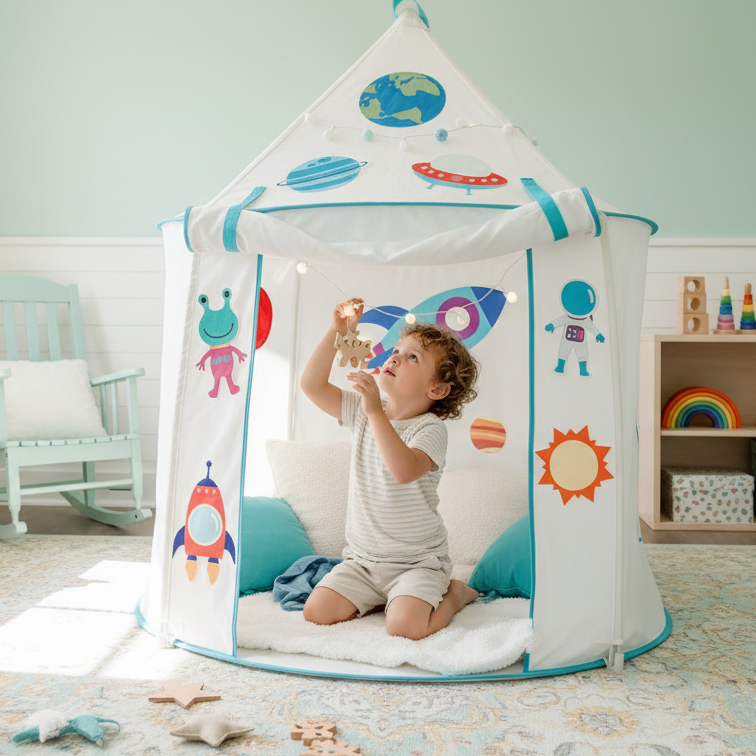
Some modern approaches, including modular setups like those seen in ZeeZee Adventures, reflect this philosophy. Rather than overwhelming children with constant sensory input, these environments provide a calmer, adaptable space that supports imagination and sustained engagement.
The emphasis is not on doing more, but on allowing children to do more with less.
Why Calm Spaces Lead to Deeper Engagement
It may seem counterintuitive, but reducing stimulation often leads to increased engagement.
When the environment is less demanding, the brain has more capacity to focus. When attention stabilizes, play becomes deeper. And when play becomes deeper, imagination expands.
In calmer spaces:
-
Children stay with activities longer
-
storytelling becomes more complex
-
creativity becomes more self-directed
-
emotional responses become more balanced
Instead of reacting to their environment, children begin to shape it.
Rethinking Behavior Through an Environmental Lens
When a child appears distracted, irritable, or disengaged, the immediate response is often to address the behavior directly.
But behavior is often a reflection of the environment.
Instead of asking, “Why won’t they focus?” it may be more useful to ask, “What is competing for their attention?”
This shift in perspective allows parents to address the root cause rather than the symptom.
Because when the environment supports the child, many behavioral challenges begin to resolve naturally.
When Less Becomes More
Overstimulation is not always obvious. It is embedded in the everyday—busy rooms, constant noise, and environments designed to keep children entertained at all times.
But when these layers are gradually reduced, something changes.
Children begin to slow down.
They focus longer.
They engage more deeply.
They imagine more freely.
What once looked like boredom reveals itself as overwhelm. What once felt like restlessness begins to settle into meaningful engagement.
Final Reflection
Children do not always need more stimulation to thrive.
Sometimes, they need less.
Less noise.
Less clutter.
Less pressure to stay constantly engaged.
Because in environments where the mind is not overwhelmed, something important happens.
Attention strengthens.
Imagination expands.
And children begin to experience the world—not as something rushing past them—but as something they can explore, shape, and understand at their own pace.
And that is where real development begins.
Frequently Asked Questions
What is overstimulation in children?
Overstimulation occurs when a child is exposed to more sensory input than their brain can comfortably process. This can include visual clutter, noise, fast-paced media, or too many activity options at once. When the brain becomes overwhelmed, it can affect attention, mood, and behavior.
How can I tell if my child is overstimulated or just energetic?
Energy and overstimulation can look similar, but the key difference is regulation. An energetic child can still focus, engage deeply in play, and transition between activities with relative ease. An overstimulated child often shows signs of restlessness, short attention spans, irritability, and difficulty calming down, especially after periods of high input.
Can too many toys lead to overstimulation?
Yes, in many cases. When children are presented with too many choices at once, it can overwhelm their attention. Instead of engaging deeply, they may jump from one toy to another without meaningful interaction. Limiting visible toys and rotating them over time can help improve focus and play quality.
Does screen time contribute to overstimulation?
Fast-paced digital content can contribute significantly to overstimulation. Screens often deliver rapid visual and auditory input, which can make it harder for children to engage in slower, real-world activities. While occasional use is manageable, constant exposure can impact attention span and emotional regulation.
Why does my child struggle to calm down at bedtime?
Difficulty settling down is a common sign of overstimulation. When children are exposed to continuous sensory input throughout the day, their brain remains active even when their bodies are tired. Creating a calmer evening routine with reduced noise and stimulation can help improve sleep transitions.
What type of environment helps reduce overstimulation?
Children generally respond well to environments that are:
-
visually simple and organized
-
low in background noise
-
predictable in structure
-
balanced between activity and rest
These conditions allow the brain to process information more efficiently and support longer attention spans and emotional stability.
Do children need stimulation for development?
Yes, but the key is balance. Children benefit from meaningful, purposeful stimulation that encourages exploration and learning. However, constant or excessive stimulation can have the opposite effect, reducing focus and engagement. Quality matters more than quantity.
How can I reduce overstimulation without limiting my child’s play?
The goal is not to restrict play, but to make it more intentional. Simple adjustments can help:
-
Reduce clutter and rotate toys
-
create quiet, defined play areas
-
Limit background noise during playtime
-
allow unstructured time for independent play
These changes support deeper engagement without taking away opportunities for creativity.






Comment (0)