
What Independent Play Looks Like at Different Ages
Independent play is often misunderstood.
Many parents imagine it means children quietly entertaining themselves for long stretches without needing help, attention, or interaction. When that does not happen naturally, it can feel frustrating or even worrying.
But independent play is not something children simply “know” how to do from birth.
Like language, emotional regulation, and problem-solving, it develops gradually over time. What independent play looks like for a one-year-old is completely different from what it looks like for a six-year-old. Children’s ability to focus, imagine, create stories, and remain engaged evolves alongside their neurological and emotional development.
Understanding these differences can completely change how parents approach play at home.
Independent play is not about leaving children alone or expecting unrealistic levels of concentration. It is about creating environments and experiences that allow children to explore, imagine, and engage confidently at their own developmental stage.
When children develop healthy, independent play skills, they strengthen:
- concentration
- creativity
- emotional resilience
- confidence
- problem-solving
- imagination
- self-regulation
In a world increasingly filled with constant stimulation and screen-based entertainment, independent play has become more important than ever.
Why Independent Play Matters So Much
Children learn best when they actively participate in creating experiences rather than simply consuming entertainment.
Independent play allows children to:
- make decisions
- solve problems
- explore ideas
- practise creativity
- build confidence
- regulate emotions independently
During independent play, children are not simply “passing time.” Their brains are actively building important cognitive and emotional skills.
Research in child development consistently shows that open-ended and self-directed play supports:
- stronger executive functioning
- longer attention spans
- emotional flexibility
- creativity
- language development
- social understanding
Independent play also teaches children something deeply important:
They are capable of creating joy, curiosity, and engagement without constant external stimulation.
Why Independent Play Looks Different at Every Age
One of the biggest misconceptions parents have is that independent play looks the same throughout childhood.
A toddler may only play independently for a few minutes before seeking reassurance. A preschooler may become immersed in pretend play for half an hour. An older child may build elaborate imaginary worlds independently for long periods.
All of these are normal.
Independent play develops gradually because children’s brains, emotional regulation systems, and attention spans are still developing.
The key is not forcing independence too early.
It supports age-appropriate opportunities for exploration and gradually allowing play skills to strengthen naturally.
Independent Play From 0–12 Months
During the first year of life, independent play is very short and heavily connected to emotional security.
Babies explore through sensory experiences. They observe movement, textures, sounds, faces, and objects while slowly learning how the world works.
At this stage, independent play may look like:
- reaching for toys
- exploring textures
- shaking objects
- observing movement
- rolling or crawling towards objects
- engaging briefly with sensory materials
Play sessions are often very short because babies still rely heavily on emotional connection and co-regulation from caregivers.
This is completely normal.
Young babies are not developmentally ready for long periods of solo play. Their nervous systems still depend on frequent reassurance and interaction.
The goal during infancy is not independence itself.
It is creating safe opportunities for curiosity and exploration.
What Helps at This Age:
- simple sensory toys
- mirrors
- soft textures
- grasping objects
- calm environments
- floor play
- predictable routines
Overstimulating toys with flashing lights and loud sounds are often less beneficial because they can overwhelm attention rather than encouraging exploration.
Independent Play From 1–2 Years
Toddlerhood marks the beginning of more intentional independent exploration.
At this stage, children become increasingly curious about movement, objects, and cause-and-effect experiences. They begin testing independence while still seeking frequent emotional reassurance.
Independent play often looks like:
- stacking blocks
- filling and emptying containers
- carrying objects around
- Exploring pretend play beginnings
- looking at books independently
- repeating simple activities over and over
Repetition is extremely important at this age because toddlers learn through mastering predictable experiences.
Parents sometimes worry that toddlers repeat the same activities constantly, but repetition actually strengthens cognitive development and confidence.
Attention spans remain relatively short during this stage. A toddler may move between activities frequently because the brain is still developing the ability to sustain focus.
Common Challenges at This Age:
- frequent interruptions
- wanting adults nearby
- frustration tolerance
- short concentration spans
This does not mean independent play is failing.
It means toddlers still require emotional safety while practising independence gradually.
Calm, uncluttered play environments help significantly because too many choices can overwhelm young attention systems.
Independent Play From 2–3 Years
Between the ages of two and three, imagination begins expanding rapidly.
Children start developing symbolic thinking, meaning objects can represent other things during play. A block may become a car. A blanket may become a cave. Pretend play starts becoming more immersive.
Independent play may now include:
- pretend cooking
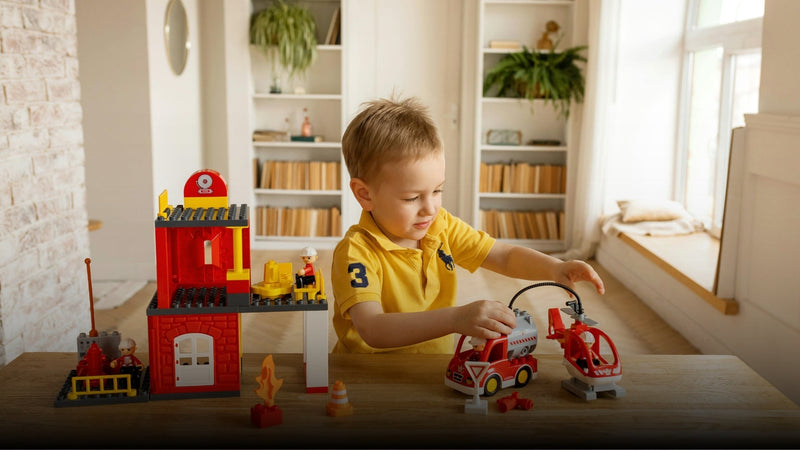
- building towers
- caring for dolls or figurines
- simple storytelling
- creating imaginary scenarios
- sensory play
- looking through books independently
This stage often marks the beginning of longer independent play periods, although emotional reassurance is still important.
Children may play independently while frequently checking whether a caregiver is nearby.
This “secure base” behaviour is developmentally healthy.
At this age, children benefit enormously from open-ended play materials that encourage imagination rather than fixed interaction.
Simple, imaginative spaces often become especially valuable because children can transform them repeatedly through storytelling and pretend play.
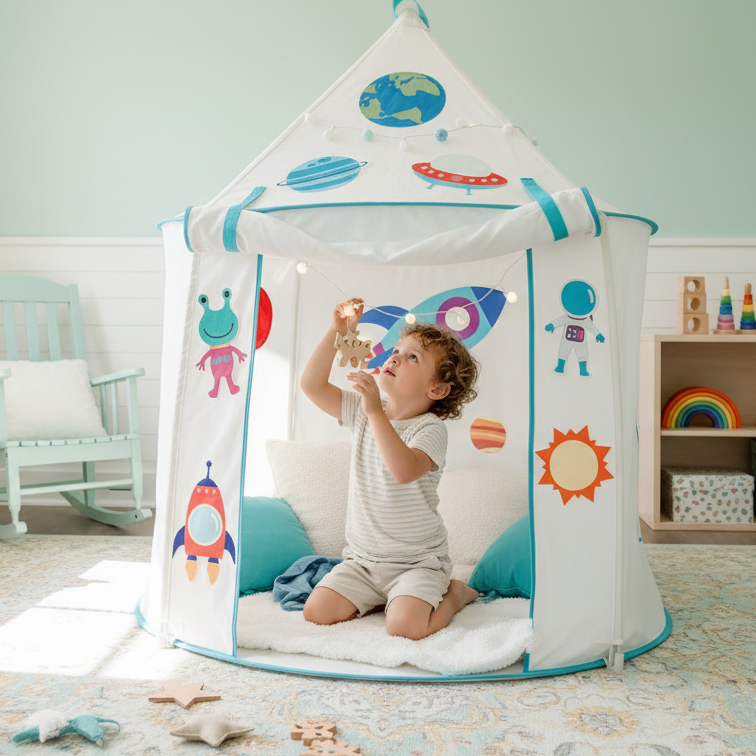
Flexible environments such as ZeeZee Adventures naturally support this developmental stage because they become whatever the child imagines — a reading nook, a castle, a spaceship, or a secret hideaway.
The environment evolves alongside the imagination.
Independent Play From 3–5 Years
This is often the golden age of imaginative play.
Between ages three and five, children become capable of much deeper and more immersive storytelling. Pretend play grows increasingly complex, and children may remain engaged independently for significantly longer periods.
Independent play at this stage may involve:
- elaborate pretend worlds
- role-playing characters
- building imaginative environments
- creating stories
- dressing up
- drawing and crafting
- constructing forts
- acting out adventures
Children now begin generating stimulation internally through imagination rather than relying constantly on external entertainment.
This is one reason uninterrupted playtime becomes so important during these years.
Deep play often unfolds slowly.
Children may appear completely absorbed in their own ideas for extended periods when given enough time and space.
What Supports Independent Play Best:
- open-ended toys
- fewer distractions
- calm environments
- uninterrupted time
- flexible imaginative spaces
Highly stimulating digital entertainment can sometimes interfere with this stage because it conditions the brain to expect constant novelty and rapid rewards.
Imaginative play, by contrast, develops patience, creativity, concentration, and narrative thinking.
Independent Play From 5–7 Years
As children enter early school years, independent play becomes more structured and goal-oriented.
Children often begin combining imagination with more advanced problem-solving and planning skills.
Independent activities may include:
- building complex structures
- creating games
- drawing detailed stories
- reading independently
- crafting projects
- imaginative world-building
- role-playing adventures
Attention spans usually become longer during this period, especially when children feel emotionally engaged in the activity.
Importantly, independent play now begins supporting emotional processing too.
Children often use imaginative play to work through:
- fears
- social experiences
- confidence
- emotional challenges
- new ideas
The stories children invent frequently reflect their emotional world.
Quiet play spaces become especially valuable because they provide emotional retreat as well as imaginative freedom.
Independent Play From 7+ Years
Older children continue benefiting from independent play, although it often looks different from early childhood pretend play.
At this stage, independent engagement may involve:
- creative hobbies
- reading
- writing stories
- designing projects
- advanced building
- imaginative role-play games
- artistic exploration
Independent play now becomes increasingly connected to identity, personal interests, and creative expression.
Unfortunately, this is also the age where screens often begin replacing imaginative play more heavily.
While technology can support creativity when used intentionally, children still benefit enormously from opportunities to engage in slower, self-directed, offline experiences.
Independent creative engagement remains deeply important for emotional wellbeing and cognitive development throughout childhood.

Why Some Children Struggle With Independent Play
Not all children develop independent play easily.
Modern environments can make it harder for children to settle into self-directed play because many children are surrounded by:
- constant stimulation
- screens
- fast-paced entertainment
- crowded schedules
- excessive toy clutter
These experiences train the brain to expect frequent novelty and external stimulation.
Independent play requires the opposite.
It asks children to generate ideas internally, sustain focus gradually, and tolerate moments of boredom before creativity emerges.
This ability strengthens slowly through practice and environment.
Why Boredom Is Important
Many parents feel pressure to entertain children constantly.
But boredom is often where imagination begins.
When children are not immediately stimulated, the brain begins searching internally for engagement. This process supports:
- creativity
- curiosity
- storytelling
- problem-solving
At first, boredom may look uncomfortable.
Children may complain or wander aimlessly.
But if given time and space, many eventually begin inventing games, stories, and imaginative worlds independently.
Independent play often emerges directly from boredom.
Environment Shapes Play
The physical environment strongly influences independent play quality.
Children often play more deeply in spaces that feel:
- calm
- organised
- emotionally safe
- flexible
- uncluttered
Highly overstimulating playrooms can overwhelm attention and reduce concentration.
Interestingly, children do not necessarily need larger spaces.
They often need smaller, emotionally manageable environments where imagination feels protected.
This is why cosy corners, forts, reading nooks, and imaginative tents frequently become favourite play areas.
Children feel emotionally contained inside these environments, which often encourages deeper concentration and storytelling.
Independent Play Is Not Isolation
One important misconception is that independent play means children should always play alone.
In reality, independent play exists alongside connection.
Children still need:
- emotional responsiveness
- affection
- conversation
- shared experiences
- collaborative play
Healthy independent play develops best when children feel emotionally secure and connected overall.
The goal is balance.
Children benefit from learning they can both connect deeply with others and confidently engage with their own imagination independently.
A Different Way to Think About Play
Independent play is not about training children to need adults less.
It is about giving children opportunities to discover their own creativity, confidence, and inner world.
The most meaningful play often happens when children feel free to:
- invent stories
- explore ideas
- create imaginary worlds
- solve problems independently
- follow curiosity naturally
And these abilities develop gradually across childhood, one stage at a time.
Because ultimately, independent play is not something children either “can” or “cannot” do.
It is something that grows through time, emotional safety, imagination, and the environments we create around them.
Frequently Asked Questions
At what age does independent play begin?
Independent play begins in very small ways during infancy through sensory exploration and gradually develops throughout childhood.
How long should children play independently?
Independent play length varies by age and development. Toddlers may only focus for a few minutes, while older children can remain engaged for much longer.
Why does my child struggle with independent play?
Overstimulation, excessive screen time, toy clutter, and limited opportunities for boredom can all affect independent play skills.
What toys best support independent play?
Open-ended toys such as blocks, figurines, books, art materials, and imaginative play spaces often encourage the deepest independent engagement.
Is boredom good for children?
Yes. Boredom often stimulates creativity, imagination, and problem-solving because children begin generating ideas internally.
Do children need adults nearby during independent play?
Especially at younger ages, children often play more confidently when caregivers remain emotionally available nearby.
Can screens affect independent play?
Highly stimulating screen content can reduce interest in slower imaginative activities by conditioning the brain to expect rapid novelty and rewards.
Why do children play better in smaller, cosy spaces?
Small enclosed spaces often help children feel emotionally safe and focused, which encourages deeper imaginative engagement.
- Baby Registry
- Baby Shower
- Best gifts
- best play tent
- Best toys
- Best toys 2025
- Best toys 2026
- Blog
- calming toys
- child development
- children
- christmas gift ideas
- customizable play tent
- Holidaygiftguide
- jeanpiaget
- kids play tent
- Montesoori
- montessori
- Montessori Gifts
- Montessori play
- open-endedplay
- openendedplay
- parenting
- parents
- play tent
- Play Tents
- playroom inspo
- pretend play
- sahm
- Sensory Play
- sensory play gifts
- teepee play tent
- toddler toys
- tonies
- toyclutter
- toys
- ZeeZee
- ZeeZee Adventure
- ZeeZee Adventure Tent
- ZeeZee Adventures





Comment (0)