
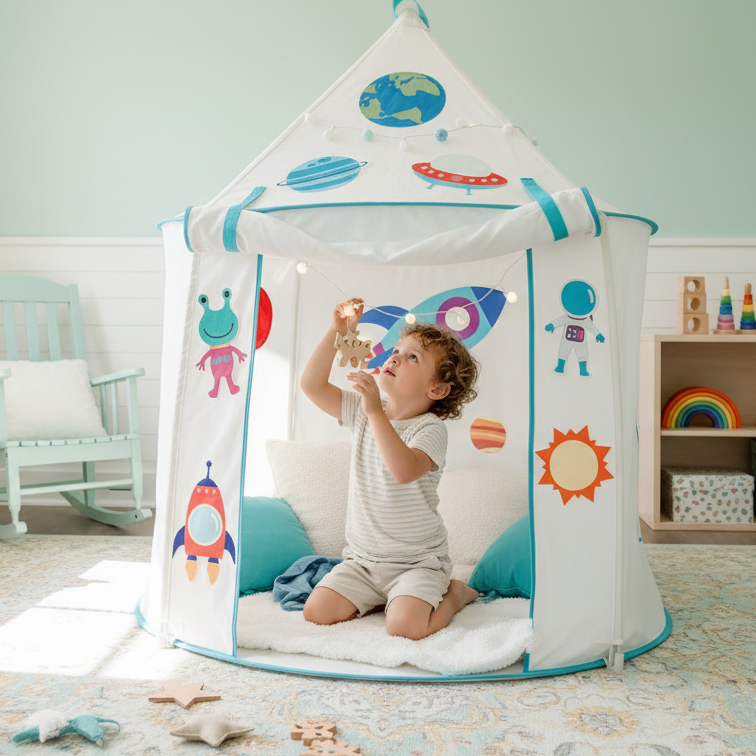

Why Your Toddler Wants You to Play With Them All the Time
There is a moment almost every parent experiences.
You sit down for a few minutes to answer an email, fold laundry, or simply drink your coffee while it is still warm.
Then you hear it:
“Play with me.”
You gently encourage your toddler to play independently.
A few minutes later:
“Come play with me.”
Sometimes the request feels endless. Even when toys are scattered across the room, and activities are available everywhere, many toddlers still seem to want one thing most:
your presence.
For exhausted parents, this can feel confusing and overwhelming. Many begin to wonder whether their child is becoming too dependent or whether they are somehow “failing” to encourage independence.
But child development research tells a very different story.
Toddlers are not simply asking for entertainment.
Very often, they are asking for connection, reassurance, emotional safety, and shared experience.
Play is one of the primary ways toddlers build relationships, regulate emotions, and learn how to explore the world safely. What looks like clinginess on the surface is often a deeply normal developmental need.
Understanding why toddlers constantly invite adults into play can completely change the way parents view these interactions — and can also help create healthier, calmer, and more balanced play experiences over time.
Toddlers Experience the World Through Connection
Adults often separate play from emotional connection.
Children do not.
For toddlers, play and attachment are deeply connected.
At this stage of development, toddlers are still learning how the world works. Their brains are rapidly developing emotional, social, and cognitive skills all at once. Because everything feels new and unpredictable, they naturally seek reassurance from trusted adults while exploring.
Psychologists refer to this as secure attachment.
A securely attached child uses a trusted caregiver as a “safe base” from which they can explore their environment. When the caregiver feels emotionally available, the child gains confidence to explore independently.
This means toddlers often invite parents into play not because they cannot play alone, but because connection creates emotional safety.
In many ways, a toddler saying “play with me” is similar to saying:
“Stay close while I figure out this world.”
Why Play Feels So Important to Toddlers
Adults sometimes view play as optional fun.
For toddlers, play is serious developmental work.
Play is how young children:
learn language
process emotions
experiment with problem-solving
Practice social interaction
develop imagination
understand cause and effect
build confidence
Every pretend scenario, repetitive game, or imaginative story helps toddlers organise and understand their experiences.
When parents participate in play, toddlers receive something even more powerful:
shared attention.
Research consistently shows that shared attention — moments where parent and child focus on the same activity together — supports emotional bonding and language development.
This is one reason toddlers repeatedly bring toys to adults or constantly ask them to watch, join, or respond during play.
The connection itself is part of the experience.
The Toddler Brain Is Still Learning Independence
Many parents worry when their toddler struggles with independent play.
But developmentally, this is extremely normal.
Toddlers are only beginning to develop:
attention regulation
impulse control
emotional regulation
sustained focus
self-directed problem solving
These skills take years to mature.
Independent play is not something children suddenly “learn” overnight. It develops gradually through emotional security, repeated experiences, and brain development.
In fact, very young toddlers often play best when a trusted adult is nearby — even if the adult is not actively participating the entire time.
Psychologists sometimes call this “anchored independence.”
The child explores freely because they know safety and reassurance are close by.
This explains why many toddlers seem content playing alone for short periods only when a parent remains physically present in the room.
Connection Comes Before Independence
Modern parenting culture often praises independence very early.
Parents frequently hear messages like:
“They should learn to entertain themselves.”
“They need to become independent.”
“You shouldn’t always play with them.”
While independent play absolutely matters, child development experts increasingly emphasise something important:
healthy independence grows from connection — not separation.
Children become more independent when they feel emotionally secure first.
When toddlers feel consistently connected to caregivers, they gradually gain the confidence to explore alone because their nervous systems feel safe.
This is why forcing independence too early can sometimes backfire.
A child who feels emotionally disconnected may actually cling more tightly.
Meanwhile, children who feel emotionally supported often move naturally toward independence over time.
Why Toddlers Love Repetitive Play
One of the most exhausting parts of toddler play is repetition.
The same game.
The same pretend scenario.
The same book.
Again and again and again.
Adults often crave novelty.
Toddlers crave mastery and predictability.
Repetition helps toddlers:
understand patterns
build memory
develop confidence
create emotional security
process experiences
Predictable interactions also strengthen connections.
When parents repeat songs, games, or stories, toddlers begin to anticipate what comes next, which creates feelings of safety and control.
What feels repetitive to adults often feels emotionally regulating to children.
Parallel Play: An Important Stage of Development
Many parents assume independent play means toddlers should play entirely alone.
But toddler development does not usually work this way.
Young children commonly engage in something called parallel play.
This means they play near others rather than directly with them.
For example, a toddler may:
stack blocks while you sit nearby
pretend to cook beside you
draw while watching you work
move between solo play and brief interaction repeatedly
This type of play is developmentally healthy.
The parents’ nearby presence acts as emotional reassurance while the toddler experiments with greater independence.
Sometimes, toddlers do not need constant interaction.
They simply need to know someone safe is close.
Play Is Also Emotional Co-Regulation
Toddlers do not yet regulate emotions effectively on their own.
Their nervous systems are still developing.
Because of this, young children rely heavily on adults for co-regulation — the process of calming and organising emotions through connection with another person.
Play often becomes one of the ways toddlers seek emotional regulation.
After difficult moments, overstimulation, transitions, or frustration, toddlers may suddenly become especially demanding about play.
What parents interpret as attention-seeking is often emotional regulation-seeking.
Play provides:
comfort
predictability
reassurance
connection
emotional grounding
This is especially true during periods of stress, change, illness, travel, or disrupted routines.
Why Modern Childhood Can Increase Clinginess
Today’s childhood environments are very different from those of previous generations.
Modern homes are often filled with:
screens
noise
fast-paced stimulation
constant activity
background media
busy schedules
overloaded toy environments
Research increasingly suggests that highly stimulating environments can overwhelm young nervous systems.
When toddlers feel overstimulated, they often seek stronger emotional grounding from caregivers.
This can appear as:
clinginess
constant requests for interaction
difficulty sustaining independent play
emotional outbursts
short attention spans
In some cases, toddlers are not struggling with independence itself.
They are struggling with overstimulation.
Why Calm Environments Support Better Play
Child development specialists increasingly emphasise the importance of calm play environments.
Calmer spaces help toddlers:
focus longer
feel emotionally regulated
engage more deeply with imagination
become less overwhelmed
sustain independent exploration
This is one reason many parents are moving away from chaotic playrooms filled with excessive toys, lights, and noise.
Instead, they are creating:
cozy corners
reading nooks
soft lighting
open-ended play spaces
simple imaginative environments
These calmer settings often encourage longer, richer play experiences because toddlers feel emotionally settled rather than overstimulated.
Some families use flexible imaginative spaces — such as forts, reading corners, or environments inspired by Zeezee Adventures play concepts — to create areas where children can feel both secure and creatively free.
The goal is not to overstimulate children constantly.
It is to create environments where imagination can unfold naturally.
Open-Ended Play Keeps Toddlers Engaged Longer
Toddlers often lose interest in toys quickly when those toys have limited possibilities.
Battery-powered toys, fixed-storyline products, or overly structured activities can entertain briefly but may not sustain long-term engagement.
Open-ended play works differently.
Open-ended materials allow toddlers to direct the experience themselves.
Examples include:
blocks
blankets
pretend kitchens
art supplies
dress-up items
small play spaces
flexible forts or tents
These materials become many different things depending on the child’s imagination.
One day, a blanket becomes a cave.
The next day, it becomes a pirate ship.
The following day it becomes a quiet reading hideaway.
Because the possibilities keep evolving, toddlers remain engaged longer.
This type of play also supports independence more naturally because children become creators of the experience rather than passive users of a toy.
Why Toddlers Want Adults to Watch Them
Sometimes, toddlers do not even want parents to fully participate.
They simply want adults to observe.
“Watch this!”
“Look at me!”
“See what I made!”
This behaviour reflects an important developmental need:
validation.
Toddlers are building their sense of self.
When trusted adults notice and respond to their efforts, children begin learning:
“I matter.”
“My ideas matter.”
“I can affect the world around me.”
Being witnessed is emotionally meaningful for young children.
Even brief moments of warm attention can refill a toddler’s emotional “cup” and support longer independent play afterwards.

Attention-Seeking Is Often Connection-Seeking
The phrase “attention-seeking” is frequently used negatively.
But all children seek attention because attention is part of human attachment and survival.
For toddlers, especially, seeking connection is biologically normal.
When children repeatedly ask parents to play, they are often seeking:
emotional reassurance
shared experience
connection
regulation
engagement
security
This does not mean parents must play constantly all day.
But understanding the emotional need underneath the request can change how parents respond.
Instead of viewing play invitations as manipulation or dependence, parents can recognise them as communication.
Why Some Toddlers Struggle More With Independent Play
Every child has a different temperament.
Some toddlers naturally play independently for longer periods.
Others crave much more connection and reassurance.
Children may struggle more with independent play when they are:
highly sensitive
emotionally intense
going through developmental leaps
experiencing major changes
overstimulated
tired or dysregulated
adjusting to new routines
seeking extra reassurance
This variation is normal.
Independent play is not a measure of parenting success or failure.
The Difference Between Loneliness and Independence
One important misconception in parenting is the idea that independence means being left alone.
Healthy independence is not emotional isolation.
Children still need emotional connection while developing autonomy.
The healthiest developmental environments balance both:
connection and exploration
security and freedom
support and independence
Toddlers thrive when they feel emotionally safe enough to explore gradually at their own pace.
How to Encourage Independent Play Gently
Parents do not need to choose between constant engagement and complete independence.
There are gentle ways to support independent play while still meeting emotional needs.
Start With Connection First
Many toddlers play independently more easily after receiving focused connection.
Even ten or fifteen minutes of fully engaged attention can help toddlers feel emotionally secure enough to continue playing alone afterwards.
Quality often matters more than quantity.
Stay Nearby Initially
Instead of leaving immediately, try remaining physically nearby while reducing active participation gradually.
For example:
sit beside the child while reading
fold laundry nearby
work quietly in the same room
offer occasional responses
This helps toddlers practice independence while still feeling emotionally anchored.
Reduce Toy Overload
Too many toys can fragment attention.
Research suggests children often play more creatively and deeply when fewer toys are available.
Rotating toys periodically may also help maintain engagement.
Create Predictable Play Spaces
Toddlers often feel calmer when play areas feel consistent and familiar.
Simple, cosy, well-organised spaces help children focus more effectively.
Soft textures, calming colours, and reduced clutter can support emotional regulation during play.
Prioritise Open-Ended Materials
Flexible materials encourage longer engagement than highly structured toys.
Open-ended play supports imagination, creativity, and self-directed exploration.
Avoid Interrupting Deep Play
When toddlers become deeply engaged, avoid interrupting unnecessarily.
Sustained concentration during play helps strengthen attention span and problem-solving abilities.
Why Boredom Can Actually Be Helpful
Modern culture often treats boredom as a problem that must be solved immediately.
But boredom can play an important developmental role.
When toddlers are not constantly entertained, they begin experimenting with:
imagination
creative problem solving
storytelling
self-directed exploration
The transition into independent play sometimes begins with boredom.
Children need opportunities to move through that discomfort rather than being constantly stimulated externally.
The Emotional Side of “Play With Me”
For many parents, constant play requests can feel draining.
Especially during busy days.
Especially for exhausted caregivers.
It is important to remember that responding warmly does not require endless performance.
Toddlers rarely need parents to become full-time entertainers.
Often they simply need:
presence
responsiveness
occasional engagement
emotional availability
warm acknowledgement
Sometimes sitting nearby matters more than actively performing elaborate pretend games.
Why Small Rituals Matter
Simple play rituals often become emotionally meaningful to toddlers.
Reading together before bed.
Building blocks together each morning.
Pretend tea parties after nursery.
Short imaginative routines.
These predictable moments strengthen connection and help toddlers feel emotionally secure.
Children who feel securely connected often carry that emotional reassurance into independent exploration throughout the day.
The Role of Imagination in Emotional Development
Imaginative play is not merely entertainment.
It is one of the ways toddlers process life emotionally.
Through pretend play, children experiment with:
fear
confidence
relationships
control
adventure
problem solving
daily experiences
A toddler pretending to care for dolls may be processing caregiving relationships.
A child building forts may be exploring ideas about safety and comfort.
Imagination helps children make emotional sense of their world.
Why Cozy Spaces Feel So Powerful to Children
Many toddlers naturally gravitate toward small enclosed spaces.
Blanket forts.
Reading corners.
Tents.
Cushioned hideaways.
Psychologists believe enclosed play spaces can help children feel:
safe
contained
calm
emotionally protected
These spaces reduce sensory input and create a sense of ownership and control.
For young children navigating a large and unpredictable world, small imaginative environments can feel emotionally grounding.
This is one reason flexible, imaginative setups inspired by concepts like Zeezee Adventures often resonate with families seeking calmer, creativity-focused play experiences.
The appeal is not just novelty.
It is emotional comfort combined with imaginative freedom.
Independence Develops Slowly Over Time
One of the most important things parents can remember is this:
Independent play is developmental.
It grows gradually.
A toddler who constantly asks for connection today will not necessarily remain dependent forever.
As children mature emotionally and neurologically, they naturally gain greater ability to:
focus independently
regulate emotions
Invent play scenarios
solve problems alone
sustain imagination
tolerate separation
What supports this development best is not emotional distance.
It is a secure connection.
Reframing the Question
Perhaps the better question is not:
“Why does my toddler always want me to play?”
But:
“What emotional need is my child expressing through play?”
Often, the answer is deeply human.
Connection.
Safety.
Reassurance.
Shared joy.
Confidence.
Toddlers are still learning how to exist in the world.
And for many children, play is the bridge between dependence and independence.
A Different Way to View Playtime
Modern parenting often places pressure on families to maximise productivity.
But childhood does not operate according to adult efficiency.
To toddlers, connection is not a distraction from development.
Connection is development.
Play invitations are often attempts to strengthen emotional safety while exploring new ideas, experiences, and feelings.
When adults understand this, play can begin to feel less like a constant demand and more like communication.
Not every invitation must be accepted immediately.
Not every moment requires elaborate engagement.
But recognising the emotional meaning behind play can help parents respond with greater empathy and less frustration.
The Quiet Confidence Children Build Through Connection
One day, something subtle begins to happen.
The toddler who once constantly asked:
“Play with me.”
Starts disappearing into imaginative worlds independently.
Stories unfold without assistance.
Games become longer.
Exploration deepens.
And often, that independence grows precisely because the child spent years feeling emotionally safe enough to explore.
Connection becomes the foundation upon which independence is built.
Not the obstacle to it.
Frequently Asked Questions
Why does my toddler always want me to play with them?
Toddlers often seek connection, emotional reassurance, and shared attention through play. Play helps them feel safe while exploring the world and developing new skills.
Is it normal for toddlers to struggle with independent play?
Yes. Independent play develops gradually over time as toddlers build emotional regulation, focus, and confidence. Many young children still need adults nearby while playing.
Does playing with my toddler too much make them dependent?
Research suggests the opposite is often true. A secure emotional connection helps children develop confidence and independence over time.
How long should toddlers play independently?
This varies by age and temperament. Very young toddlers may only play independently for short periods initially. Independent play time usually increases gradually with development.
What kinds of toys encourage longer play?
Open-ended toys and imaginative play materials tend to encourage longer engagement because children can use them in many different ways.
Why does my toddler constantly ask me to watch them?
Toddlers seek validation and connection from trusted adults. Being noticed helps support confidence, emotional security, and social development.
Can overstimulation affect toddler play?
Yes. Highly stimulating environments can overwhelm young children and make it harder for them to focus or sustain independent play.
Final Thoughts
Toddlers do not constantly ask adults to play because they are incapable of independence.
More often, they are seeking something much deeper:
connection,
reassurance,
shared experience,
and emotional safety.
Play is one of the ways young children build trust in both the world and themselves.
Over time, a secure connection helps children gain the confidence to explore independently, imagine freely, and create their own adventures.
Sometimes, the most important thing a parent gives a toddler during play is not entertainment.
It is the quiet reassurance that someone safe is nearby while they discover the world.
- Baby Registry
- Baby Shower
- Best gifts
- best play tent
- Best toys
- birthday gift ideas for 3 year old
- birthday gift ideas for 4 year old
- birthday gift ideas for 5 year old
- birthday gift ideas for 6 year old
- birthday gift ideas for 7 year old
- Blog
- calming toys
- child development
- children
- christmas gift ideas
- customizable play tent
- Holidaygiftguide
- jeanpiaget
- kids play tent
- Montesoori
- montessori
- Montessori Gifts
- Montessori play
- open-endedplay
- openendedplay
- parenting
- parents
- play tent
- Play Tents
- playroom inspo
- pretend play
- sahm
- Sensory Play
- sensory play gifts
- teepee play tent
- toddler toys
- tonies
- toyclutter
- toys
- ZeeZee
- ZeeZee Adventure
- ZeeZee Adventure Tent
- ZeeZee Adventures





Comment (0)