
Why Imaginative Play Matters More Than Ever for Screen-Free Independent Play for Kid
Introduction
Today's parents face a challenge that previous generations never experienced on the same scale: raising children in a world filled with endless digital entertainment.
From streaming platforms and mobile games to short-form videos and educational apps, children have access to more content than ever before. While technology certainly has its place, many parents are beginning to notice something concerning.
The more time children spend consuming content, the less time they spend creating it.
That's one reason imaginative play is becoming one of the most important conversations in modern parenting.
As families embrace screen-free independent play for kids and seek a more balanced, intentional childhood, imaginative play is re-emerging as a powerful tool for creativity, resilience, emotional development, and confidence.
The truth is simple: imaginative play isn't just fun.
It's some of the most important developmental work a child can do.

The Core Problem: Why Modern Childhood Leaves Less Room for Imagination
Childhood today is incredibly stimulating.
Children are surrounded by:
-
Screens
-
Structured activities
-
Organized sports
-
Educational programs
-
Interactive toys
-
Constant entertainment
While many of these experiences have value, they also share something in common:
They often tell children what to do next.
Imaginative play works differently.
Instead of following instructions, children create the story.
Instead of consuming entertainment, they become the creators.
Without opportunities for open-ended play, children may have fewer chances to develop essential skills that emerge naturally through imagination.
When Play Becomes Passive
A child watching a story receives information.
A child creating a story generates information.
That difference matters.
Imaginative play challenges children to think, adapt, solve problems, and invent possibilities in real time.
It's active rather than passive.
And that's exactly why it remains so important in today's world.
What Children Gain Through Imaginative Play
Creativity Expands
Creativity is often viewed as an artistic skill.
In reality, it's a life skill.
When children invent characters, scenarios, and adventures, they learn how to think beyond the obvious and explore new possibilities.
A cardboard box becomes a pirate ship.
A blanket becomes a castle.
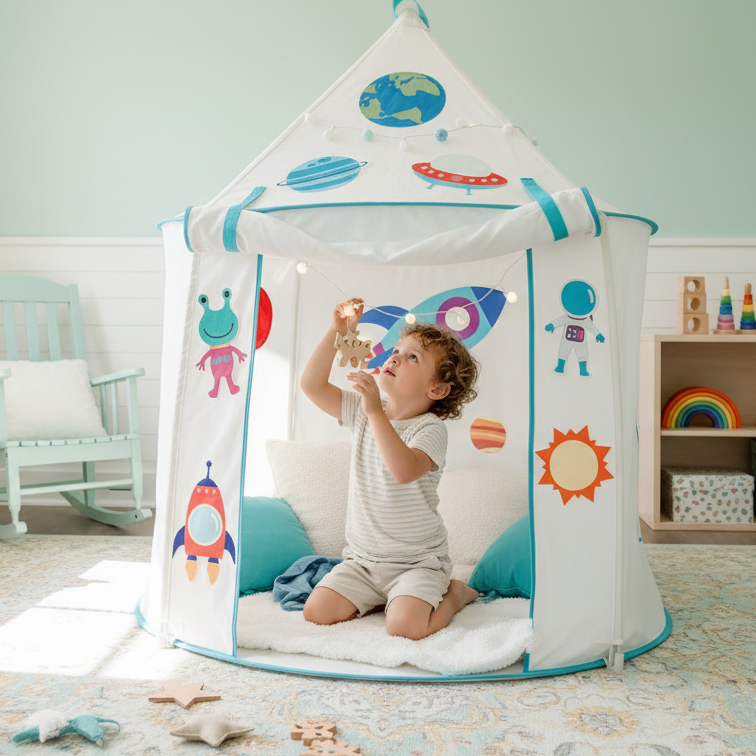
A tent becomes an entire universe.
Problem-Solving Develops Naturally
Every imaginary adventure presents challenges.
How will the dragon be defeated?
Where will the astronauts land?
What happens when the treasure map is lost?
Through pretend play, children practice finding solutions independently.
Communication Skills Improve
Many forms of imaginative play involve storytelling, role-playing, and dialogue.
Children learn how to express ideas, negotiate rules, and communicate effectively.
Emotional Regulation Strengthens
Pretend play allows children to explore emotions in a safe environment.
They can act out fears, frustrations, excitement, and challenges while remaining in control of the narrative.
This process supports emotional resilience and self-awareness.
Confidence Grows
One of the most powerful outcomes of imaginative play is confidence.
Children realize they can create worlds, solve problems, and direct their own experiences.
That sense of capability extends far beyond playtime.
Why Screen-Free Independent Play for Kids Matters in 2026
A growing number of parents are embracing screen-free childhood practices not because technology is harmful, but because children need balance.
They need opportunities to:
-
Think independently
-
Entertain themselves
-
Create rather than consume
-
Practice focus
-
Develop curiosity
Screen-free independent play for kids creates space for all of these experiences.
When children are free from constant stimulation, imagination often fills the gap.
This is where some of the most meaningful learning happens.
Actionable Advice: How to Encourage More Imaginative Play
Create a Dedicated Play Space
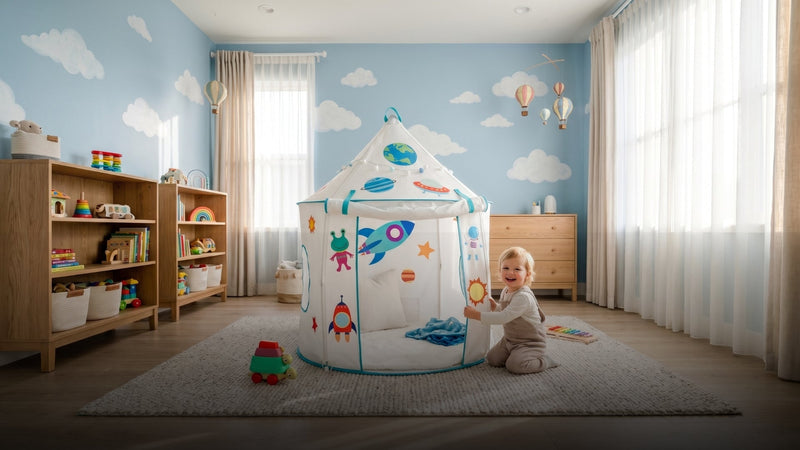
Children often play more deeply when they have a specific area designed for creativity and exploration.
A dedicated environment helps signal that this is a place where imagination can thrive.
Offer Open-Ended Materials
Simple items often inspire more creativity than complex toys.
Consider:
-
Blankets
-
Building materials
-
Costumes
-
Art supplies
-
Pretend play accessories
The less defined the object, the more imagination it requires.
Avoid Overscheduling
Children need unstructured time.
Resist the urge to fill every moment with activities.
Creativity often emerges in the spaces between plans.
Let Boredom Do Its Job
Boredom is frequently the starting point for imaginative play.
Allow children time to figure out what comes next rather than immediately offering solutions.
[BUTTON: Discover More Screen-Free Play Ideas]
The ZeeZee Solution
Creating opportunities for imaginative play often starts with the environment.
Children naturally engage more deeply when they have a space that feels calm, inviting, and entirely their own.
This is why many families use ZeeZee Adventures as part of their screen-free independent play strategy.
A dedicated play tent provides children with a cozy retreat where distractions fade and imagination takes center stage.
The real magic comes from the interchangeable StickeeZ themes.
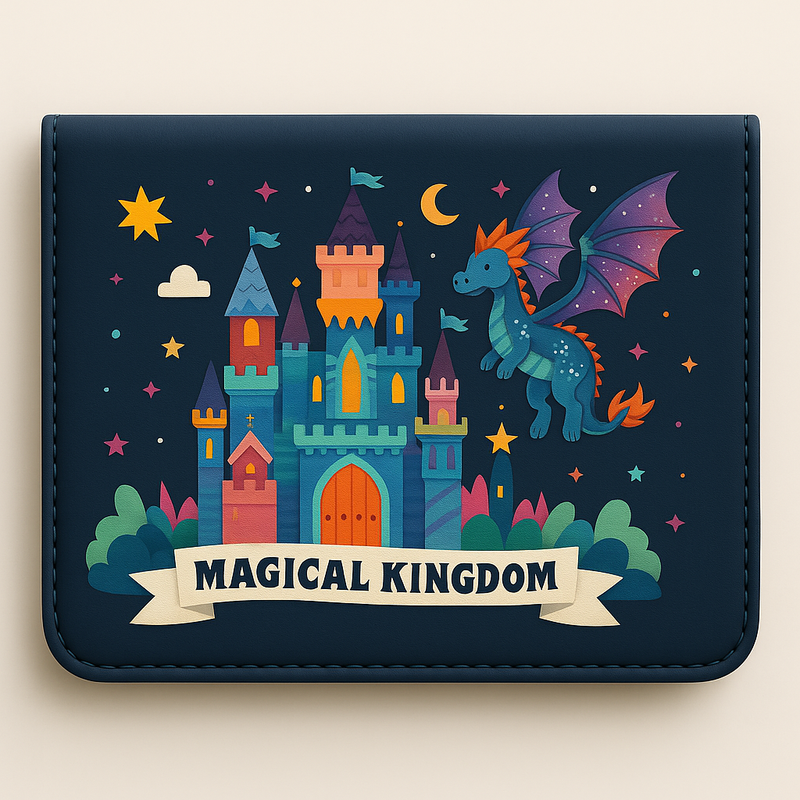
One week, the tent becomes a Magical Kingdom.
The next, it's a Space Voyage mission.
Then it transforms into a secret jungle expedition.
Because the themes evolve, the stories evolve too.
Instead of a toy that tells children what to do, the environment encourages them to create their own adventures.
For many families, imaginative play isn't just an activity.
It's becoming the foundation of a more balanced childhood.
Conclusion
In a world filled with screens, schedules, and constant stimulation, imaginative play has never been more important.
It's where children learn to create, problem-solve, communicate, and explore their emotions.
Most importantly, it's where they discover the joy of directing their own adventures.
The good news is that fostering imaginative play doesn't require elaborate plans or constant parent involvement.
Often, it simply requires the right environment, a little unstructured time, and the freedom to imagine.
Because when children are given space to create, incredible things happen.
Author Bio
The ZeeZee Play Experts are passionate advocates for child-led play and healthy childhood development. Through years of experience designing sensory-friendly, calming environments for children, they help families create meaningful opportunities for imagination, independence, and screen-free play. Their mission is to make open-ended adventures part of everyday childhood.





Comment (0)