
How Your Home Environment Affects Your Child's Behavior (More Than You Think)
Introduction
Have you ever noticed that your child seems calm and focused in one environment but restless and irritable in another?
Maybe they're perfectly content building with blocks at a grandparent's house but become overwhelmed and easily distracted at home. Or perhaps they can spend long periods playing independently in a cozy corner but struggle to focus when the television is on in the background.
Many parents assume behavior is simply a reflection of personality, temperament, or parenting style.
But child development experts increasingly recognize something important:
Environment matters.
In fact, the spaces children live, learn, and play in can have a significant impact on their mood, attention span, emotional regulation, and ability to engage in independent play.
As more families embrace low-stimulation living and seek healthier alternatives to constant screen time, understanding the connection between environment and behavior has never been more valuable.
The good news? Small changes to your home environment can often lead to meaningful changes in your child's daily behavior.
The Core Problem: Modern Homes Are Often More Stimulating Than We Realize
Today's children are growing up in environments filled with stimulation.
Consider everything competing for their attention:
-
Televisions running in the background
-
Smartphones and tablets
-
Bright electronic toys
-
Constant notifications
-
Visual clutter
-
Busy schedules
-
Multiple conversations happening at once
Individually, none of these things are necessarily harmful.
But together, they can create an environment that makes it harder for children to focus, self-regulate, and settle into meaningful play.
Children's brains are still developing.
Unlike adults, they often struggle to filter out unnecessary information. What feels like normal background activity to a parent may feel overwhelming to a young child.
Behavior Is Often a Response to Environment
When children appear:
-
Hyperactive
-
Distracted
-
Irritable
-
Defiant
-
Easily frustrated
We often focus on correcting the behavior itself.
But sometimes the environment deserves just as much attention.
Many behaviors are not signs that something is wrong with the child.
They're signals that the environment may be asking too much of their developing nervous system.
How Your Home Environment Influences Behavior
Noise Affects Emotional Regulation
Background noise doesn't just impact concentration.
It can also affect stress levels.
Constant television, loud toys, or frequent interruptions can make it more difficult for children to process emotions and remain calm.
Creating quieter moments throughout the day gives children's brains an opportunity to rest and reset.
Clutter Competes for Attention
A room filled with toys, decorations, and visual distractions may seem stimulating, but it can actually make play more difficult.
Too many choices often overwhelm children.
When everything demands attention, it's harder to focus on any one activity.
Simplifying play spaces can often lead to deeper engagement and longer attention spans.
Screens Change Expectations
Digital entertainment provides fast-paced stimulation and immediate rewards.
After spending time with highly stimulating content, slower activities such as reading, drawing, building, or pretend play may feel less appealing.
This doesn't mean screens are inherently bad.
It simply means balance matters.
Physical Space Shapes Behavior
Children naturally respond to their surroundings.
Open spaces encourage movement.
Quiet spaces encourage reflection.
Cozy spaces often encourage focus and imaginative play.
The environment sends subtle messages about what types of behavior feel natural in that space.
The Power of Environmental Design
One of the most effective parenting tools isn't a reward chart, a consequence system, or a new routine.
It's environmental design.
Environmental design means intentionally creating spaces that support the behaviors you'd like to encourage.
For example:
If you want more reading:
-
Create a comfortable reading nook.
If you want more creativity:
-
Keep art supplies easily accessible.
If you want more independent play:
-
Design a space dedicated to imagination and exploration.
Rather than constantly directing children, environmental design allows the space itself to support positive behaviors.
Actionable Advice: How to Create a Calmer Home Environment
Reduce Background Stimulation
Turn off televisions when they're not actively being watched.
Limit unnecessary noise and notifications.
Children often become calmer when their environment becomes calmer.
Rotate Instead of Accumulate
Children don't need access to every toy all the time.
Rotating toys can reduce overwhelm while making familiar items feel new again.
Create Dedicated Activity Zones
Designate specific areas for:
-
Reading
-
Creative projects
-
Quiet time
-
Imaginative play
Clear boundaries help children understand how each space can be used.
Prioritize Cozy Spaces
Children naturally seek environments that feel safe and comforting.
Soft lighting, comfortable seating, and enclosed play spaces can help support emotional regulation and focus.
Allow Unstructured Time
Not every moment needs a planned activity.
Some of the most meaningful play begins when children have the freedom to follow their own interests.
The ZeeZee Solution
One of the most effective ways to encourage calm, focused behavior is by creating a dedicated environment where imagination can flourish.
This is one reason many families are incorporating ZeeZee Adventures into their homes.
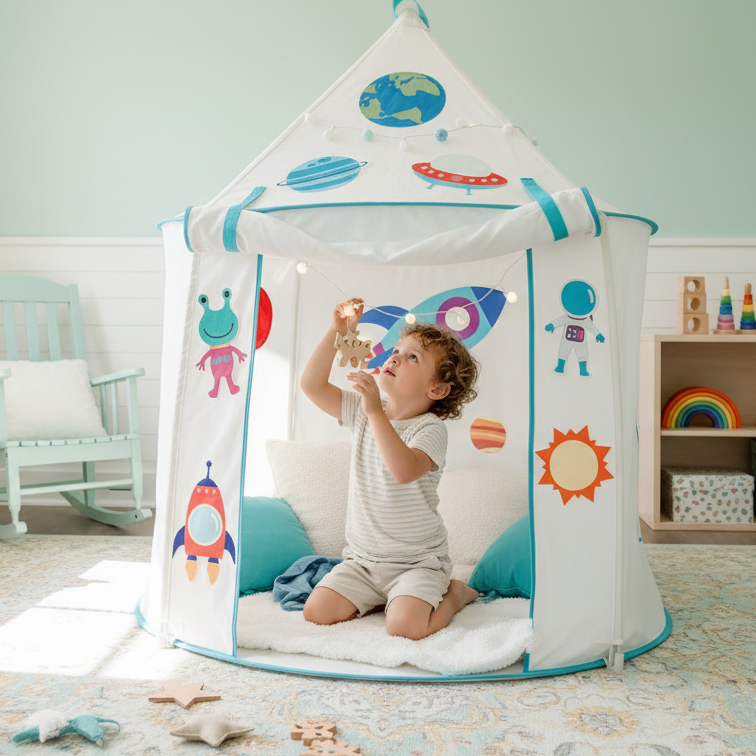
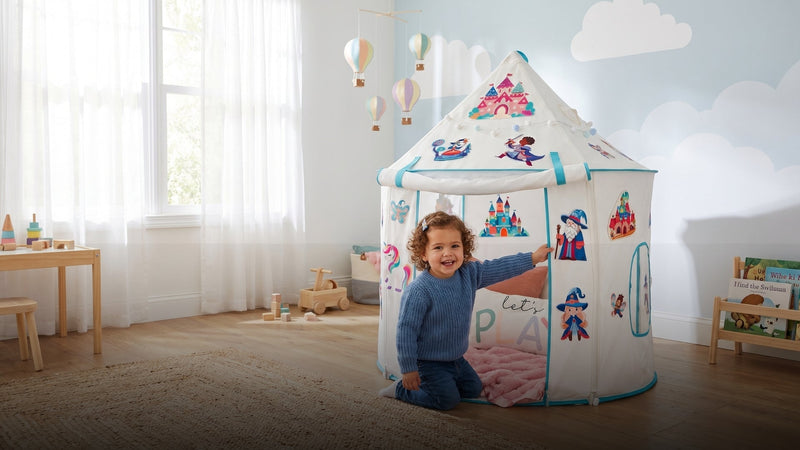
A dedicated play tent creates a space that feels separate from the distractions of daily life. Instead of competing with screens, noise, and visual clutter, children have a cozy retreat where they can focus on storytelling, creativity, and independent play.
The sensory-friendly design helps create a calming atmosphere, while the interchangeable StickeeZ themes keep the experience fresh and engaging.
One day, the space becomes a Magical Kingdom.
The next, it's a Space Voyage adventure.
Then it transforms into a secret hideout for reading, relaxing, or imaginative exploration.
Rather than relying on constant entertainment, children are encouraged to become the creators of their own experiences.
For many parents, the goal isn't simply changing behavior.
It's creating an environment that naturally supports the behaviors they want to see more often.
Conclusion
When it comes to child behavior, environment is often the hidden factor parents overlook.
Children don't develop in isolation.
They respond to the spaces around them every single day.
A calmer, more intentional home environment can support focus, emotional regulation, creativity, and independent play in ways that constant reminders and corrections often cannot.
The encouraging news is that you don't need a complete home makeover to make a difference.
Small changes—less noise, fewer distractions, more dedicated play spaces, and opportunities for imagination—can have a powerful impact over time.
Because sometimes the simplest way to change behavior isn't to change the child.
It's to change the environment around them.
Author Bio
The ZeeZee Play Experts are passionate advocates for child-led play and healthy childhood development. Drawing on years of experience creating sensory-friendly, calming environments for children, they help families design spaces that encourage imagination, independence, and emotional well-being. Their mission is to make meaningful, screen-free play a natural part of everyday childhood.






Comment (0)