

The Rise of the Screen-Free Childhood Movement (And Why Parents Are Embracing It in 2026)
For years, technology has been woven into nearly every aspect of childhood. Tablets have become common travel companions, smartphones are often introduced at increasingly younger ages, and streaming platforms provide an endless supply of entertainment on demand. While digital tools have undoubtedly brought convenience and educational opportunities, many parents are beginning to ask an important question: Has childhood become too dependent on screens?
In 2026, a growing number of families are answering that question with a decisive yes.
Across the world, parents are embracing what has become known as the screen-free childhood movement. This shift is not about rejecting technology entirely or pretending that digital tools have no value. Instead, it represents a conscious effort to restore balance by prioritizing experiences that encourage creativity, independence, social interaction, and real-world exploration.
What began as a niche parenting philosophy has evolved into a broader cultural movement. More families are reevaluating how children spend their free time, questioning the long-term effects of excessive screen exposure, and seeking alternatives that support healthier development.
Why the Screen-Free Childhood Movement Is Growing
The rise of the screen-free childhood movement can largely be traced to a growing awareness of how modern technology shapes behavior.
Children today are exposed to more digital stimulation than any generation before them. Educational apps, video-sharing platforms, online games, social media, and streaming services compete for attention throughout the day. Many of these platforms are intentionally designed to maximize engagement, making it easy for children to spend hours consuming content without realizing how much time has passed.
While technology offers undeniable benefits, parents are increasingly noticing unintended consequences. Many report shorter attention spans, reduced interest in independent play, difficulty transitioning away from devices, and a growing reliance on screens for entertainment.
These observations have encouraged families to rethink their relationship with technology and explore alternatives that place greater emphasis on active participation rather than passive consumption.
The Difference Between Entertainment and Engagement
One of the central ideas behind the screen-free childhood movement is understanding the difference between entertainment and engagement.
Entertainment is often delivered to children. A video plays, a game provides instructions, or an app guides the experience from beginning to end.
Engagement works differently.
Engagement requires children to become active participants. They create stories, solve problems, build structures, invent games, and explore ideas. Rather than consuming experiences, they generate them.
This distinction matters because many developmental benefits emerge through active participation. Creativity, critical thinking, communication skills, and resilience are strengthened when children are challenged to direct their own experiences.
As more parents recognize this difference, they are intentionally creating opportunities for children to spend less time consuming content and more time creating it.

Why Parents Are Reclaiming Unstructured Play
One of the most noticeable trends associated with the screen-free movement is the return of unstructured play.
For decades, childhood has become increasingly scheduled. Organized sports, extracurricular activities, educational programs, and digital entertainment have gradually reduced the amount of free time available for spontaneous exploration.
Yet unstructured play remains one of the most important aspects of healthy development.
When children are free to decide how they spend their time, they develop independence, confidence, and problem-solving abilities. They learn how to entertain themselves, navigate challenges, and pursue their own interests without relying on constant adult guidance.
Many parents have discovered that reducing screen time naturally creates more opportunities for these experiences. Children who initially struggle with boredom often begin inventing games, building imaginary worlds, and engaging in deeper forms of play once they move beyond the initial discomfort of having less digital stimulation.
The Science Behind Screen-Free Activities
Research continues to highlight the benefits of activities that encourage direct interaction with people, environments, and physical objects.
Reading books strengthens language development and comprehension skills.
Outdoor play supports physical health and sensory exploration.
Creative activities encourage imagination and self-expression.
Social interactions help children develop communication skills and emotional intelligence.
Unlike digital experiences, many screen-free activities engage multiple areas of development simultaneously. A child building a fort with friends is communicating, problem-solving, collaborating, and using their imagination all at once.
These experiences create opportunities for learning that cannot always be replicated through a screen.
Why Imaginative Play Is Making a Comeback
As families move toward screen-free lifestyles, imaginative play is experiencing a significant resurgence.
Parents are increasingly recognizing that some of the most meaningful childhood experiences emerge from open-ended environments where children are free to create their own adventures.
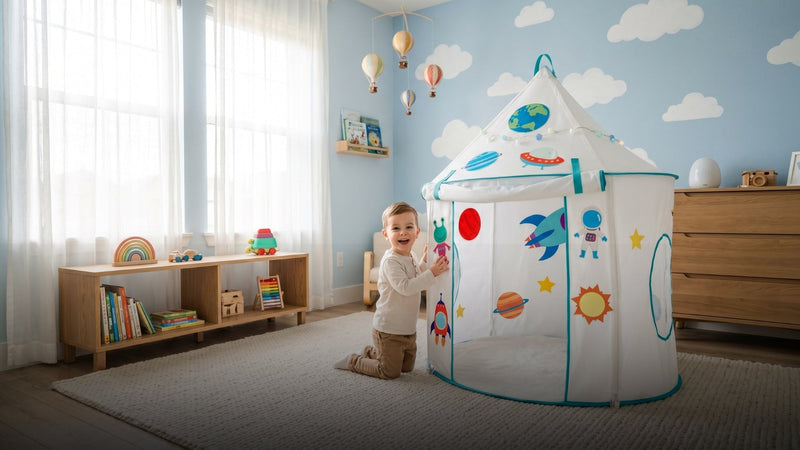
A simple play space can become a castle, a jungle expedition, a pirate ship, or a secret headquarters. The physical environment remains the same, but the possibilities continue evolving because the child's imagination drives the experience.
This renewed focus on imaginative exploration has contributed to the growing popularity of brands like ZeeZee Adventures, which create adventure-inspired environments designed to encourage storytelling, creativity, and independent play. Rather than providing predetermined entertainment, these experiences give children the freedom to become the creators of their own worlds.
The Hidden Benefits of Reducing Screen Time
Many parents initially adopt screen-free habits with the goal of reducing device use. What often surprises them are the additional benefits that emerge over time.
Children frequently become more engaged in family conversations.
Independent play sessions tend to last longer.
Creative thinking becomes more visible.
Outdoor exploration increases.
Reading habits often improve.
Parents also report noticing stronger connections between siblings, particularly when shared play experiences replace individual screen time.
These outcomes suggest that reducing screens is not simply about limiting technology. It is about creating space for other experiences to flourish.
Why Boredom Is No Longer the Enemy
One of the most significant mindset shifts within the screen-free movement involves changing how parents view boredom.
For years, boredom was treated as something that needed to be eliminated immediately. The moment a child complained about having nothing to do, adults often stepped in with solutions.
Today, many parents are taking a different approach.
They recognize that boredom frequently serves as the starting point for creativity.
When children are not provided with instant entertainment, they begin generating ideas of their own. They create games, invent stories, build projects, and explore interests that might otherwise remain undiscovered.
The screen-free movement encourages parents to view boredom not as a problem but as an opportunity for growth.
Creating a Screen-Free Environment at Home
Parents interested in reducing screen dependence often wonder where to begin.
The most successful families rarely focus exclusively on restrictions. Instead, they create environments that naturally encourage alternative forms of engagement.
Books become easily accessible.
Art supplies are readily available.
Outdoor play is encouraged.
Imaginative play spaces are thoughtfully designed.
Family activities become more intentional.
The goal is not to remove technology completely but to ensure that screens are not the default solution for every moment of free time.
Many families find success by creating dedicated areas that encourage exploration and creativity. Adventure-inspired play environments from ZeeZee Adventures have become particularly popular because they help transform ordinary spaces into immersive experiences where children can engage deeply with their imagination.
The Future of Childhood in a Digital World
The screen-free childhood movement is not about returning to the past.
Technology will continue to play an important role in education, communication, and daily life. Most parents recognize that digital literacy is an essential skill for modern children.
The movement is instead focused on balance.
Parents are becoming increasingly aware that children need opportunities to develop skills that technology alone cannot provide. Creativity, resilience, social connection, independent thinking, and imaginative exploration all flourish when children spend time away from screens.
The goal is not to eliminate technology but to ensure that it remains a tool rather than becoming the center of childhood itself.
Why More Families Are Embracing the Movement in 2026
As concerns about screen dependency continue to grow, more parents are realizing that meaningful childhood experiences often happen away from devices.
The appeal of the screen-free movement lies in its simplicity. It encourages families to prioritize connection, creativity, exploration, and play. It reminds parents that children do not always need more entertainment. Often, they need more opportunities to create it themselves.
This philosophy is resonating with families around the world because it aligns with a growing desire to raise confident, curious, and capable children.
Whether through outdoor adventures, independent play, family activities, reading, or imaginative environments such as those offered by ZeeZee Adventures, parents are rediscovering the value of experiences that place creativity and human connection at the center of childhood.
In 2026, the screen-free childhood movement is more than a parenting trend. It is a reflection of a broader belief that while technology has a place in children's lives, some of the most important lessons are still learned through exploration, imagination, and real-world experiences.






Comment (0)