
Why Kids Today Get Bored Faster Than Ever
Many parents have noticed the same pattern emerging in modern childhood.
A child becomes excited about a new toy, activity, or experience. For a short period, the enthusiasm feels intense. They play enthusiastically, talk about it constantly, and appear completely absorbed.
Then, almost suddenly, the interest fades.
The toy is abandoned in a corner. The activity no longer feels exciting. Attention shifts rapidly towards something newer, faster, or more stimulating.
For many families, this cycle repeats endlessly.
It is easy to assume that children today simply have shorter attention spans or naturally become bored more quickly than previous generations. However, child development research suggests a more complex explanation. In many cases, children are not becoming less imaginative or less curious. Instead, they are growing up in environments filled with constant stimulation, rapid entertainment, and immediate rewards that make slower forms of engagement feel less satisfying.
Modern Childhood Is Built Around Constant Stimulation
Modern childhood is shaped by speed.
Children today are surrounded by:
- fast-paced digital entertainment
- interactive apps
- highly stimulating toys
- streaming platforms
- notifications
- endless visual input
- short-form videos
- instant digital rewards
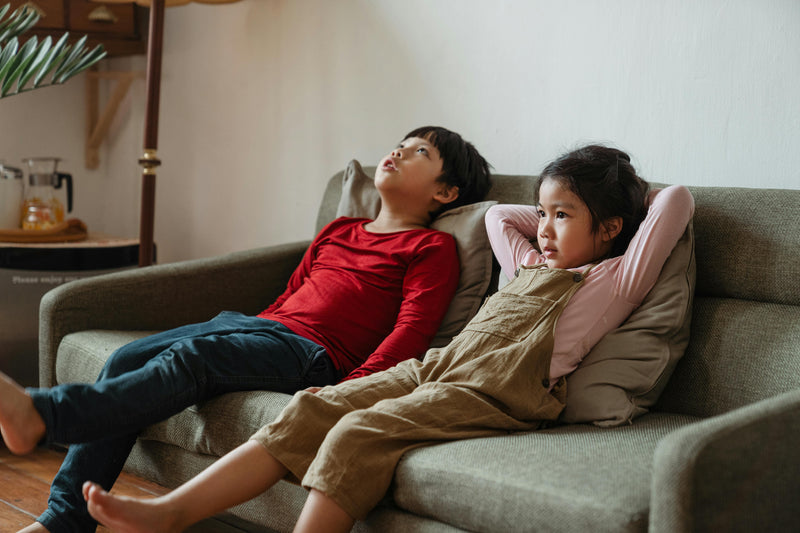
Entertainment is available within seconds, and boredom rarely lasts long enough for imagination to emerge naturally.
While these experiences may appear harmless individually, together they gradually condition the brain to expect continuous novelty and stimulation. As a result, many children now struggle to remain deeply engaged in slower activities such as reading, imaginative play, drawing, storytelling, or independent exploration.
Why Boredom Is Actually Important for Development
One of the most significant changes in modern childhood is the disappearance of boredom.
Previous generations typically experienced far more:
- quietness
- unstructured afternoons
- independent outdoor play
- unscheduled exploration
- creative downtime
Children often had to create their own entertainment because there were fewer ready-made distractions available. They built forts from blankets, invented games outdoors, created imaginary worlds, and spent hours exploring ideas independently.
Today, entertainment arrives immediately. If a child experiences boredom for even a brief moment, a screen, app, video, or stimulating toy can instantly fill the silence.
However, boredom plays an essential developmental role.
When children are not externally entertained, the brain begins searching internally for engagement. This process is often where creativity begins. A child who initially complains about having “nothing to do” may eventually:
- start drawing
- build imaginative worlds
- role-play characters
- invent games
- create stories
- explore independently
Many of the richest forms of imaginative play begin only after boredom.
Without opportunities to experience boredom fully, children may struggle to develop the ability to generate ideas independently. Instead of creating stimulation internally through imagination, they begin relying on external entertainment to remain occupied.
Why Modern Toys Often Lose Their Appeal Quickly
Another important factor is the way many modern toys are designed.
Contemporary toys often prioritise:
- instant excitement
- flashing lights
- sounds and music
- automatic movement
- rapid sensory feedback
- structured play experiences
These features attract attention quickly because they stimulate the brain instantly.
The problem is that highly stimulating toys often leave very little room for imagination.
Once children discover everything the toy can do, the novelty fades because the experience becomes predictable. The child becomes a passive observer rather than an active creator within the play experience.
Open-ended play works very differently.
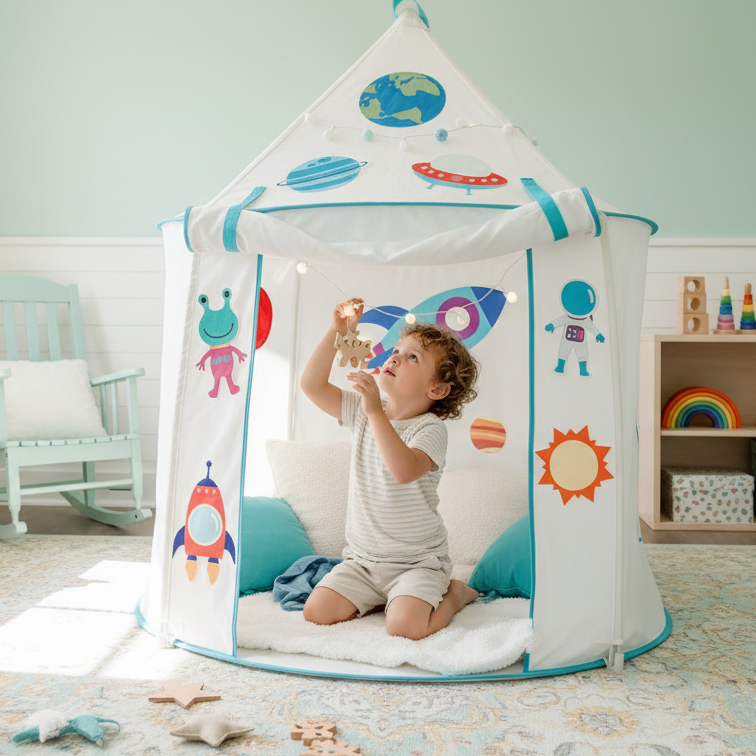
Simple, imaginative environments allow children to shape the experience repeatedly through creativity and storytelling. A blanket fort can become:
- a castle
- a spaceship
- a pirate cave
- a reading retreat
- a secret hideaway
The physical environment remains unchanged, but the child’s imagination transforms the experience continuously.
This is one reason children often remain engaged for longer periods with surprisingly simple objects and environments than with highly sophisticated electronic toys.
The Brain Is Becoming Conditioned for Instant Rewards
Modern childhood increasingly revolves around instant gratification.
Videos change rapidly, digital platforms deliver constant novelty, and games reward children continuously with stimulation and feedback. Over time, the brain becomes accustomed to:
- quick rewards
- rapid entertainment
- constant transitions
- immediate stimulation
- fast emotional responses
Unfortunately, many valuable developmental experiences operate at a much slower pace.
Activities such as:
- reading
- drawing
- imaginative storytelling
- creative building
- role-play
- independent play
require patience before immersion develops.
Creativity often emerges gradually. Deep imaginative play takes time to unfold. Concentration strengthens slowly through sustained attention.
Children who become accustomed to immediate stimulation may initially perceive slower activities as “boring” simply because their brains expect faster rewards.
This does not mean children are incapable of focus. It means many children rarely receive opportunities to practise slower, deeper forms of engagement.
Why Children Jump Rapidly Between Activities
One particularly noticeable consequence of overstimulation is fragmented attention.
Many children now move rapidly between:
- videos
- games
- toys
- apps
- digital platforms
- activities
without settling deeply into any of them.
As soon as stimulation decreases slightly, children often begin searching for something new.
This pattern can weaken:
- sustained concentration
- frustration tolerance
- patience
- independent problem-solving
- imaginative depth
- emotional regulation
In many cases, children are not actually bored because the activity lacks value. They are bored because their nervous systems have become accustomed to constant novelty.
The Difference Between Entertainment and Engagement
There is an important distinction between entertainment and engagement.
Entertainment captures attention quickly.
Engagement holds attention deeply.
Highly stimulating experiences often entertain children effectively for short periods, but they do not always encourage:
- concentration
- creativity
- storytelling
- imagination
- resilience
- independent thinking
Deep engagement usually requires active participation from the child. It encourages them to create stories, solve problems, invent ideas, and shape the experience independently.
This is why children frequently become deeply absorbed in surprisingly ordinary activities. A cardboard box, a fort made from cushions, or a quiet, imaginative corner may hold attention longer than expensive digital toys because the child’s imagination becomes responsible for creating the experience.
Why Independent Play Is Becoming Rare
Independent play is becoming increasingly uncommon in modern childhood.
Many children now move constantly between:
- structured activities
- supervised schedules
- organised sports
- tutoring
- digital entertainment
- planned routines
While structured activities provide many important benefits, children also need opportunities to:
- explore independently
- tolerate boredom
- generate ideas
- experiment creatively
- solve problems alone
- engage without external rewards
Independent play teaches children how to create engagement from within themselves rather than relying constantly on stimulation from outside sources.
Calm Spaces Support Deeper Play
Interestingly, children often play more deeply in quieter, less stimulating environments.
Overcrowded playrooms filled with excessive toys, noise, and distractions can overwhelm attention and reduce concentration. By contrast, calmer environments help children:
- Focus for longer periods
- feel emotionally regulated
- engage more creatively
- settle into storytelling naturally
- sustain imaginative play
This is why cosy reading corners, forts, imaginative hideaways, and flexible play spaces often become children’s favourite environments.
These spaces reduce distractions and encourage children to immerse themselves fully in creativity and storytelling.
Flexible, imaginative environments such as ZeeZee Adventures support this kind of deeper engagement naturally because they leave room for children to direct the experience themselves. Rather than overwhelming children with fixed narratives or excessive stimulation, the environment simply provides a calm foundation where imagination can develop freely.
One day, the space may become a pirate ship. The next day it transforms into a quiet reading retreat or a magical storytelling cave. The experience evolves because the child remains at the centre of the creativity.
Children Often Need Less Stimulation, Not More
Modern parenting culture sometimes creates pressure to keep children constantly occupied.
Parents are often encouraged to provide:
- educational entertainment
- enrichment activities
- digital learning tools
- structured stimulation
- continuous engagement
As a result, many adults feel responsible for preventing boredom entirely.
Yet children do not necessarily need constant stimulation in order to thrive.
In many cases, they need the opposite.
They need:
- slower experiences
- calmer environments
- fewer distractions
- opportunities for boredom
- imaginative freedom
- time for independent exploration
- quiet creative spaces
Some of the most important developmental experiences happen quietly through imagination, curiosity, and self-directed play.
A Different Way to Think About Childhood Boredom
Perhaps the real issue is not that children today become bored more quickly.
Perhaps the issue is that modern childhood rarely allows children enough time to move beyond boredom into deeper creativity and imagination.
When every quiet moment is instantly filled with stimulation, children lose opportunities to develop:
- patience
- concentration
- resilience
- creativity
- independent thinking
- emotional balance
Children do not always need more entertainment.
Sometimes they simply need more space.
Space to think slowly.
Space to imagine freely.
Space to create independently.
Space to explore without interruption.
Space to become deeply absorbed in their own ideas.
Because the experiences children remember most are rarely the loudest or fastest ones.
They are often the quieter moments where imagination has enough room to grow.
- Baby Registry
- Baby Shower
- Best gifts
- best play tent
- Best toys
- birthday gift ideas for 3 year old
- birthday gift ideas for 4 year old
- birthday gift ideas for 5 year old
- birthday gift ideas for 6 year old
- birthday gift ideas for 7 year old
- Blog
- calming toys
- child development
- children
- christmas gift ideas
- customizable play tent
- gift for kids ages 3–8
- Holidaygiftguide
- jeanpiaget
- kids play tent
- Montesoori
- montessori
- Montessori Gifts
- Montessori play
- open-endedplay
- openendedplay
- parenting
- parents
- play tent
- Play Tents
- playroom inspo
- pretend play
- sahm
- Sensory Play
- sensory play gifts
- teepee play tent
- toddler toys
- tonies
- toyclutter
- toys
- ZeeZee
- ZeeZee Adventure
- ZeeZee Adventure Tent
- ZeeZee Adventures




Comment (0)