
Why Parents Are Choosing Play-Based, “Analog” Childhoods and What It Means for Kids Today
In 2026, parenting conversations feel different.
They’re no longer centered only on sleep schedules or discipline strategies. Something deeper is shifting. Across communities, families are quietly rethinking what childhood should look like in a world saturated with screens, notifications, and constant stimulation.
More parents are stepping back — not from technology entirely — but from the idea that it should fill every quiet moment.
Instead, they’re leaning into something slower. More intentional. More human.
They’re choosing play.
The Rise of the “Analog Childhood”
You may have heard the phrase: analog childhood.
It doesn’t mean anti-technology. It doesn’t mean banning devices or pretending the digital world doesn’t exist. It simply reflects a growing desire to use technology thoughtfully — instead of letting it dominate daily life.
For many families, this shift looks like making more room for:
-
Face-to-face interaction
-
Open-ended, creative play
-
Physical exploration
-
Imaginative storytelling
-
Hands-on, curiosity-led learning
After years of digital overload, parents are asking an important question:
What does my child truly need to grow well — emotionally, socially, cognitively?
And increasingly, the answer points back to real-world play.
Analog childhood isn’t about going backward. It’s about protecting what builds children forward.
Play Is Not a Break From Learning — It Is Learning
For a long time, play was treated like downtime. Something children did in between “real” learning.
But developmental science tells a different story.
Play is one of the most powerful ways children learn.
When children build a fort, invent a game, negotiate rules, or solve a pretend problem, they are strengthening:
-
Language and communication
-
Social understanding
-
Cognitive flexibility
-
Emotional regulation
-
Creative problem-solving
-
Persistence
Through play, children experiment. They test ideas. They make mistakes in low-stakes environments. They practice resilience without even realizing it.
A cardboard box becomes a spaceship. A disagreement becomes a lesson in compromise. A tower falling becomes an opportunity to try again.
Play isn’t optional enrichment. It is foundational development.
The Conversation Around Screens Has Matured
The shift toward play-based childhood isn’t driven by fear — it’s driven by nuance.
Parents today understand that screen time isn’t just about minutes on a clock. It’s about patterns. It’s about quality. It’s about what screens replace.
Research suggests that excessive passive screen use — especially when it displaces physical play and social interaction — can affect attention, emotional regulation, and behavior.
So in 2026, many families are choosing balance:
-
Limiting passive, background screen use
-
Encouraging intentional and social digital experiences
-
Prioritizing real-world problem-solving
-
Reinforcing skills through hands-on play
Technology remains part of life. But it’s no longer the center of it.
Play Supports Mental Health — Not Just Development
There’s another reason this shift matters.
Children’s mental health is now part of mainstream parenting conversations — and with good reason. Anxiety, emotional dysregulation, and attention challenges are showing up earlier and more frequently.
What helps?
Regular, engaged play.
Play supports emotional processing. It reduces stress. It builds coping skills. It strengthens resilience.
When children play — especially alongside caregivers — they experience connection, competence, and a sense of safety.
In a fast-moving world, play slows things down in the healthiest way possible.
Gen Alpha Is Emotionally Aware — But Still Needs Practice
Today’s children are growing up with greater emotional awareness than many previous generations. Schools talk about feelings. Parents model emotional language. Conversations around mental health are more open than ever.
But awareness alone isn’t enough.
Children still need practice developing:
-
Patience
-
Frustration tolerance
-
Empathy
-
Focus
-
Self-control
And play provides the training ground.
Unlike digital environments that offer instant rewards and rapid stimulation, play-based experiences require negotiation, collaboration, waiting, problem-solving, and reflection.
That’s where emotional growth truly deepens.
What Analog, Play-Based Parenting Looks Like
This shift shows up in everyday choices.
It might look like:
Intentional Play Spaces
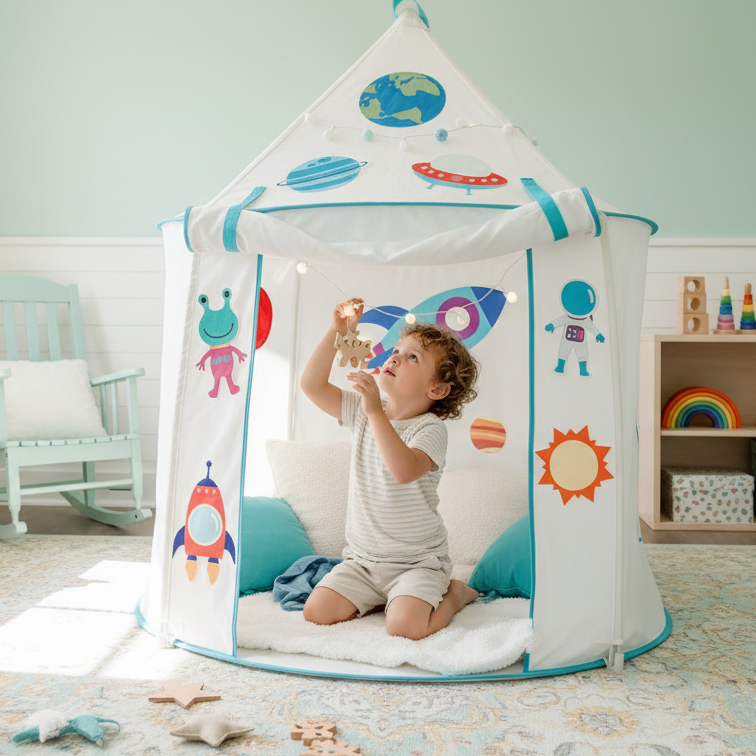
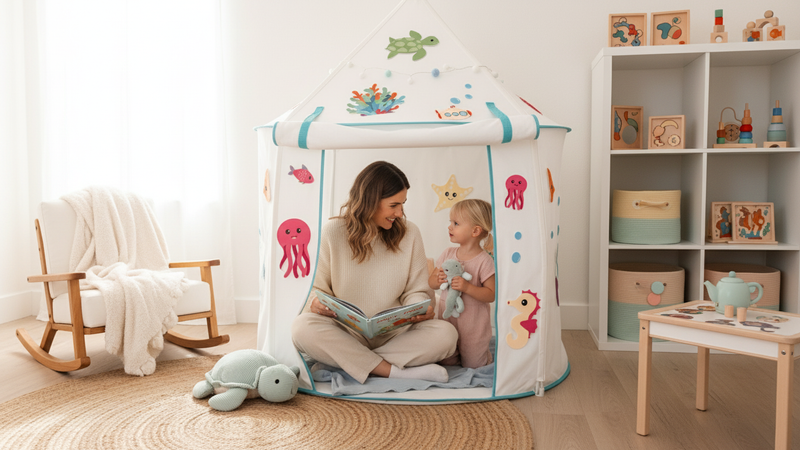
A reading nook. A calm corner. A simple blanket fort. Spaces designed for imagination rather than distraction.
Real-World Exploration
Nature walks. Water play. Crafting. Building. Experiences that engage the senses and encourage curiosity.
Unstructured Social Time
Playgrounds. Cooperative games. Storytelling. Opportunities for children to navigate friendships independently.
Balanced Technology Use
Screens used intentionally — not as background noise.
Curiosity-Led Learning
Allowing children to experiment, explore, and problem-solve rather than over-scheduling every moment.
None of it requires perfection. It requires intention.
Why This Cultural Shift Matters
Play-based childhoods are not a passing trend.
They align with:
-
Developmental research
-
Mental health awareness
-
Concerns about overstimulation
-
A desire to raise capable, adaptable humans
Parents are recognizing that the skills children need most — creativity, resilience, empathy, flexibility — are not built through fast content or passive consumption.
They’re built through experience.
Through exploration.
Through connection.
Through play.
A Thought to End On
In a world that moves quickly and rewards constant engagement, many families are choosing to slow down.
They are choosing a deeper connection over distraction.
Meaning over noise.
Presence over performance.
They aren’t rejecting the modern world. They are simply shaping it differently — in a way that protects imagination, supports emotional growth, and honors the depth of childhood.
And perhaps that quiet recalibration is one of the most meaningful parenting shifts of our time.






Comment (0)