
Why Simple Toys Lead to More Creative Kids
There is a quiet but important contradiction in the way modern toys are designed and the way children actually learn to play, because while many toys are built to offer more features, more interaction, and more stimulation, the developmental needs of a child often move in the opposite direction, favouring simplicity, flexibility, and space for imagination to unfold.
In early childhood, creativity does not emerge from instruction or complexity, but from the ability to explore possibilities, reinterpret objects, and construct meaning independently, and this process relies heavily on the degree of freedom a child has within their environment and the tools they are given to interact with it.
When toys are highly structured, they tend to guide the experience from the outset, offering predefined responses, fixed narratives, and predictable outcomes, and although this can create an initial sense of excitement, it gradually limits the child’s role within the activity, shifting them from an active creator of play to a passive participant in something that has already been designed.
As a result, once the toy’s built-in functions have been explored, the experience often reaches a natural endpoint, leaving little room for further discovery, which explains why many children lose interest quickly despite the toy’s complexity.
Simple toys, by contrast, operate without imposing a fixed purpose, and it is precisely this lack of definition that makes them so powerful from a developmental perspective, because it requires the child to supply the meaning, the narrative, and the direction of the play experience.
A single object can take on multiple roles depending on the child’s imagination, and because there is no predetermined outcome, the play remains open-ended and continuously evolving, allowing creativity to deepen over time rather than diminish.
This kind of interaction encourages cognitive flexibility, as children must constantly adapt their ideas, test different possibilities, and build connections between concepts, all of which contribute to the development of problem-solving skills and independent thinking.
Attention also behaves differently in the presence of simple toys, because when stimulation is not externally driven through lights, sounds, or automated responses, the responsibility for sustaining engagement shifts to the child, and this often results in longer, more focused periods of play.
Unlike fast, reactive engagement, which is common with highly stimulating toys, this slower form of attention allows children to immerse themselves in the activity, explore ideas in greater depth, and build persistence over time.
The emotional dimension of play is equally significant, as open-ended experiences provide children with the opportunity to express thoughts and feelings through self-created narratives, enabling them to process experiences and experiment with different perspectives in a way that feels safe and controlled.
When play is overly structured, this opportunity is reduced, as the focus remains on interacting with the toy rather than engaging with one’s own internal world.
The environment in which play occurs further shapes these outcomes, because even the simplest toys can feel overwhelming if they are placed within a space that is cluttered or filled with competing stimuli, whereas calm, organised environments support deeper engagement and allow children to focus more effectively on creative exploration.
This is why modern approaches to child development increasingly emphasise the importance of designing environments that support open-ended interaction, where the combination of simple materials and thoughtful spatial design creates a foundation for imagination to grow.
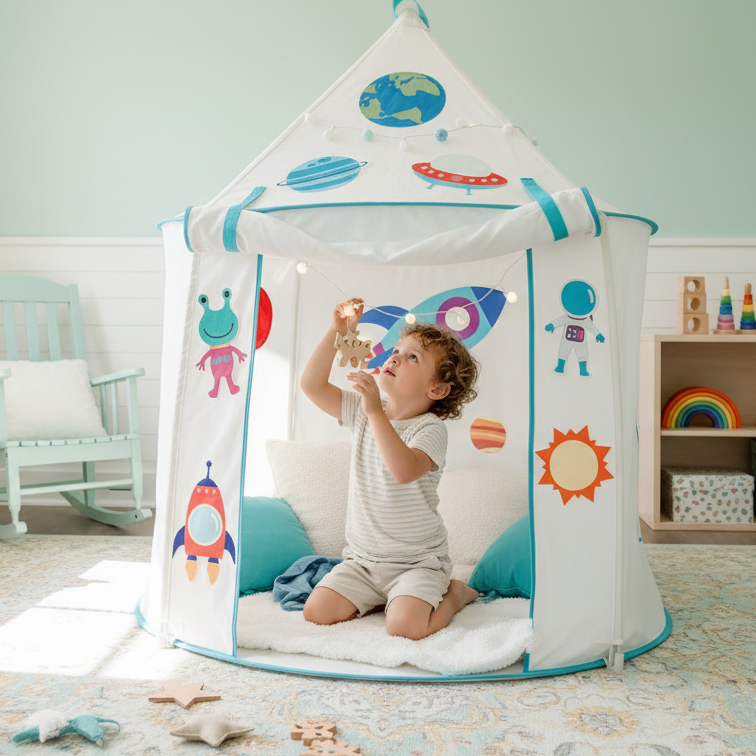
For instance, concepts explored in platforms such as ZeeZee Adventures reflect a broader shift towards adaptable play environments that do not dictate how children should play, but instead provide a flexible structure within which creativity can evolve naturally, highlighting the idea that it is not the complexity of the toy that matters most, but the possibilities it allows.
This perspective challenges the common assumption that more advanced toys lead to better developmental outcomes, suggesting instead that simplicity often provides greater depth by encouraging children to engage actively rather than passively.
When fewer toys are available, and when those toys are open-ended in nature, children tend to invest more time and attention in their play, discovering new ways to use the same objects and extending the lifespan of the experience.
Ultimately, creativity is not something that can be delivered through features or built into a product, because it is a process that emerges from interaction, exploration, and imagination, all of which require space rather than instruction.
Simple toys create that space, allowing children to think more freely, explore more deeply, and engage more meaningfully with the world around them, and in doing so, they support not only creative development but also the broader cognitive and emotional skills that shape how children learn and grow over time.
Frequently Asked Questions
Are simple toys really enough for a child’s development?
Yes, simple toys are not only sufficient but often more effective for supporting a child’s development, because they encourage exploration, imagination, and independent thinking rather than guiding the child towards a fixed outcome, which allows learning to happen more naturally and across multiple areas such as creativity, problem-solving, and emotional expression.
Why do children seem to get bored with complex toys faster?
Children often lose interest in complex toys more quickly because those toys tend to offer a limited set of predefined interactions, and once the child has explored all of those possibilities, there is little left to discover, whereas simpler toys continue to evolve through the child’s imagination, making them feel new and engaging over a longer period of time.
How do simple toys actually improve creativity?
Simple toys improve creativity by leaving space for the child to decide how the toy should be used, which encourages them to create their own stories, experiment with ideas, and think beyond what is immediately visible, all of which are essential processes in developing creative thinking.
How many toys should a child ideally have?
There is no exact number that applies to every child, but research and observation suggest that having fewer toys available at one time often leads to deeper and more focused play, as children are less overwhelmed by choice and more likely to explore each toy in a meaningful and imaginative way.
Are electronic or interactive toys harmful?
Electronic or interactive toys are not inherently harmful, but they can limit opportunities for creativity if they dominate the play environment, as they tend to guide interaction through fixed responses, so it is generally more beneficial to use them in moderation while ensuring that children also have access to open-ended play experiences.
Can simple toys support learning as effectively as educational toys?
Simple toys can support learning very effectively because they encourage a wide range of developmental skills at once, including problem-solving, language development, and cognitive flexibility, rather than focusing on a single predefined skill, which often makes the learning experience more holistic and adaptable.
What types of toys are considered open-ended?
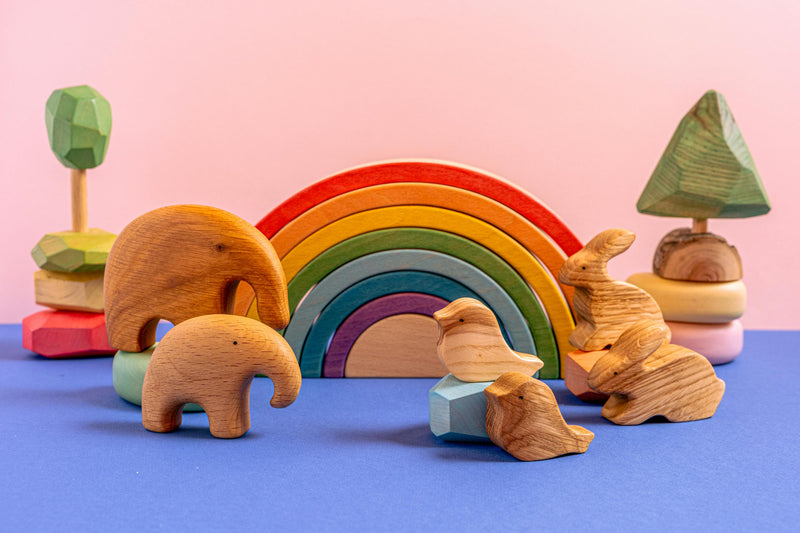
Open-ended toys are those that can be used in multiple ways without a fixed purpose, such as building blocks, art materials, pretend play objects, or flexible play structures, as these allow children to create their own meanings and adapt the play experience based on their imagination.
How can parents encourage children to play more with simple toys?
Parents can encourage children to engage more with simple toys by creating a calm and uncluttered play environment, reducing overstimulation, and allowing time for unstructured play, as children often need space and freedom to rediscover slower, more imaginative ways of interacting.
Do simple toys help with attention and focus?
Yes, simple toys often help improve attention and focus because they require children to actively sustain the play experience rather than relying on constant external stimulation, which encourages longer periods of engagement and deeper concentration over time.
How can you tell if a toy is supporting creativity?
A toy is likely supporting creativity if the child uses it in different ways over time, creates new stories or scenarios around it, and remains engaged with it beyond its initial novelty, as these are clear signs that the child is actively shaping the play experience rather than simply following it.




Comment (0)