
Why Slower Play Leads to Smarter Thinking
A Shift Away from Speed-Driven Childhood
In contemporary childhood environments, speed has quietly become the default. Toys respond instantly, digital experiences deliver immediate feedback, and even physical play is often structured around quick transitions from one activity to another. This pattern reflects a broader cultural preference for efficiency, where rapid engagement is often equated with productivity.
Within this framework, slower play can appear unremarkable. It does not deliver instant outcomes, nor does it produce obvious signs of progress. A child engaged in slower play may repeat actions, pause frequently, or remain focused on a single activity for extended periods. From an external perspective, this can be mistaken for inactivity or lack of stimulation.
However, beneath this surface lies a very different process. Slower play provides the conditions necessary for deeper thinking. It allows children to move beyond immediate reactions and engage in more reflective, sustained cognitive activity. The value of this approach is not always visible in the moment, but its impact becomes evident over time.
The Role of Time in Cognitive Development
Thinking is not a rapid process when it involves depth. While simple responses can occur quickly, more complex forms of thinking require time. They depend on the ability to remain with an idea, examine it from multiple angles, and gradually refine understanding.
Slower play supports this process by extending the duration of engagement. Instead of moving quickly from one stimulus to another, the child remains within a single activity long enough for thinking to evolve. Initial curiosity leads to exploration, which then develops into experimentation and refinement.
In contrast, fast-paced environments often interrupt this progression. Each new stimulus demands attention, pulling the child away from their current focus. The result is a pattern of interaction that is broad but shallow, with limited opportunity for deeper cognitive processing.
By slowing the pace, play becomes less about reacting and more about reflecting. The child is given the time needed to think, not just respond.
Sustained Attention and Its Cognitive Benefits
One of the most significant advantages of slower play is its impact on sustained attention. The ability to focus on a single activity over an extended period is fundamental to learning, yet it is increasingly challenged by environments that encourage constant change.
Sustained attention allows children to move beyond initial engagement and into deeper exploration. They begin to notice subtleties, identify patterns, and make connections that are not immediately apparent. This process is gradual and requires continuity.
Slower play creates the conditions for this continuity. Without frequent interruptions, attention stabilises. The child remains engaged long enough for thinking to deepen and become more structured.
When attention is fragmented, thinking becomes fragmented as well. When attention is sustained, thinking gains clarity, coherence, and depth.
Exploration Without Immediate Outcomes
Modern play often emphasises results. Toys are designed with specific functions, clear goals, and defined endpoints. While this structure can be beneficial in certain contexts, it also shifts the focus towards completion.
Slower play offers a different approach. It removes the pressure to achieve a specific outcome and instead emphasises the process of exploration. The child is free to engage without the expectation of finishing.
This shift encourages curiosity. The child becomes more willing to test ideas, experiment with different approaches, and consider alternative possibilities. Thinking becomes more flexible and less constrained by predetermined outcomes.
Over time, this flexibility contributes to stronger problem-solving abilities. The child learns not just to find answers, but to explore the space around them.
The Importance of Repetition in Learning
Repetition is often misunderstood in childhood play. It can appear monotonous or unproductive, leading adults to introduce new activities prematurely. However, repetition plays a crucial role in cognitive development.
Through repeated engagement, children refine their understanding. Each repetition provides an opportunity to adjust, test variations, and deepen knowledge. This process supports the development of mastery.
Slower play allows repetition to occur naturally. The child returns to the same activity not out of habit, but out of curiosity. They are exploring its possibilities in greater detail.
In faster environments, repetition is often interrupted. New stimuli replace the current activity before it can be fully explored. This limits the depth of learning.
Recognising the value of repetition requires patience and an understanding that progress is often gradual rather than immediate.
Imagination and the Expansion of Thought
Slower play creates space for imagination to flourish. Without constant external input, children are required to generate their own ideas. This process engages multiple cognitive systems simultaneously.
Through imaginative play, children construct scenarios, assign meaning to objects, and explore different possibilities. They experiment with ideas in a flexible and open-ended way, which supports cognitive growth.
This flexibility is essential for developing creative and adaptive thinking. It allows children to move beyond fixed patterns and explore new perspectives.
In environments that prioritise speed and stimulation, this process can be limited. When ideas are constantly provided, there is less opportunity for children to create their own. Slower play restores this balance, encouraging internal idea generation.
Emotional Regulation and Thinking Clarity
The pace of play has a direct impact on emotional experience. Fast-paced environments can create overstimulation, making it difficult for children to regulate their emotions effectively.
Slower play tends to have a calming effect. It reduces sensory input, allowing the child to settle into a more balanced state. This emotional stability supports clearer thinking.
When children feel calm, their cognitive processes function more effectively. They are better able to concentrate, process information, and engage in deeper exploration.
This connection between emotional regulation and cognitive clarity highlights the broader value of slower play. It supports not only thinking itself but also the conditions that make effective thinking possible.
The Role of Environment in Supporting Slow Play
The design of the play environment plays a significant role in shaping the pace of engagement. Environments that are highly stimulating or cluttered tend to encourage rapid interaction.
In contrast, calmer and more flexible environments support slower play. These spaces allow children to engage at their own pace, without the pressure of constant change.
Flexibility is particularly important. Environments that can be adapted to different forms of play allow children to revisit and reinterpret their surroundings over time. This reduces the need for constant novelty and supports sustained engagement.
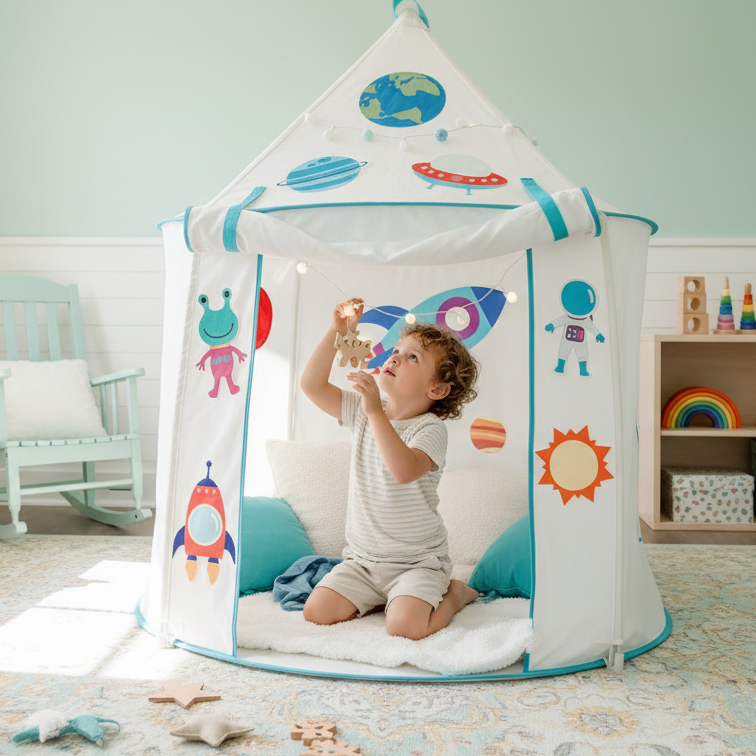
Adaptable play environments, including modular formats similar to ZeeZee Adventures, reflect this principle. By offering a structure that can evolve rather than a fixed function, they encourage children to engage more thoughtfully and extend their play.
Rethinking How We Measure Learning
The benefits of slower play are not always immediately visible. They do not produce quick results or easily measurable outcomes. Instead, they contribute to deeper and more lasting forms of learning.
This requires a shift in perspective. Rather than focusing on speed or completion, it becomes important to consider the quality of engagement. Depth, persistence, and flexibility are indicators of meaningful learning.
When children are given time to engage deeply, their thinking becomes more sophisticated. They develop the ability to analyse, reflect, and adapt—skills that are essential across all areas of learning.
A New Perspective on Play
Slower play challenges the assumption that speed is always beneficial. It demonstrates that meaningful learning often requires time, patience, and continuity.
This does not mean eliminating fast-paced play entirely. Rather, it involves creating a balance. Slower play provides something that faster forms cannot: the opportunity for sustained attention, deeper exploration, and more thoughtful engagement.
When children are given the time and space to engage at their own pace, their thinking evolves in ways that are both subtle and profound.
Frequently Asked Questions
Why does slower play improve thinking?
Slower play allows children to remain focused on an activity for longer, enabling deeper exploration and more complex thinking.
Does slow play mean less learning?
No. In many cases, it leads to more meaningful learning because children engage more deeply with the activity.
How can I encourage slower play at home?
By reducing distractions, allowing uninterrupted time, and providing open-ended materials that support exploration.
Is repetition during play normal?
Yes. Repetition helps children refine their understanding and build confidence.
What type of environment supports slower play?
Calm, flexible environments—such as adaptable play setups like ZeeZee Adventures—support sustained and thoughtful engagement.






Comment (0)