
Creating a “Yes Space” for Toddlers: What It Is and Why It Works
A Different Approach to Early Childhood Environments
In many homes, the early years of childhood are characterised by a constant negotiation between curiosity and control. Toddlers move through spaces designed primarily for adults, encountering objects, furniture, and boundaries that require continuous supervision. The result is a familiar rhythm: exploration followed by interruption, curiosity followed by correction.
Parents and caregivers often find themselves repeating the same words throughout the day—“no”, “don’t”, “not there”, “be careful”. While these responses are usually necessary for safety, they can gradually shape a child’s experience of their environment as one filled with restrictions rather than possibilities.
Over time, this dynamic can create a subtle tension. Children remain driven to explore, yet their exploration is frequently limited. Adults, meanwhile, are placed in the position of constant monitoring and redirection. It is within this context that the concept of a “Yes Space” has emerged as a compelling alternative.
A “Yes Space” is not simply a physical arrangement. It represents a shift in how we think about children’s environments, behaviour, and development. Rather than asking how to control a child’s actions, it asks how to design a space where those actions can unfold safely and constructively.
Defining the “Yes Space” Concept
At its core, a “Yes Space” is an environment intentionally prepared so that almost everything within it is safe, accessible, and permitted for a child to engage with independently. Instead of relying on constant verbal correction, the space itself becomes the primary guide.
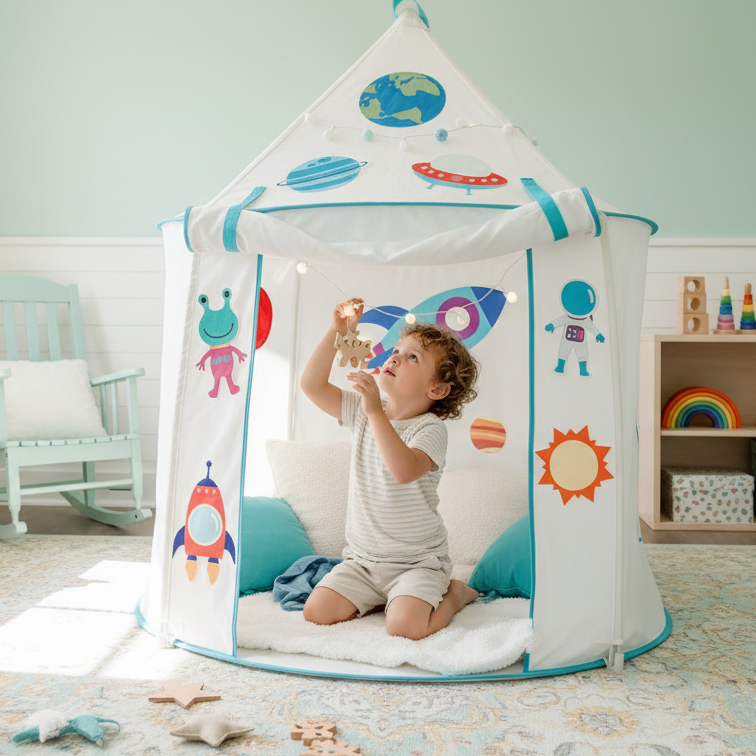
Within such an environment, a toddler can move freely, touch objects without restriction, and explore at their own pace. The adult’s role shifts from active controller to thoughtful observer.
This approach is rooted in a fundamental principle of early childhood development: children learn most effectively through direct interaction with their surroundings. When the environment is aligned with their developmental stage, fewer external interventions are required.
A well-designed “Yes Space” often includes several key characteristics. It tends to prioritise safety without being overly restrictive, offering materials and objects that are appropriate for the child’s age and abilities. It avoids unnecessary complexity, instead favouring clarity and accessibility. Most importantly, it supports autonomy by allowing the child to make choices within a secure framework.
Why Toddlers Are Driven to Explore
To understand why a “Yes Space” is effective, it is essential to consider the developmental needs of toddlers. During the early years, children are not passive recipients of information. They are active investigators, constantly testing, manipulating, and experimenting with their environment.
This behaviour is often misunderstood as impulsive or disruptive. In reality, it reflects a critical phase of cognitive and physical development. Toddlers are developing motor coordination, spatial awareness, and problem-solving abilities. Each action—whether stacking, climbing, or opening—serves as a form of experimentation.
Research in early childhood development consistently highlights the importance of uninterrupted exploration. When children are able to repeat actions, observe outcomes, and adjust their behaviour accordingly, they strengthen neural pathways associated with learning and memory.
However, in environments that are not designed for them, this process is frequently interrupted. A child reaches for an object and is stopped. They attempt to climb and are redirected. Over time, these interruptions can fragment the learning process.
A “Yes Space” addresses this challenge by removing many of the barriers to exploration, allowing children to engage in sustained, meaningful activity.
The Impact of Frequent Restriction
While setting boundaries is an essential part of parenting, excessive restriction can have unintended consequences. When toddlers hear “no” repeatedly, they may become increasingly frustrated or resistant. This is not necessarily a sign of defiance; rather, it reflects a mismatch between their developmental drive and the limitations of their environment.
Frequent interruption can also affect attention span. Each time a child’s activity is halted, their focus is disrupted. Over time, this can lead to shorter periods of engagement and a tendency to move quickly from one activity to another.
In contrast, environments that allow for uninterrupted exploration tend to support longer periods of concentration. Children become more absorbed in their activities, demonstrating persistence and curiosity.
The “Yes Space” model does not eliminate boundaries entirely. Instead, it relocates them from constant verbal enforcement to thoughtful environmental design. By doing so, it reduces the need for repeated correction while still maintaining safety.
The Role of Environment in Shaping Behaviour
One of the most significant insights from developmental psychology is that behaviour is deeply influenced by environment. Rather than viewing behaviour as something that must be managed directly, it can often be guided indirectly through spatial design.
In a traditional setting, an adult might need to intervene frequently to prevent unsafe or inappropriate actions. In a “Yes Space”, many of these potential issues are addressed in advance.
For example, objects that could pose a risk are removed or replaced with safer alternatives. Furniture is arranged to minimise hazards. Materials are selected with care, ensuring they are both engaging and appropriate.
This approach reduces the cognitive load on both the child and the adult. The child is not required to constantly interpret verbal instructions, and the adult is not required to maintain continuous vigilance.
Instead, the environment itself becomes a silent partner in guiding behaviour.
Simplicity and Focus in Early Play
Another defining feature of effective “Yes Spaces” is simplicity. While it may be tempting to provide a wide range of toys and materials, research suggests that excessive choice can overwhelm young children.
When too many options are available, attention becomes fragmented. Children may move rapidly from one object to another without engaging deeply with any of them.
In contrast, a more curated environment encourages sustained interaction. With fewer distractions, children are more likely to explore objects in greater depth, discovering new possibilities and refining their skills.
This does not mean that a “Yes Space” should be empty or minimalistic to the point of austerity. Rather, it should be intentional. Each element within the space should serve a purpose, contributing to the overall experience of exploration and learning.
Emotional and Psychological Benefits
The benefits of a “Yes Space” extend beyond physical safety and cognitive development. These environments also play a significant role in supporting emotional well-being.
When children are able to move freely and make choices independently, they often develop a stronger sense of confidence. They begin to trust their own abilities and judgement.
At the same time, the reduction in constant correction can lead to a calmer atmosphere. Children are less likely to experience frustration, and interactions with caregivers become more positive.
This shift can have a lasting impact. Early experiences of autonomy and trust contribute to the development of self-regulation and resilience.
Practical Considerations for Creating a “Yes Space”
While the concept may seem idealised, creating a “Yes Space” does not require extensive resources or large amounts of space. It can be implemented in a variety of settings, from small flats to larger homes.
The process begins with observation. Caregivers can consider how a child currently interacts with their environment, identifying common points of friction or restriction.
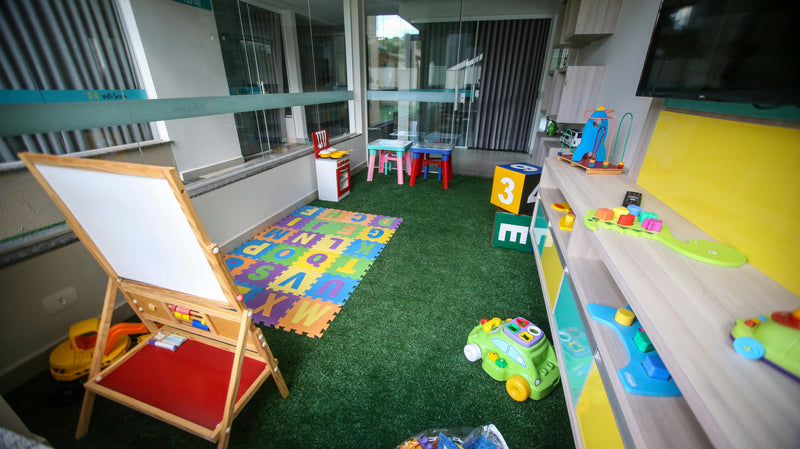
From there, adjustments can be made. Unsafe objects can be removed or relocated. Furniture can be rearranged to create clear, open areas. Materials can be selected with an emphasis on safety, durability, and open-ended use.
Soft surfaces, low shelving, and accessible storage often play a key role. These elements allow children to interact with their environment independently, without relying on constant assistance.
Some families also choose to incorporate defined zones within the space, creating areas for different types of activity such as quiet play, movement, or reading.
In this context, adaptable environments—such as those inspired by modular concepts like ZeeZee Adventures—can serve as useful examples of how spaces can evolve alongside a child’s interests while maintaining simplicity and openness.
A Shift in Perspective
Ultimately, the value of a “Yes Space” lies not only in its practical benefits but also in the perspective it represents. It encourages caregivers to view behaviour through a different lens, recognising that many challenges arise not from the child, but from the environment.
By making small but thoughtful adjustments, it is possible to create spaces that align more closely with a child’s natural tendencies.
This does not eliminate the need for guidance or boundaries. Rather, it creates a foundation upon which those elements can be applied more effectively.
Conclusion: Creating Environments That Support Growth
The early years of childhood are a period of rapid development, marked by curiosity, experimentation, and discovery. The environments in which children grow play a crucial role in shaping these experiences.
A “Yes Space” offers a simple yet powerful approach. By prioritising safety, accessibility, and autonomy, it allows children to explore their world with confidence.
In doing so, it reduces the need for constant correction, supports deeper engagement, and fosters a more positive relationship between children and their surroundings.
Perhaps most importantly, it shifts the focus from controlling behaviour to enabling growth.
And in that shift, everyday interactions become not just easier, but more meaningful.





Comment (0)