

Why Your Child Gets Bored So Quickly (And What It Really Means)
The Moment Many Parents Notice
It often begins in a way that feels familiar in many homes. A new toy is introduced, or a new activity is carefully set up. At first, everything works exactly as expected. The child is engaged, curious, and fully immersed in the experience. There is focus, excitement, and a sense that this new addition has truly captured their attention.
Then, gradually, something changes. The same toy is left untouched. The same activity no longer feels interesting. What once felt engaging begins to feel ordinary, and attention shifts elsewhere.
For many parents, this pattern raises an important question: why does interest fade so quickly? It can appear as though the child is losing focus or constantly seeking something new. However, research in child development suggests that the issue is often not with the child, but with how play experiences are structured.
Children do not lose interest simply because they want more toys. They lose interest when an experience stops offering something new to explore.
Understanding Boredom as a Developmental Signal
Boredom in children is often misunderstood. Rather than being a negative behavior, it functions as a developmental signal. It indicates that the brain has extracted what it can from a particular experience and is ready to move on to something that offers greater challenge, novelty, or flexibility.
Children are naturally driven by curiosity. Their learning process depends on exploration, experimentation, and discovery. When an activity becomes predictable, the brain no longer finds it stimulating enough to remain engaged.
In this sense, boredom is not a problem that needs to be fixed immediately. It is feedback. It reveals that the experience has reached its limit and that the child is ready for something more open-ended.
Why Many Toys Lose Their Appeal
A large number of modern toys are designed around fixed outcomes. They are built to deliver a specific experience, often with clear instructions or predictable results. While these toys can be engaging at first, their limitations become apparent over time.
Once a child understands how the toy works, the experience becomes complete. There is little room left for reinterpretation or discovery. As a result, attention fades.
This is particularly noticeable in toys that are:
-
designed for one specific function
-
based on a predefined storyline
-
dependent on repetitive actions
The issue is not that these toys are ineffective, but that they offer limited possibilities. When play is limited, engagement naturally follows the same pattern.
The Difference Between Stimulation and Engagement
It is important to recognize the difference between stimulation and engagement. Stimulation captures attention quickly through sensory input such as color, sound, and movement. Engagement, however, is sustained involvement that requires thought, creativity, and interaction.
Highly stimulating environments often create short bursts of attention. Children may move quickly from one activity to another without fully engaging in any of them. This leads to shallow interaction rather than meaningful play.
Environments that support deeper engagement tend to be more balanced. They provide enough visual interest to spark curiosity but allow space for focus and exploration. In these settings, children are more likely to stay engaged for longer periods.
Why Imagination Extends Attention
One of the most effective ways to sustain a child’s attention is through imagination. When children are free to reinterpret their environment, the experience continues to evolve. A single object or space can take on multiple meanings over time, preventing it from becoming predictable.
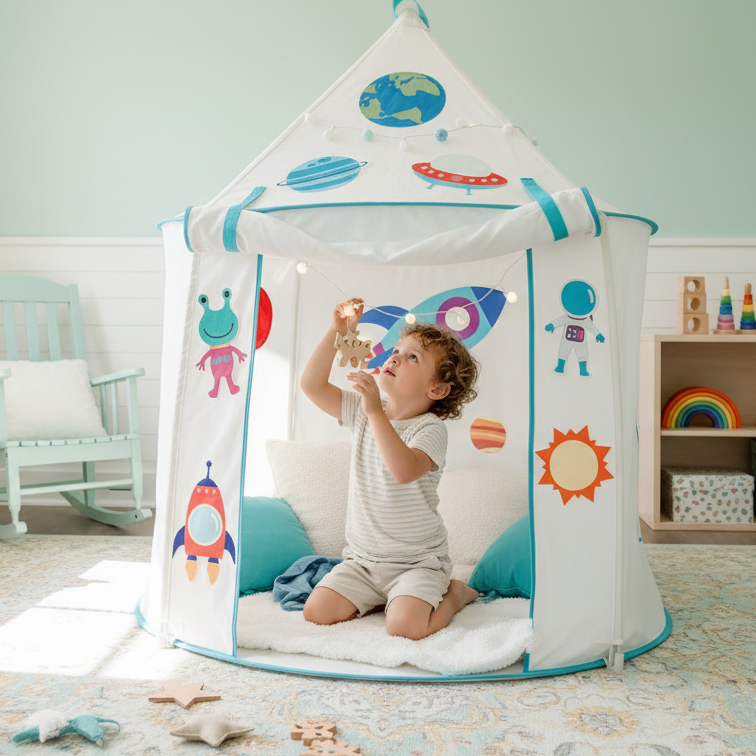
For example, a simple play structure can become a reading corner, a fort, a quiet retreat, or part of an imaginative story depending on how the child chooses to use it. Because the experience changes with the child’s ideas, it does not feel repetitive.
This is where the concept of open-ended play becomes important. Open-ended environments allow children to shape their own experiences rather than follow predefined instructions. Some modern play systems, including modular setups like ZeeZee Adventure play spaces, are designed around this principle. Instead of offering a fixed function, they act as flexible environments that can adapt to different types of play, allowing children to continuously reinterpret how they use the space.
The key idea is not the product itself, but the approach. When play is flexible, it remains engaging.
The Role of Environment in Sustained Engagement
The environment in which a child plays has a significant impact on how long they remain engaged. Spaces that are overly busy or filled with distractions can make it difficult for children to focus. When attention is constantly pulled in different directions, engagement becomes fragmented.
In contrast, environments that are calm, structured, and flexible tend to support deeper play. These spaces reduce unnecessary stimulation and allow children to explore more freely. They create a sense of focus, where attention can settle rather than constantly shift.
Flexible play environments, including adaptable setups like ZeeZee Adventure-style modular play tents, often become more than just physical spaces. They become environments that children return to repeatedly because the experience can change over time.
Why Fewer Choices Can Lead to Better Play
It may seem that providing more toys or options would increase engagement, but research suggests that too many choices can actually reduce focus. When children are presented with too many options, they may move quickly from one activity to another without fully exploring any of them.
When the number of options is reduced, children tend to engage more deeply. They spend more time experimenting, imagining, and discovering new ways to interact with what is available.
This is why environments that prioritize flexibility over quantity often perform better. Instead of offering many different toys, they provide fewer elements that can be used in multiple ways. Over time, this leads to more sustained engagement.
Rethinking Boredom in Daily Life
When a child says they are bored, the immediate instinct is often to provide something new. However, constantly replacing experiences can reinforce the idea that engagement must come from external sources.
A more effective approach is to allow space for boredom to exist. When children are not immediately given a solution, they often begin to create their own. They experiment, imagine, and develop new forms of play on their own terms.
These moments are important. They encourage independence and creativity. They allow children to shift from passive consumption to active creation.
A More Meaningful Approach to Play
Supporting a child’s engagement does not require constant stimulation or an endless supply of toys. It requires creating an environment where play can evolve.
This includes:
-
providing flexible spaces rather than fixed experiences
-
reducing overstimulation and unnecessary distractions
-
encouraging imagination and independent exploration
When children are given the freedom to shape their own experiences, they remain engaged for longer periods. Play becomes something they return to, rather than something they move on from.
In this context, boredom is no longer a problem to solve. It becomes a starting point for deeper, more meaningful play.
Frequently Asked Questions
Why does my child get bored so quickly?
Children often lose interest when an activity becomes predictable and no longer offers new possibilities. Their brain naturally seeks novelty and exploration.
Is boredom a sign of a short attention span?
No. Boredom usually indicates that the activity is not engaging enough, rather than a limitation in the child’s ability to focus.
How can I help my child stay engaged longer?
Focus on creating environments that allow for open-ended play. Reduce distractions and provide flexible materials or spaces that children can use in different ways.
Do children need more toys to stay interested?
Not necessarily. In many cases, fewer toys with more flexibility lead to deeper and longer-lasting engagement.
What type of play reduces boredom the most?
Open-ended play, where children can imagine, create, and reinterpret their environment, tends to sustain attention the longest.





Comment (0)