
How to Help Your Child Play Longer Without Interrupting Them
There is a particular kind of moment that tends to go unnoticed in everyday parenting. A child is absorbed in play, fully engaged in an activity that seems to unfold at its own pace. There is no need for direction, no request for help, and no visible sign of distraction. The experience appears complete in itself. Yet, almost instinctively, adults often feel compelled to step in. A suggestion is offered, a question is asked, or a new idea is introduced. What follows is subtle but significant: the rhythm of the play shifts, and in many cases, the depth of engagement quietly diminishes.
This pattern is rarely intentional. It is often driven by a desire to support, guide, or enhance the experience. However, from a developmental perspective, uninterrupted play holds a particular value that is easily disrupted. The ability to remain engaged in self-directed activity is not simply a matter of attention; it reflects a deeper cognitive process involving exploration, decision-making, and imaginative thinking. When this process is interrupted too frequently, the continuity that sustains it begins to weaken.
To understand how to help children play longer, it is useful to first consider what allows play to continue in the absence of intervention. Sustained engagement does not arise from constant stimulation or external input. It emerges when the child is able to maintain a sense of control over the experience. This sense of control, often described as agency, allows the child to determine not only what happens next but also how the experience evolves over time. When agency is intact, play becomes self-propelling. The child moves from one idea to another, not because they are prompted to do so, but because the activity itself invites further exploration.
Interruptions, even well-intentioned ones, tend to shift this dynamic. A question such as “What are you making?” or “Why don’t you try this?” may appear harmless, but it introduces an external frame of reference. The child is momentarily pulled out of their internal process and redirected toward an external expectation. In doing so, the flow of play is altered. The experience becomes partially guided, and with that shift, the continuity that supports deeper engagement may begin to fragment.
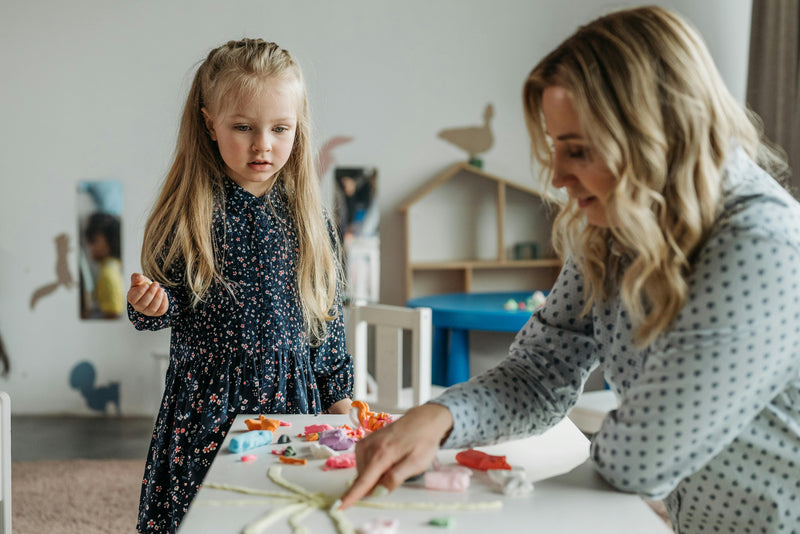
This does not suggest that adults should remain entirely absent from a child’s play. Rather, it highlights the importance of timing and restraint. There is a meaningful difference between participating in play and directing it. Participation tends to follow the child’s lead, entering the experience without altering its course. Direction, on the other hand, introduces new objectives or modifies existing ones. The former supports continuity, while the latter can inadvertently disrupt it.
Another factor that significantly influences the duration of play is the structure of the environment itself. Environments that are overly defined or crowded with options often lead to shorter engagement cycles. When a child is presented with too many stimuli or clearly prescribed uses for each object, the scope for interpretation becomes limited. The child moves quickly from one activity to another, not because they lack focus, but because each experience reaches its endpoint too quickly.
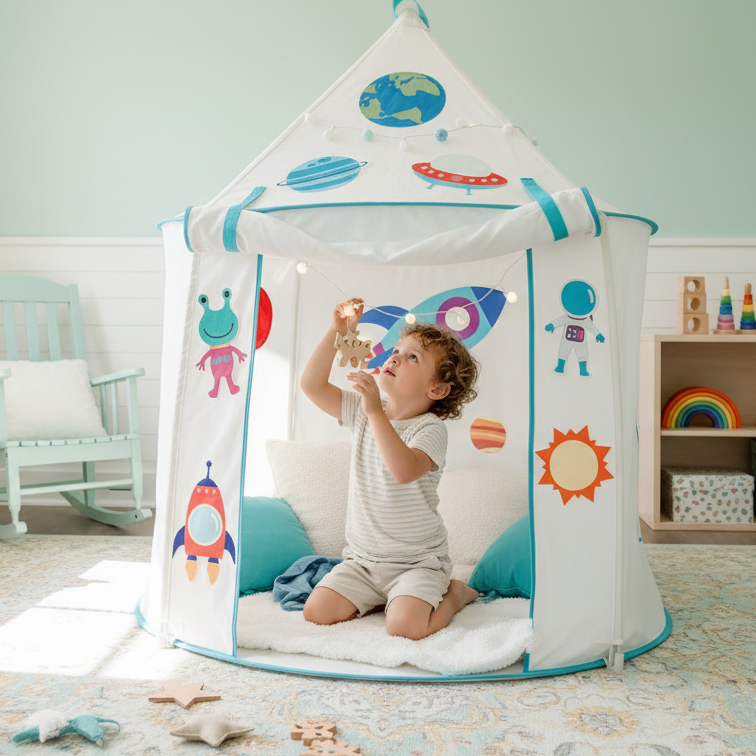
In contrast, environments that are more contained and flexible tend to support longer periods of play. These spaces do not dictate how they should be used. Instead, they offer a framework within which multiple interpretations are possible. A simple structure, for instance, can become a reading space, a hiding place, or part of an imaginative narrative, depending on the child’s intentions at any given moment. Because the environment does not impose a fixed function, it remains open to reinterpretation. This openness allows the experience to evolve, which in turn sustains engagement.
It is within this context that certain contemporary approaches to play design have begun to shift. Rather than focusing on individual toys with specific functions, they emphasize adaptable environments that can change with the child’s ideas. Modular play spaces, including formats similar to ZeeZee Adventures, reflect this perspective. Their significance lies not in any single feature but in their capacity to support different forms of play over time. By remaining flexible, they allow the child to maintain ownership of the experience, which is central to sustained engagement.
Beyond environment and structure, the role of time itself is often underestimated. Sustained play requires an uninterrupted stretch of time in which the child can move through different phases of engagement. Initially, there may be a period of exploration, followed by experimentation, and eventually deeper immersion. Interruptions during these phases can reset the process, preventing the child from reaching more complex levels of play.
In many cases, what appears as disengagement is simply a response to premature interruption. The child has not lost interest in the activity itself but in the disrupted version of it. When given sufficient time and space, children often return to the same activity and extend it in new directions. This capacity to revisit and reinterpret is a key component of longer play cycles.
It is also important to consider the role of boredom within this process. Boredom is frequently seen as something to be resolved immediately, often by introducing a new activity. However, in the context of play, boredom can function as a transitional state. It marks the point at which the current experience no longer satisfies the child’s need for exploration, but a new one has not yet been formed.
If this moment is allowed to unfold without immediate intervention, it often leads to the creation of new ideas. The child begins to modify their environment, combine elements in different ways, or construct entirely new forms of play. This transition is critical. It represents a shift from externally provided stimulation to internally generated engagement. When adults intervene too quickly, this shift may not occur.
Helping children play longer, therefore, is not primarily about adding more input. It is about preserving the conditions that allow play to extend naturally. This involves a combination of thoughtful observation, minimal interruption, and intentional design of the environment. It requires recognizing when to step in and when to remain at a distance.
There is a tendency to equate involvement with support, but in the context of play, support often takes a quieter form. It is reflected in the decision not to interrupt, not to redirect, and not to complete the experience on behalf of the child. Instead, it involves creating a space in which the child can remain engaged on their own terms.
Over time, this approach contributes to the development of sustained attention, creativity, and independence. The child learns not only how to engage with an activity but how to remain within it, extending it through their own ideas. This capacity does not emerge from constant guidance but from the opportunity to navigate play without interruption.
In this sense, the goal is not to make play longer by adding more elements, but to allow it to deepen by removing unnecessary interference. When children are given the space to continue what they have already begun, they often reveal a level of focus and creativity that might otherwise remain unnoticed.
- Baby Registry
- Baby Shower
- Best gifts
- best play tent
- Best toys
- Best toys 2025
- Best toys 2026
- Blog
- calming toys
- child development
- children
- christmas gift ideas
- customizable play tent
- Holidaygiftguide
- jeanpiaget
- kids play tent
- Montesoori
- montessori
- Montessori Gifts
- Montessori play
- open-endedplay
- openendedplay
- parenting
- parents
- play tent
- Play Tents
- playroom inspo
- pretend play
- sahm
- Sensory Play
- sensory play gifts
- teepee play tent
- toddler toys
- tonies
- toyclutter
- toys
- ZeeZee
- ZeeZee Adventure
- ZeeZee Adventure Tent
- ZeeZee Adventures






Comment (0)