

The Science of “Too Much”: When Play Becomes Overwhelming
Rethinking the Idea of “More”
Modern childhood environments are often shaped by a well-intentioned belief: that more stimulation leads to better engagement. Playrooms are filled with a wide variety of toys, colours are chosen for their vibrancy, and interactive elements are layered into a child’s surroundings with the aim of encouraging curiosity. At a glance, this approach appears logical. A richer environment should, in theory, provide more opportunities for learning and exploration.
Yet, when these environments are observed closely, a different reality frequently emerges. Instead of sustained engagement, children often move rapidly from one activity to another. Attention is captured, but not held. Interest appears briefly, then fades. What is commonly interpreted as a short attention span or a tendency towards boredom may, in fact, reflect a more fundamental issue—an environment that offers too much, too quickly, and without sufficient structure.
The question, therefore, is not whether stimulation is beneficial, but how much of it is effective. The science of “too much” invites a closer examination of the point at which stimulation begins to undermine the very engagement it is intended to support.
Stimulation and Engagement: A Crucial Distinction
To understand why excess can become counterproductive, it is essential to distinguish between stimulation and engagement. These terms are often used interchangeably, yet they describe very different processes.
Stimulation refers to the sensory input that captures attention. Bright colours, movement, sound, and novelty all serve this purpose. They draw the child’s focus quickly and effectively. Engagement, by contrast, is a deeper cognitive state. It involves sustained attention, interpretation, and active interaction with the environment.
An environment can be highly stimulating without being engaging. In fact, when stimulation is excessive, it can fragment attention rather than deepen it. The child’s focus shifts from one stimulus to another, preventing the development of sustained interaction. The result is a series of brief engagements rather than a continuous experience.
This distinction is central to understanding why more stimulation does not necessarily lead to better play.
Cognitive Load: The Limits of Processing
The developing brain operates within certain constraints. It is capable of processing a significant amount of information, but its capacity is not unlimited. Particularly in early childhood, the ability to filter and prioritise sensory input is still developing.
Cognitive load refers to the amount of information the brain must process at any given time. When this load remains within manageable limits, the child can focus effectively, exploring an activity in depth. However, when the load becomes excessive, the brain begins to disengage as a form of protection.
In a highly stimulating environment, cognitive load increases rapidly. Multiple sources of input compete for attention, each demanding processing. The child is not simply observing the environment; they are attempting to make sense of it. When this process becomes overwhelming, attention becomes fragmented.
This fragmentation often appears as distraction. The child moves from one activity to another, not because they lack interest, but because the environment does not allow for sustained focus. In this context, disengagement is not a behavioural issue but a cognitive response.
The Impact of Too Many Choices
Choice is often associated with freedom and autonomy. Providing a range of options is generally seen as a way to empower children, allowing them to select activities that interest them. However, the relationship between choice and engagement is more complex than it appears.
Each additional option introduces a decision-making process. The child must evaluate, compare, and select. When the number of options is limited, this process is relatively simple. When it becomes extensive, the cognitive demand increases.
Too many choices can lead to what is known as decision fatigue. Although this concept is more commonly applied to adults, the underlying principle applies equally to children. When the effort required to choose becomes too great, the quality of engagement decreases. The child may switch between activities without fully committing to any of them.
In contrast, when fewer options are available, children are more likely to explore each one in depth. Engagement becomes more sustained because attention is not divided across multiple competing possibilities.
Visual Overload and Competing Attention
The physical structure of the environment plays a significant role in shaping attention. Visually busy spaces, filled with objects, colours, and movement, create a constant demand on the child’s focus. Each element competes for attention, making it difficult to settle on a single activity.
Even well-designed toys can lose their effectiveness when placed within such environments. The issue is not the individual object, but the context in which it exists. When everything is designed to capture attention, nothing is able to hold it.
In contrast, environments that are more contained and intentionally arranged tend to support concentration. By reducing visual noise, they allow the child to direct their attention more effectively. The absence of competing stimuli creates the conditions necessary for deeper engagement.
This does not suggest that environments should be minimal to the point of emptiness. Rather, it highlights the importance of clarity. When the environment is organised in a way that supports focus, children are better able to engage with what is available.
Emotional Responses to Overstimulation
The effects of excessive stimulation extend beyond attention. Emotional regulation is also influenced by the environment. When children are exposed to continuous sensory input, their ability to process and respond to that input can become strained.
This strain may manifest in various ways. Some children become restless, moving rapidly between activities without settling. Others may withdraw, showing reduced interest in play. Irritability can increase as the child attempts to manage an overwhelming level of input.
These responses are often misinterpreted as behavioural problems. In reality, they are natural reactions to an environment that exceeds the child’s capacity for regulation. When the level of stimulation is reduced, these behaviours often diminish, revealing a more balanced pattern of engagement.
Simplicity and the Depth of Play
One of the more counterintuitive findings in developmental research is that simpler environments often produce more complex play. When the environment does not dictate how it should be used, the child is required to contribute more of their own thinking.
This shift from passive interaction to active creation is central to sustained engagement. The child begins to reinterpret objects, combine elements, and develop narratives. Play becomes an evolving process rather than a fixed experience.
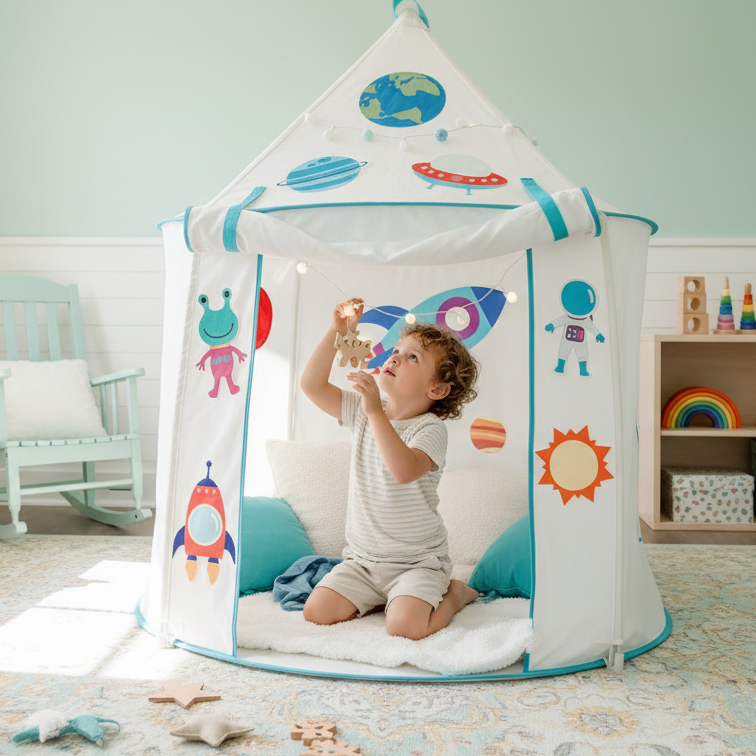
This principle is increasingly reflected in contemporary play design. Instead of focusing on quantity, there is a growing emphasis on flexibility. Modular play environments, including formats similar to ZeeZee Adventures, exemplify this approach. Their purpose is not to overwhelm with features but to provide a structure that can be adapted over time.
By allowing the child to shape the experience, these environments support deeper and more sustained engagement.
The Role of Time in Sustained Engagement
Time is a critical but often overlooked factor in play. Sustained engagement does not occur instantly. It develops gradually as the child moves through different stages of interaction.
Initially, there is exploration, as the child becomes familiar with the activity. This is followed by experimentation, during which different possibilities are tested. Eventually, if uninterrupted, the child may reach a state of immersion, where attention is fully absorbed.
In environments characterised by excessive stimulation, this progression is frequently interrupted. Attention is redirected before deeper engagement can develop. As a result, play remains at a surface level.
Allowing uninterrupted time for play is therefore essential. When children are given the opportunity to remain with an activity, they are more likely to explore it in depth and extend it over time.
Boredom as a Necessary Transition
Boredom is often viewed as something to be avoided. When a child expresses boredom, the immediate response is often to introduce a new activity. However, boredom can serve an important function within the play process.
It represents a transition between experiences. When this transition is allowed to unfold without immediate intervention, it can lead to the development of new ideas. The child begins to create rather than simply respond to external input.
In highly stimulating environments, this transition is less likely to occur. The constant availability of new stimuli removes the need for internal generation. As a result, play becomes dependent on external input rather than driven by the child’s imagination.
Towards a More Balanced Approach
The science of “too much” ultimately points towards the importance of balance. Stimulation is not inherently problematic, but it must be used with intention. When it exceeds the child’s capacity to process it, it becomes counterproductive.
Creating a balanced environment involves thoughtful decisions about what is included and what is left out. It may mean reducing the number of visible toys, simplifying the arrangement of space, and allowing for quieter periods of play.
These changes do not diminish the richness of the environment. Instead, they make that richness more accessible. By reducing unnecessary input, they create the conditions in which deeper engagement can emerge.
When children are given the space to engage without overwhelming stimuli, their behaviour often changes. Attention becomes more sustained, play more coherent, and creativity more evident. The need for constant novelty diminishes, replaced by a deeper engagement with what is already present.
Frequently Asked Questions
What does “too much” mean in a play environment?
It refers to an excess of sensory input, choices, or visual elements that can overwhelm a child’s ability to process information and sustain attention.
How does overstimulation affect a child’s focus?
It can fragment attention, leading to shorter engagement periods and frequent switching between activities.
Are more toys always better for development?
Not necessarily. Fewer, more flexible options often lead to deeper and more sustained engagement.
How can I reduce overwhelm in my child’s play space?
Simplifying the environment, reducing clutter, and allowing uninterrupted playtime can help support focus.
What kind of play environments work best?
Environments that are calm, structured, and flexible tend to support longer attention spans and more meaningful play.





Comment (0)