
Why Toddlers Need Repetition in Play (And Why It Matters)
Introduction: The Puzzle of Repetitive Play
Many parents notice a pattern in early childhood that can feel both curious and, at times, exhausting.
A toddler builds a tower, knocks it down, and builds it again.
They repeat the same action, the same story, the same sequence—sometimes dozens of times in a single sitting.
From an adult perspective, this repetition can appear unnecessary. There is often an instinct to introduce something new, to expand the activity, or to guide the child towards variety.
Yet, for toddlers, repetition is not a limitation.
It is a fundamental part of how they learn, process, and make sense of the world.
Understanding why repetition matters can shift how we respond to play—and how we support development in its earliest stages.
Repetition as a Foundation for Learning
In early childhood, repetition is not simply about doing the same thing again. It is about reinforcing neural connections.
Each repeated action strengthens pathways in the brain. When a toddler stacks blocks repeatedly, they are not just playing—they are refining coordination, understanding balance, and building spatial awareness.
Repetition allows these processes to move from conscious effort to familiarity.
What begins as a tentative action gradually becomes more confident, more controlled, and more precise.
In this way, repetition transforms experience into learning.
The Role of Predictability and Security
Repetition also provides something less visible but equally important: a sense of predictability.
The world can feel vast and unpredictable for a toddler. New experiences, new environments, and new expectations are encountered constantly.
Repetitive play creates a structure within this uncertainty.
When a child repeats an action, they know what will happen. This predictability offers comfort and stability. It allows them to feel in control of their environment, even in a small way.
This sense of security supports emotional regulation, helping children remain engaged rather than overwhelmed.
Mastery Through Repetition
Toddlers are naturally driven towards mastery.
When they encounter a new skill or concept, they return to it repeatedly until they feel a sense of competence.
This process is not rushed. It unfolds gradually, with each repetition building on the last.
For example, when a toddler fits shapes into a sorter, they may initially struggle. Through repetition, they begin to recognise patterns, adjust their movements, and eventually succeed.
The repetition is not redundant—it is essential.
It allows the child to move from exploration to understanding, and from understanding to confidence.
Repetition and Cognitive Development
Repetitive play supports several aspects of cognitive development simultaneously.
As toddlers repeat actions, they strengthen their memory by recalling what they have done before. They improve attention by staying with a task over time. They develop problem-solving skills by adjusting their approach with each attempt.
These processes are interconnected.
Repetition provides the time and space for them to develop together.
Rather than seeking novelty, toddlers seek depth.
Language and Repetition
Language development is closely linked to repetition.
Toddlers often repeat words, phrases, and sounds in the same way they repeat physical actions. This repetition helps them process language, understand meaning, and refine pronunciation.
Similarly, repeated storytelling plays a crucial role.
When a child asks for the same story again and again, they are not simply seeking familiarity. They are learning narrative structure, anticipating outcomes, and building comprehension.
Each repetition deepens their understanding.
The Connection Between Repetition and Focus
Repetition also supports the development of attention.
When a child engages in repeated play, they are more likely to remain focused for longer periods. Familiarity reduces cognitive load, allowing them to concentrate on refining their actions rather than understanding what to do next.
This extended engagement strengthens their ability to sustain attention.
Over time, this contributes to the development of focus as a skill.
Why Adults Often Interrupt Repetition
Despite its importance, repetition is often interrupted.
Adults may feel that children need variety, stimulation, or new challenges. There can be a tendency to introduce additional elements, suggest alternative activities, or redirect play.
While well-intentioned, these interruptions can disrupt the learning process.
When repetition is allowed to continue, children are able to complete their internal cycle of exploration, refinement, and mastery.
When it is interrupted, this cycle may remain incomplete.
Designing Environments That Support Repetition
The environment plays a significant role in how easily repetition can occur.
Spaces that are cluttered or overstimulating can make it difficult for children to return to the same activity repeatedly. Distractions pull attention away, interrupting the flow of play.
In contrast, calm and intentional environments support repetition naturally.
When materials are accessible, visible, and consistent, children can return to them as often as needed. They can repeat actions without interruption, deepening their engagement.
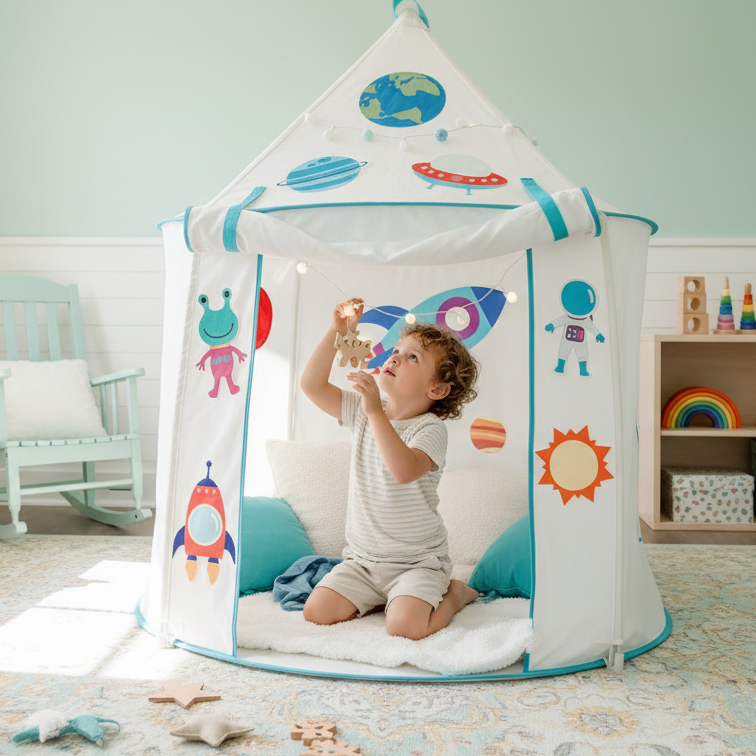
Many families are now exploring structured yet flexible play environments, such as ZeeZee play setups, which provide a consistent base for repeated imaginative scenarios. These environments do not dictate play but allow children to revisit and rebuild their ideas over time, supporting both repetition and creativity.
Repetition in Imaginative Play
Repetition is not limited to physical actions. It is equally present in imaginative play.
A toddler may enact the same story repeatedly, using similar characters and sequences. While this may appear static, it often evolves subtly with each repetition.
New details are added. Roles shift. Narratives expand.
This process allows children to explore ideas, emotions, and social interactions in a safe and controlled way.
Emotional Processing Through Repetition
Repetitive play also plays a role in emotional development.
Children often repeat experiences that help them process feelings or understand situations.
For example, a child who has experienced a new event—such as starting nursery—may recreate similar scenarios in their play. Through repetition, they gain familiarity and control over the experience.
This process supports emotional understanding and resilience.
The Importance of Time and Patience
Repetition requires time.
In fast-paced environments, there can be pressure to move quickly from one activity to another. However, deep learning often occurs when children are given the time to remain with an activity.
Allowing repetition means allowing time for exploration, mistakes, adjustments, and eventual mastery.
Patience is essential.
Supporting Repetition Without Interference
Supporting repetition does not mean withdrawing completely. It involves observing, understanding, and responding thoughtfully.
This may include:
- allowing the child to continue without interruption
- providing space and materials for repeated use
- observing subtle changes in how the activity evolves
When adults resist the urge to direct or expand prematurely, children are able to lead their own learning process.
Long-Term Benefits of Repetitive Play
The benefits of repetition extend beyond early childhood.
Children who engage in repeated play develop stronger foundational skills in attention, problem-solving, and persistence. They become more comfortable with effort and more confident in their ability to master new challenges.
These qualities support learning across all areas of development.
Conclusion: Repetition as a Path to Understanding
Repetition in toddler play is not a sign of limitation.
It is a sign of learning in progress.
Each repeated action, story, or sequence reflects a process of exploration, understanding, and growth.
By recognising the value of repetition—and allowing it to unfold—we support children in developing the skills they need to navigate the world with confidence and curiosity.





Comment (0)