

Smart Ways to Balance Technology and Play
Technology has become an integral part of modern childhood. From educational apps to interactive videos, digital tools offer convenience and learning opportunities that were unimaginable a decade ago. At the same time, concerns about excessive screen time and its impact on children’s development continue to grow.
For parents, the challenge is not to eliminate technology, but to find a healthy balance between digital engagement and real-world play.
Understanding the Role of Technology
Technology, when used thoughtfully, can support learning and creativity. Educational apps, storytelling platforms, and interactive games can introduce new concepts and reinforce skills. However, problems arise when screen time replaces activities that are essential for development, such as physical play, social interaction, and imaginative exploration.
Young children, especially toddlers, learn best through hands-on experiences. They need to touch, build, move, and interact with their environment. These experiences help develop motor skills, problem-solving abilities, and emotional understanding.
Why Play Still Matters More Than Ever
Play is not simply a way to pass time. It is a critical part of how children learn and grow. Open-ended play, in particular, allows children to think creatively, make decisions, and explore ideas without rigid instructions.
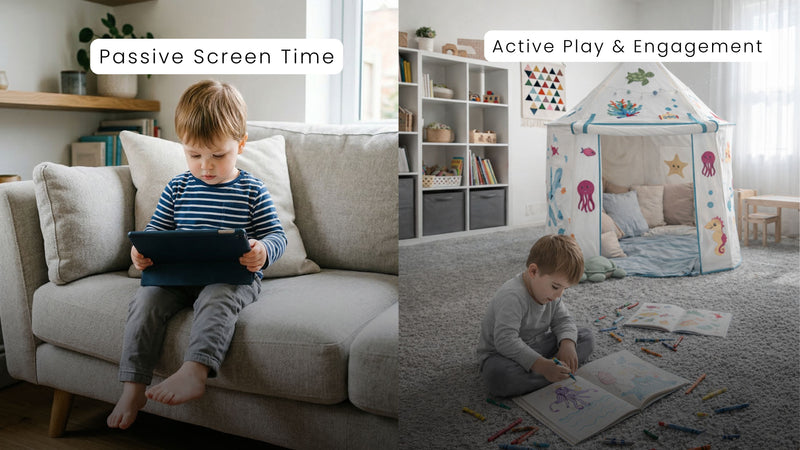
When children engage in imaginative play, they practice independence, build confidence, and develop essential cognitive skills. Unlike passive screen consumption, play encourages active participation and deeper learning.
Setting Healthy Boundaries Around Screen Time
One of the most effective ways to create balance is by setting clear and consistent boundaries. This does not mean strict restrictions, but rather thoughtful limits that prioritize well-being.
Parents can establish screen-free times during the day, such as during meals, before bedtime, or in the morning. Creating tech-free zones in the home, especially in bedrooms, can also help maintain a healthy routine.
Consistency is key. When expectations are clear, children are more likely to adapt without resistance.
Encouraging Meaningful Play
Children are more likely to move away from screens when they are offered engaging alternatives. Simple changes in the home environment can make a significant difference.
Providing access to open-ended toys, books, and creative materials encourages exploration. A well-organized play space allows children to choose activities independently, which builds both focus and confidence.
Parents do not need to create elaborate setups. Even a small, thoughtfully arranged space can inspire hours of meaningful play.
Leading by Example
Children often mirror the behavior they see. When parents are constantly on their phones or devices, it sends a powerful message about what is important.
Modeling balanced behavior, such as setting aside devices during family time or engaging in shared activities, can influence children more effectively than rules alone.
Spending time together through play, reading, or simple conversations strengthens both connection and healthy habits.
Making Technology Intentional
Not all screen time is equal. Passive scrolling or long hours of unstructured viewing can be less beneficial than purposeful use.
Choosing high-quality, age-appropriate content and engaging with children during screen time can make a difference. Watching together, asking questions, and discussing what they see can turn a passive activity into an interactive experience.
Finding a Balance That Works
Every family is different, and there is no single formula for balancing technology and play. What matters most is being intentional, consistent, and aware of a child’s needs.
A balanced approach allows children to benefit from technology while still enjoying the richness of real-world experiences. It supports their development, creativity, and emotional well-being.
Frequently Asked Questions
1. How much screen time is appropriate for young children?
For toddlers, limited and supervised screen time is recommended. Short, purposeful sessions are more beneficial than extended use.
2. Is all screen time harmful?
No, not all screen time is harmful. Educational and interactive content can support learning when used in moderation.
3. How can I reduce my child’s screen time without conflict?
Introduce engaging alternatives, set clear routines, and gradually reduce screen time instead of removing it suddenly.
4. What are good alternatives to screen time?
Open-ended toys, reading, outdoor play, creative activities, and imaginative games are excellent alternatives.
5. Should parents participate in their child’s playtime?
Yes, even a small amount of shared playtime can strengthen relationships and encourage healthy habits.
6. Can technology ever support creativity?
Yes, when used intentionally. Certain apps and tools can enhance creativity, especially when combined with offline activities.
7. What signs indicate too much screen time?
Decreased interest in play, irritability, difficulty focusing, and sleep disturbances can be signs of excessive screen use.






Comment (0)