

The Attention Span Problem No One Is Talking About
Introduction
"My child can't focus."
It's one of the concerns parents mention most often.
Perhaps your child starts building with blocks but abandons the project after five minutes.
Maybe they bounce from one toy to another without settling into meaningful play.
Or perhaps homework becomes a constant battle, with every small distraction pulling their attention away.
At first glance, it might seem like children today simply have shorter attention spans than previous generations.
But the reality is far more nuanced.
Interestingly, the same child who struggles to complete a worksheet may spend an hour constructing an elaborate LEGO city.
A child who seems unable to sit through dinner might happily listen to bedtime stories every evening.
Another may lose interest in educational apps within minutes but spend an entire afternoon pretending their bedroom is a veterinary clinic.
These differences reveal something important.
Attention isn't a fixed trait. It's deeply influenced by motivation, environment, emotional wellbeing, and the type of activity a child is engaged in.
Rather than asking whether children have "good" or "bad" attention spans, a more useful question is:
What helps children sustain attention naturally?
Understanding that question matters because attention influences nearly every area of childhood.
It affects learning.
Friendships.
Creativity.
Problem-solving.
Emotional regulation.
Independence.
Yet many conversations about attention focus almost entirely on distractions, particularly screens.
While technology certainly plays a role, it's only one piece of a much larger picture.
Modern children navigate busy schedules, constant sensory stimulation, organized activities, academic expectations, and endless streams of information.
Each of these factors competes for their mental energy.
The encouraging news is that attention is not simply something children are born with.
Like creativity, confidence, and emotional regulation, it develops gradually through repeated experiences.
Parents can support that development in practical, meaningful ways without turning every moment into another lesson.
In this guide, we'll explore what attention really is, why many children appear to struggle with focus, how modern childhood shapes concentration, and the everyday habits that help children build longer, deeper periods of attention through play, curiosity, and meaningful engagement.
What Does Attention Span Really Mean?
Attention Is More Than Sitting Still
When adults think about attention, they often picture a child quietly sitting at a desk, listening carefully, and completing work without becoming distracted.
While that's certainly one form of attention, it isn't the only one.
Attention is the brain's ability to select what deserves focus while filtering out everything else.
Children use this ability constantly.
They pay attention while:
-
listening to stories
-
building towers
-
solving puzzles
-
pretending to run a restaurant
-
learning to ride a bicycle
-
watching insects in the garden
-
drawing pictures
-
talking with friends
Each activity requires slightly different kinds of attention.
This is why judging a child's overall ability to focus based on one situation can be misleading.
Attention Changes Throughout Childhood
Attention develops gradually.
A preschooler isn't expected to concentrate like a teenager.
Young children's brains are still learning how to:
-
ignore distractions
-
Stay focused on one task
-
remember instructions
-
switch between activities
-
control impulses
These abilities continue developing throughout childhood and adolescence.
Growth happens step by step rather than all at once.
Focus Depends on Interest
Think about your own attention.
You might struggle to read a complicated instruction manual but lose track of time while enjoying a favorite hobby.
Children experience the same phenomenon.
Interest dramatically influences attention.
A child fascinated by dinosaurs may happily spend an hour organizing toy fossils.
The same child may become restless after ten minutes of handwriting practice.
This doesn't necessarily indicate poor concentration.
It reflects how motivation shapes attention.
One of the goals of healthy childhood experiences is helping children gradually learn to focus even when activities aren't immediately exciting, while also providing plenty of opportunities for deeply engaging play.
Why Parents Are More Concerned Than Ever
Many parents feel that children today become distracted more easily than previous generations.
There are several reasons this perception has become increasingly common.
Children Live in an Attention Economy
Today's world is designed to compete for attention.
Apps send notifications.
Streaming platforms automatically begin the next episode.
Games provide frequent rewards.
Advertisements constantly introduce something new.
Many digital experiences are intentionally designed to keep people engaged through novelty and rapid stimulation.
Children are growing up surrounded by these systems from an early age.
That doesn't mean technology inevitably damages attention.
It does mean children have more competition for their focus than ever before.
Daily Life Moves Faster
Many families navigate tightly packed schedules.
School.
Homework.
Sports.
Music lessons.
Clubs.
Family commitments.
Bedtime routines.
Moving rapidly from one activity to another leaves fewer opportunities for sustained, uninterrupted concentration.
Children often need time to settle into an activity before their deepest focus emerges.
When every activity ends quickly, that deeper level of engagement becomes harder to reach.
Parents Notice Differences More Clearly
Modern parents have access to far more information about child development than previous generations.
Articles.
Podcasts.
Social media.
Expert advice.
While this information can be incredibly helpful, it can also increase anxiety.
Parents may begin comparing their child with developmental milestones or carefully edited images of family life online.
Every child develops differently.
Attention grows through practice rather than following a perfectly predictable timeline.
Common Myths About Attention Span
Misunderstandings about attention often lead parents to unnecessary worry.
Let's examine a few of the most common myths.
Myth 1: Children Today Can't Focus
Reality is more complicated.
Many children demonstrate extraordinary concentration when engaged in meaningful, self-directed activities.
They may spend long periods:
-
constructing elaborate buildings
-
reading favorite books
-
drawing detailed pictures
-
inventing imaginary worlds
-
observing nature
The question often isn't whether children can focus.
It's what invites their focus.
Myth 2: More Stimulation Improves Attention
Parents sometimes assume keeping children constantly entertained will improve engagement.
Ironically, continuous stimulation can make slower, quieter activities feel less rewarding.
Attention often grows strongest when children experience balance between exciting experiences and opportunities for calm, uninterrupted exploration.
Myth 3: Constant Reminders Improve Focus
Repeatedly saying:
"Pay attention."
"Focus."
"Stop getting distracted."
Rarely teaches attention itself.
Instead, children benefit from environments that naturally encourage concentration.
Quiet spaces.
Open-ended play.
Predictable routines.
Meaningful challenges.
These experiences help attention develop from within rather than relying entirely on adult reminders.
How Children's Attention Develops
Attention isn't something children suddenly acquire.
It's built through thousands of everyday experiences.
Every time children:
-
finish building a tower
-
listen to another chapter of a book
-
solve a puzzle
-
continue an imaginary story
-
experiment with art supplies
-
complete a nature scavenger hunt
They practice sustaining attention a little longer.
These moments gradually strengthen the brain's ability to remain engaged despite minor distractions.
Just as muscles become stronger through repeated movement, attention becomes stronger through repeated opportunities to focus on meaningful experiences.
Attention Grows Best When Children Feel Safe
One of the most overlooked aspects of attention is emotional wellbeing.
Children who feel anxious, overwhelmed, rushed, or overstimulated naturally devote more mental energy to managing those feelings.
That leaves fewer resources available for sustained concentration.
When children feel emotionally secure, something remarkable happens.
They become curious.
They experiment.
They ask questions.
They remain engaged longer.
Attention is closely connected to emotional safety.
Children focus best when they feel safe enough to explore.
What's Competing for Children's Attention Today?
If attention develops through practice, one important question naturally follows:
What is competing for children's attention?
The answer isn't one single thing.
It's a combination of modern habits, environments, and expectations that continually pull children's focus in different directions.
This doesn't mean childhood today is worse than it was in previous generations.
Children have access to remarkable educational opportunities, technology, and experiences that previous generations could never have imagined.
The challenge is balance.
Attention grows best when children have opportunities to become deeply engaged in meaningful activities.
Many aspects of modern life unintentionally interrupt that process before it has a chance to develop.
The World Is Competing for Children's Attention
Attention has become one of the most valuable resources in today's world.
Companies compete for it.
Apps are designed to capture it.
Advertisements constantly interrupt it.
Streaming services encourage continuous viewing.
Games reward rapid responses and frequent interaction.
Adults experience this every day.
Children do too.
Unlike previous generations, today's children are growing up in an environment where something is almost always asking for their attention.
Learning how to focus has become just as important as learning what to focus on.
The Brain Needs Time to Settle
Imagine trying to read a novel while someone changes the television channel every two minutes.
Eventually, staying immersed in the story becomes nearly impossible.
Children experience something similar when they move rapidly between activities without enough time to settle into one.
Deep concentration rarely appears immediately.
It often takes several minutes before children become fully absorbed.
Unfortunately, many interruptions happen before they ever reach that point.
Screens Are Only Part of the Story
Discussions about attention often begin and end with screen time.
Technology certainly deserves consideration.
However, focusing only on screens oversimplifies a much more complex issue.
The real challenge isn't simply using technology.
It's experiencing constant stimulation without enough opportunities for recovery.
Fast-Paced Content Changes Expectations
Many digital experiences are intentionally designed to maintain engagement.
Quick scene changes.
Bright colors.
Immediate rewards.
Endless scrolling.
Frequent novelty.
These features keep users interested.
They also create an expectation that something exciting should happen every few seconds.
By comparison, slower activities like reading, drawing, or building require children to generate much of the experience themselves.
Initially, these activities may feel less stimulating.
With regular practice, however, children often rediscover how deeply satisfying slower forms of play can become.
Passive Entertainment and Active Engagement
There's an important difference between watching a story and creating one.
Watching a film allows children to enjoy someone else's imagination.
Building a blanket fort asks them to invent the story themselves.
Both experiences have value.
But they exercise different parts of the brain.
Passive entertainment provides information.
Active play develops attention, creativity, planning, and problem-solving because children must continuously make decisions.
The more opportunities children have to become creators rather than observers, the more they practice sustained focus.
Overscheduling Can Interrupt Deep Focus
Parents naturally want children to explore different interests.
Sports.
Dance.
Music.
Language lessons.
Art classes.
Science clubs.
These activities provide valuable experiences.
However, there is a difference between a full childhood and an overloaded one.
Every Transition Requires Mental Energy
Each time children switch from one activity to another, their brains adjust.
They remember new rules.
Shift attention.
Manage different expectations.
Meet different people.
These transitions require cognitive effort.
When they happen repeatedly throughout the day, children may have fewer opportunities to become deeply absorbed in any single activity.
Sometimes the most valuable part of the afternoon isn't another scheduled lesson.
It's an uninterrupted hour with building blocks or imaginary adventures.
Free Time Isn't Empty Time
Parents occasionally worry that unstructured time lacks educational value.
In reality, free time often becomes the laboratory where important developmental skills emerge.
During child-led play, children learn to:
-
organize their own activities
-
make independent decisions
-
solve unexpected problems
-
manage frustration
-
sustain attention naturally
These skills cannot be fully developed when every activity is directed by adults.
Multitasking Isn't Helping Children Focus
Modern life often encourages multitasking.
Television plays in the background while homework is completed.
Messages arrive during meals.
Music plays while children build.
Multiple conversations happen simultaneously.
Adults sometimes assume children simply adapt.
The brain doesn't truly multitask.
Instead, it switches attention rapidly between different sources of information.
Each switch carries a small mental cost.
For children whose attention skills are still developing, these constant shifts make sustained concentration more difficult.
Background Noise Matters
Many families don't realize how much background media influences attention.
A television no one is watching.
A phone continuously receiving notifications.
Music with advertisements.
Even these seemingly minor distractions compete for children's mental resources.
Creating periods of intentional quiet helps children notice their own thoughts instead of constantly reacting to external ones.
Why Boredom Still Matters
Perhaps the most overlooked ingredient in healthy attention development is boredom.
Parents often feel pressure to prevent it.
Children complain.
Adults respond.
Another activity.
Another toy.
Another screen.
Yet boredom serves an important developmental purpose.
It marks the transition between consuming ideas and creating them.
What Happens After "I'm Bored"
The first few minutes may feel uncomfortable.
Children wander.
They sigh.
They ask what they should do.
Then something interesting begins to happen.
The brain starts generating possibilities.
A cardboard box becomes a castle.
Stuffed animals need a veterinarian.
The sofa transforms into a pirate ship.
A simple stick collected outdoors becomes a magic wand.
These ideas don't arrive because adults planned them.
They appear because children finally had enough space to invent something themselves.
Imagination Strengthens Attention
Creative play asks children to remain inside an imaginary world they have created.
They must remember characters.
Solve problems.
Expand stories.
Adapt when something unexpected happens.
Every one of these actions strengthens sustained attention.
Children aren't practicing focus because someone told them to.
They're practicing because the adventure matters to them.
Why Deep Play Looks Different
Parents sometimes mistake quiet concentration for the only form of attention.
In reality, children often demonstrate remarkable focus while:
-
building elaborate structures
-
creating imaginary worlds
-
caring for dolls
-
exploring insects outdoors
-
drawing detailed pictures
-
reading favorite books repeatedly
-
organizing collections
During these moments, children aren't simply occupied.
They're deeply engaged.
This state of immersion supports learning, creativity, and emotional regulation simultaneously.
Environment Influences Attention More Than We Realize
Children don't develop attention in isolation.
Their surroundings shape how easily they can concentrate.
Spaces that encourage focus often include:
-
fewer visual distractions
-
organized materials
-
comfortable seating
-
predictable routines
-
opportunities for uninterrupted play
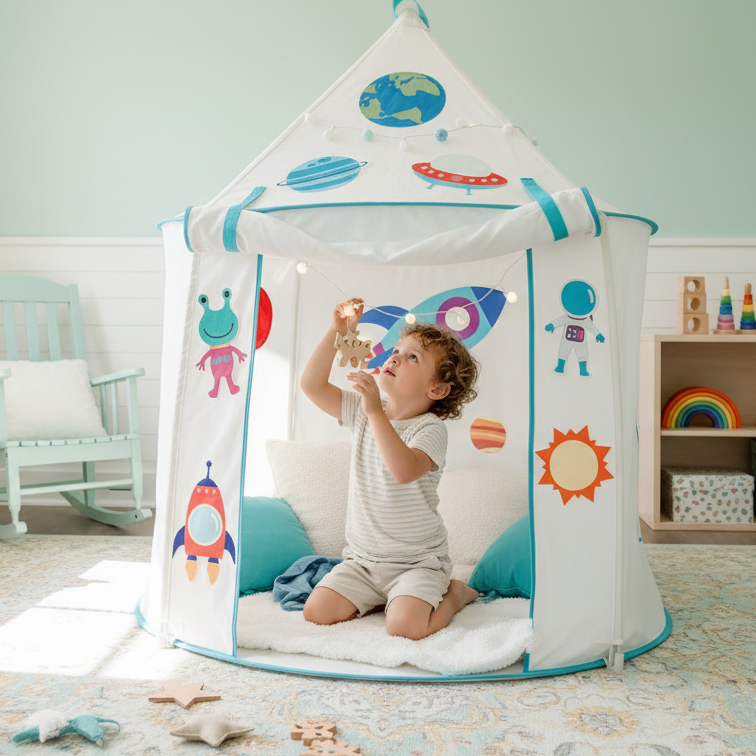
Many families intentionally create play environments that reduce distractions while encouraging imaginative exploration. This principle is reflected in ZeeZee Adventures, where adaptable play tents provide children with a familiar space that feels both comforting and flexible. Rather than directing play toward one fixed activity, interchangeable StickeeZ themes encourage children to build their own stories, helping them remain immersed for longer periods as their attention naturally follows their curiosity.
Attention Isn't About Forcing Focus
One of the biggest misconceptions about attention is that children simply need to "try harder."
In reality, lasting focus develops when children are:
-
emotionally secure
-
genuinely interested
-
free from unnecessary distractions
-
given enough uninterrupted time
-
supported rather than constantly redirected
Attention grows through meaningful experiences, not constant reminders.
How Play Builds Attention Better Than Constant Practice
If attention develops through experience, then one of the most important questions parents can ask is:
What kinds of experiences naturally strengthen a child's ability to focus?
The answer may surprise many families.
It's not endless worksheets.
It's not repeatedly reminding children to "pay attention."
And it certainly isn't filling every free moment with structured activities.
Instead, some of the most effective opportunities to develop sustained attention look remarkably simple.
A child building a city from blocks.
A sibling inventing a treasure hunt.
A quiet afternoon spent reading beneath a blanket fort.
An hour exploring insects in the garden.
These activities don't just occupy children.
They invite deep engagement, which is where attention grows strongest.
Deep Play Is Different From Busy Play
Not all play develops attention in the same way.
Some activities are exciting but brief.
Others encourage children to remain fully absorbed for long periods.
This second type is often called deep play.
Deep play happens when children become so immersed in an activity that they lose track of time.
They aren't waiting for the next instruction.
They aren't asking what comes next.
They're completely invested in what they're creating.
Psychologists sometimes describe this as entering a state of flow, where concentration feels effortless because the activity itself is meaningful.
Children experience flow surprisingly often when given enough uninterrupted time.
Why Deep Play Strengthens Attention
During deep play, children continuously practice important mental skills.
They:
-
Remember their plan
-
solve unexpected problems
-
adapt when something doesn't work
-
make decisions
-
ignore minor distractions
-
Stay motivated without external rewards
Each of these actions strengthens the brain's ability to sustain attention.
Importantly, children practice these skills because they want to, not because someone tells them to.
That internal motivation makes learning much more powerful.
Imaginative Play Is Exercise for the Brain
Pretend play may appear simple on the surface.
A child becomes a veterinarian.
A sofa transforms into a pirate ship.
Stuffed animals attend school.
Behind the scenes, however, the brain is performing remarkably complex work.
Children must remember characters, create rules, organize events, solve problems, and expand stories while responding to unexpected changes.
Few childhood activities combine so many cognitive skills at once.
Every Story Requires Sustained Thinking
Imagine a child pretending to run a bakery.
First, they gather materials.
Then they decide what to "bake."
Customers begin arriving.
Someone places an unusual order.
The bakery runs out of pretend ingredients.
Now the child must invent a solution.
Every new challenge extends attention because the story continues evolving.
Unlike many electronic games that provide the next objective automatically, imaginative play asks children to generate the next idea themselves.
That ongoing decision-making naturally strengthens concentration.
Reading Builds Attention One Page at a Time
Books remain one of the most powerful tools for developing sustained attention.
Unlike fast-moving digital media, stories unfold gradually.
Children must:
-
remember characters
-
follow events
-
imagine settings
-
predict what happens next
-
connect ideas across chapters
These mental processes encourage longer periods of focused thinking.
Reading also strengthens vocabulary, empathy, memory, and imagination simultaneously.
Shared Reading Matters Too
Attention isn't developed only through independent reading.
Listening to stories read aloud offers many of the same benefits.
Children learn to:
-
listen carefully
-
anticipate events
-
visualize scenes
-
ask thoughtful questions
-
remain engaged without constant visual stimulation
Reading together also strengthens emotional connection, making the experience both educational and comforting.
Building Activities Encourage Persistence
Construction toys provide an excellent example of attention developing through meaningful challenge.
Children naturally encounter problems while building.
A tower falls.
A bridge collapses.
The roof won't stay in place.
Instead of immediately succeeding, they experiment.
They adjust.
Try again.
Improve their design.
This persistence strengthens attention because children remain invested in reaching their own goal.
Success becomes more satisfying because it requires sustained effort.
Nature Invites Longer Observation
Nature operates at a slower pace than many indoor environments.
Nothing flashes.
Nothing vibrates.
Nothing demands immediate attention.
Instead, children discover subtle details.
An ant carrying food.
Clouds changing shape.
Birds collecting nesting materials.
Leaves floating downstream.
These experiences encourage observation rather than reaction.
Many parents notice their children naturally become calmer and more focused after spending time outdoors.
Nature gently trains attention by rewarding patience.
Unstructured Outdoor Play
Playgrounds certainly have value.
But open-ended outdoor spaces often inspire even richer attention.
A fallen tree becomes a balance beam.
Sticks become fishing rods.
Rocks become dinosaur fossils.
A small hill becomes a mountain expedition.
Because the environment doesn't dictate one correct activity, children remain mentally engaged by continually inventing new possibilities.
Independent Play Builds Mental Endurance
Independent play offers something adults sometimes unintentionally interrupt.
The opportunity to think without constant guidance.
When children play independently, they decide:
-
What to build
-
How long to continue
-
How to solve problems
-
When to change direction
-
When the story ends
Every decision strengthens executive function and sustained attention.
Children learn to rely on their own thinking instead of waiting for external direction.
Resist Solving Every Problem
It's natural to want to help.
A tower falls.
The puzzle becomes difficult.
The art project doesn't look as expected.
Adults often step in immediately.
Sometimes the best support is simply waiting.
Ask questions instead.
"What have you tried?"
"What do you think might work?"
Giving children time to solve problems independently encourages persistence, which is closely connected to attention.
Designing Spaces That Encourage Focus
Children concentrate more easily in environments that reduce unnecessary distractions.
Creating these spaces doesn't require expensive furniture or elaborate playrooms.
Small adjustments often produce meaningful results.
Reduce Visual Clutter
Too many toys visible at once compete for attention.
Instead:
-
rotate toys
-
organize materials
-
display fewer choices
-
create open floor space
Children often play longer when they aren't overwhelmed by options.
Protect Uninterrupted Time
One of the biggest obstacles to deep attention is interruption.
Children frequently reach their highest level of concentration twenty or thirty minutes after beginning an activity.
Unfortunately, many interruptions happen just before this point.
Whenever possible:
-
delay unnecessary reminders
-
allow unfinished projects
-
avoid rushing transitions
-
Let children finish their ideas
Deep attention needs time to develop.
Create Spaces That Feel Inviting
Children naturally focus longer in places that feel comfortable.
Soft rugs.
Reading corners.
Building stations.
Quiet nooks.
Comfort encourages children to stay rather than constantly searching for another activity.
Many families intentionally create adaptable, imaginative spaces because familiar environments help children settle into deeper play more quickly. ZeeZee Adventures was designed around this understanding of child development. Rather than offering one fixed experience, interchangeable StickeeZ themes allow children to transform the same cozy play tent into a space station, rainforest, castle, ocean world, or reading retreat. Because the environment feels both predictable and endlessly flexible, children often remain engaged longer as their attention follows the story they've created themselves.
Attention Grows Through Relationships
Attention isn't built only through activities.
It also develops through connection.
Children focus more confidently when they feel emotionally secure.
Simple moments such as:
-
reading together
-
cooking as a family
-
taking nature walks
-
building with blocks side by side
-
talking without distractions
Teach children that sustained attention is enjoyable, not something forced.
Parents don't need to entertain constantly.
Often, simply being present is enough.
Small Habits Create Lasting Change
Improving attention doesn't happen overnight.
It grows gradually through everyday experiences.
Every completed puzzle.
Every chapter of a favorite book.
Every imaginative adventure.
Every uninterrupted afternoon of building.
Together, these seemingly ordinary moments strengthen the brain's ability to concentrate, solve problems, and remain engaged.
Children aren't practicing attention because they're told to.
They're practicing because they're deeply interested in what they're doing.
That difference matters.
Helping Children Build Lifelong Focus
By now, one idea should be clear:
Children are not simply born with a "good" or "bad" attention span.
Attention develops.
It grows through relationships, meaningful experiences, emotional security, and repeated opportunities to become deeply engaged with the world.
The encouraging news is that parents don't need complicated programs or expensive educational products to support this development.
Many of the most effective strategies are already available in everyday family life.
A book.
A walk.
A puzzle.
An uninterrupted afternoon of imaginative play.
The goal isn't to eliminate distractions completely.
The goal is to create enough opportunities for children to practice sustained attention in environments where they feel safe, curious, and motivated.
Frequently Asked Questions
How long should a child be able to focus?
There isn't a single answer.
Attention naturally varies depending on:
-
age
-
personality
-
emotional state
-
sleep
-
interest
-
environment
-
the activity itself
A preschooler won't focus like a teenager, and even older children will concentrate much longer on activities they genuinely enjoy.
Rather than comparing your child with others, look for gradual improvement over time.
Small increases in sustained engagement are often more meaningful than expecting perfect concentration.
Is screen time always harmful to attention?
Not necessarily.
Technology itself isn't the problem.
Children can learn coding, create music, draw digitally, and explore educational content through screens.
The challenge comes when highly stimulating digital experiences consistently replace opportunities for slower, self-directed activities.
Balance matters more than complete avoidance.
Children benefit from experiencing both technology and offline play, reading, nature, and creative exploration.
Why does my child jump from toy to toy?
There are many possible reasons.
Sometimes children feel overwhelmed by too many choices.
Sometimes they're searching for an activity that truly captures their interest.
Sometimes the environment contains too many distractions.
Instead of assuming poor attention, observe:
-
Which activities keep your child engaged the longest?
-
What time of day do they focus best?
-
What happens just before they lose interest?
Patterns often reveal helpful answers.
Can imaginative play really improve attention?
Yes.
Pretend play requires children to:
-
maintain storylines
-
remember characters
-
solve problems
-
organize ideas
-
adapt to unexpected changes
These experiences naturally strengthen sustained attention because children remain invested in the story they've created.
Unlike many structured activities, imaginative play develops focus from intrinsic motivation.
What if my child says they're bored?
Resist solving the problem immediately.
Boredom often marks the beginning of creativity rather than the absence of it.
Instead of offering another activity, try asking:
-
"What could you invent?"
-
"What story could happen today?"
-
"What could you build with what's already here?"
Many wonderful ideas appear after children move beyond the initial discomfort of having nothing planned.
Practical Habits That Strengthen Attention
Attention isn't built through occasional lessons.
It develops through daily routines.
Small, consistent habits often produce the greatest long-term results.
Protect Daily Reading Time
Reading remains one of the simplest ways to encourage sustained attention.
Whether children read independently or listen to stories aloud, books invite them to remain mentally engaged over extended periods.
Even fifteen or twenty minutes each day creates valuable practice.
The goal isn't finishing more books.
It's enjoying the experience of following one idea from beginning to end.
Allow Projects to Continue
Children often lose momentum when every activity must be cleaned up immediately.
Whenever possible, allow unfinished creations to remain.
A castle can become larger tomorrow.
A drawing can become part of a bigger story.
A pretend restaurant can reopen after lunch.
Returning to previous work teaches children that meaningful projects take time.
Reduce Unnecessary Interruptions
Many interruptions come from good intentions.
Parents check progress.
Offer suggestions.
Take photographs.
Ask children to switch activities.
Whenever possible, allow children to remain immersed.
Deep concentration often develops after twenty to thirty minutes of uninterrupted play.
Protecting that time gives attention an opportunity to grow naturally.
Encourage Open-Ended Activities
Activities without predetermined outcomes encourage longer engagement.
Examples include:
-
building blocks
-
magnetic tiles
-
drawing
-
painting
-
pretend play
-
nature exploration
-
cardboard construction
-
storytelling
Children remain engaged because they decide what happens next.
That ownership strengthens both motivation and attention.
Slow the Pace of Family Life
Not every afternoon needs another activity.
Not every quiet moment needs filling.
Children benefit from days that include space to:
-
think
-
imagine
-
observe
-
create
-
wonder
Sometimes the most productive thing a family can do is nothing in particular.
Those slower moments often become the birthplace of meaningful attention.
What Parents Can Stop Doing
Supporting attention isn't only about adding helpful habits.
Sometimes it's about removing unhelpful ones.
Stop Expecting Instant Focus
Children often need several minutes before becoming deeply engaged.
Give them time.
Instead of assuming an activity isn't working after five minutes, observe what happens after twenty.
Patience frequently reveals attention that wasn't immediately visible.
Stop Comparing Children
Every child develops differently.
Some become deeply absorbed in books.
Others build for hours.
Some focus best outdoors.
Others prefer quiet indoor spaces.
The goal isn't to make every child concentrate in the same way.
It's helping each child discover activities that naturally invite their attention.
Stop Equating Movement With Distraction
Children don't always focus while sitting perfectly still.
Many think best while:
-
building
-
walking
-
drawing
-
manipulating objects
-
exploring outdoors
Attention can exist alongside movement.
Looking beyond traditional expectations allows parents to recognize concentration in many different forms.
Stop Filling Every Silence
Silence often feels uncomfortable for adults.
Children, however, frequently use quiet moments to organize their thoughts.
Not every pause requires entertainment.
Sometimes imagination simply needs a little room to begin.
Why Environment Still Matters
Children focus best in environments that support concentration.
This doesn't require expensive renovations.
Simple adjustments often make a noticeable difference.
Consider creating spaces that include:
-
organized materials
-
fewer visual distractions
-
comfortable seating
-
natural lighting
-
predictable routines
-
opportunities for uninterrupted play
Many families intentionally create flexible play spaces because familiar environments help children settle into deep concentration more easily. ZeeZee Adventures reflects this philosophy by providing adaptable play tents that children can transform through interchangeable StickeeZ themes. Whether today's adventure takes place in outer space, beneath the ocean, inside a magical forest, or within a quiet reading retreat, the familiar environment encourages children to remain immersed in the story they've created rather than constantly searching for something new to hold their attention.
Final Thoughts
Attention isn't disappearing.
It's being challenged.
Modern children live in a world filled with more information, more entertainment, and more competing demands than any generation before them.
That makes sustained attention increasingly valuable.
Fortunately, attention is not fixed.
It grows every time children:
-
finish a puzzle
-
complete a drawing
-
build a tower
-
lose themselves in a story
-
observe nature
-
Invent an imaginary world
-
Solve a problem independently
These experiences strengthen more than concentration.
They develop patience.
Curiosity.
Confidence.
Creativity.
Emotional resilience.
As parents, we don't need to eliminate every distraction.
We simply need to create enough opportunities for children to experience something increasingly rare.
The joy of becoming completely absorbed in their own ideas.
Because when children discover that feeling, attention stops being something they struggle to maintain.
It becomes something they naturally choose.






Comment (0)