
What Makes a Play Space Feel Calm (From a Child’s Perspective)
Introduction: Why Calm Matters More Than Ever
Modern childhood looks very different from what it did even a decade ago.
Homes are filled with stimulation—bright toys, digital screens, constant noise, and busy schedules. While these elements can be engaging, they also create environments where children are rarely given the opportunity to slow down.
Yet, from a child’s perspective, calm is not boring.
Calm is where imagination deepens.
Calm is where focus strengthens.
Calm is where emotional balance begins.
Understanding what makes a play space feel calm is not simply about aesthetics. It is about creating an environment that supports how children naturally think, feel, and explore the world.
How Children Experience Space Differently
Adults tend to view space visually.
Children experience space sensory-first.
They respond to:
-
noise levels
-
lighting intensity
-
texture and comfort
-
visual clutter
-
spatial boundaries
A room that feels normal to an adult can feel overwhelming to a child.
Young brains are still developing the ability to filter stimuli. When too many elements compete for attention, children can experience:
-
difficulty focusing
-
increased restlessness
-
shorter play cycles
-
emotional fatigue
This is why calm environments are not a luxury—they are a developmental necessity.
The Core Elements of a Calm Play Space
1. Visual Simplicity
A calm play space is visually quiet.
This does not mean empty or dull—it means intentional.
Too many colors, patterns, and objects create cognitive overload. When everything demands attention, nothing truly holds it.
Calm spaces typically include:
-
neutral or soft-toned backgrounds
-
limited color palettes
-
minimal visual distractions
This allows children to direct their attention inward, rather than constantly reacting to their surroundings.
2. Soft, Balanced Lighting
Lighting plays a critical role in emotional regulation.
Harsh lighting can overstimulate, while dim or warm lighting tends to create a sense of comfort and safety.
From a child’s perspective, calm lighting:
-
reduces visual strain
-
creates a cozy atmosphere
-
encourages slower, more focused play
Natural light, when available, is particularly effective in creating a grounded environment.
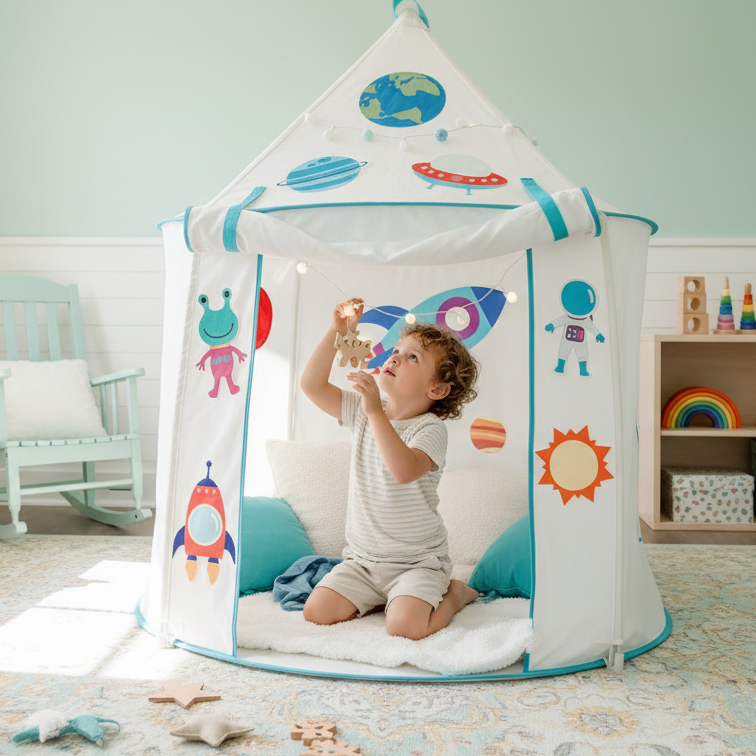
3. Defined, Cozy Spaces
Children feel calmer when they have clear boundaries.
Large, open spaces can sometimes feel overwhelming, especially for younger children. Smaller, defined areas create a sense of:
-
safety
-
ownership
-
emotional containment
This is why children naturally build:
-
blanket forts
-
reading corners
-
small hideaways
These structures provide something psychologically important—a space that feels like their own world.
4. Reduced Noise and Sensory Input
Calm environments minimize unnecessary sensory stimulation.
This includes:
-
loud toys
-
constant background noise
-
overlapping audio sources
When noise is reduced, children are better able to:
-
concentrate
-
engage in imaginative play
-
regulate emotions
Silence—or near silence—is not empty for children. It is full of possibilities.
5. Open-Ended Play Materials
Calm spaces are not defined by what is present, but by how those elements can be used.
Open-ended materials encourage:
-
creativity
-
exploration
-
sustained engagement
Instead of directing play, they invite it.
Examples include:
-
fabric
-
blocks
-
simple structures
-
imaginative play environments
These materials reduce pressure and allow children to take control of the play experience.
The Psychological Impact of Calm Spaces
Calm environments do more than just look appealing—they directly influence development.
Emotional Regulation
Children in calmer environments tend to:
-
experience fewer emotional spikes
-
recover from stress more quickly
-
feel more secure
Improved Focus
Reduced sensory input allows children to sustain attention for longer periods.
Deeper Imagination
When external stimulation decreases, internal creativity increases.
Why “Less” Often Leads to “More”
A common misconception is that children need more toys, more color, and more stimulation to stay engaged.
In reality, the opposite is often true.
When environments are simplified:
-
play becomes deeper
-
engagement lasts longer
-
creativity expands
Less input from the environment leads to more output from the child.
Designing Calm Play Spaces at Home
Parents can begin creating calmer environments with small, intentional changes.
Practical Approaches:
-
reduce visible clutter
-
rotate toys instead of displaying all at once
-
introduce soft lighting
-
Create a designated quiet play corner
-
use neutral or calming color tones
The goal is not perfection—it is balance.
The Role of Structured Play Environments
In recent years, there has been a shift from individual toys toward structured play environments.
Instead of focusing on objects, these environments focus on experience.
Well-designed play spaces combine:
-
physical comfort
-
emotional safety
-
creative flexibility
This is where modular and adaptable play systems become especially valuable.
A Thoughtful Approach to Play Design
Modern play design increasingly reflects principles from child psychology and environmental design.
Spaces are being created not to entertain constantly, but to support:
-
independent exploration
-
imaginative storytelling
-
emotional well-being
Products like ZeeZee Adventures reflect this shift by focusing on adaptable environments rather than fixed play outcomes.
Instead of dictating play, such systems act as a canvas—allowing children to shape their own experiences over time.
Calm as a Foundation for Creativity
When children feel calm, they:
-
take more creative risks
-
engage more deeply
-
explore ideas more freely
Calm is not the absence of activity.
It is the foundation that allows meaningful activity to happen.
A New Perspective on Play Spaces
The question is no longer:
“What toys should we buy?”
It is:
“What kind of environment helps children thrive?”
Calm spaces do not remove excitement.
They make space for it to emerge naturally.
Conclusion: Designing for the Child, Not the Noise
From a child’s perspective, a calm play space is not about aesthetics—it is about feeling.
Feeling safe.
Feeling focused.
Feeling free to imagine.
In a world that is increasingly fast and stimulating, calm becomes one of the most valuable things we can offer children.
Frequently Asked Questions (FAQ)
What makes a play space calming for children?
A calming play space typically includes soft lighting, minimal clutter, neutral colors, and defined cozy areas that reduce sensory overload.
Do children need bright and colorful playrooms?
Children benefit from color, but excessive brightness and visual stimulation can reduce focus and increase distraction.
Why do children prefer small enclosed play spaces?
Small spaces provide a sense of security and control, which helps children feel emotionally safe and more focused.
How can I make my child’s playroom calmer?
You can simplify the space by reducing clutter, limiting toys, using soft lighting, and creating a designated quiet play area.
Are calm spaces better for learning and development?
Yes. Research shows calm environments support focus, emotional regulation, and deeper imaginative play.





Comment (0)