
What to Do When Kids Are Stuck Indoors All Day
Long indoor days can feel endless for both children and parents. Whether it is heavy rain, extreme heat, illness, school holidays, or simply a lack of outdoor access, staying inside for hours at a time often changes the atmosphere within a home. Children become restless, emotional, noisy, frustrated, or repeatedly complain that they are bored. Parents begin searching for ways to keep everyone calm while also managing work, responsibilities, and their own stress levels.
Modern parenting often responds to these situations with screens. Tablets, streaming platforms, gaming consoles, and short-form videos provide immediate entertainment and temporary relief. Yet many families notice the same pattern after prolonged screen exposure. Children may initially seem calm, but later become irritable, overstimulated, emotionally reactive, or unable to engage in slower activities.
The problem is not necessarily that children are indoors. The deeper issue is that many indoor days revolve around passive entertainment rather than meaningful engagement.
Children do not simply need occupied time.
They need movement.
They need creativity.
They need an emotional connection.
They need opportunities for imagination, focus, and independence.
Indoor days can either increase overstimulation or become opportunities for emotional growth, creativity, and deeper family connection. The difference often depends on how the environment is structured.
In This Article
- Why indoor days affect children emotionally
- The hidden impact of overstimulation indoors
- Why boredom is not always a bad thing
- How movement changes children’s behaviour indoors
- Why imaginative play matters more than ever
- The importance of quiet spaces inside the home
- How indoor days affect focus and emotional regulation
- Practical ways to create healthier indoor routines
- What parents should avoid during long indoor days
- How to make indoor time feel meaningful rather than stressful
Why Indoor Days Affect Children Emotionally
Children are naturally designed for movement, exploration, curiosity, and sensory engagement. Outdoor environments provide opportunities for physical activity, fresh air, social interaction, independence, and emotional release. When children are suddenly confined indoors for long periods, many of those natural regulation systems become restricted.
This is why indoor days often lead to emotional overwhelm.
Children may become more sensitive, impatient, argumentative, or emotionally reactive because their nervous systems are not receiving the sensory balance they normally depend on. The issue is not simply boredom. In many cases, children are experiencing a build-up of physical energy, overstimulation, and emotional frustration all at once.
Modern homes can also unintentionally intensify this problem. Constant background noise, screens, notifications, clutter, bright lights, and fast-paced entertainment create continuous sensory input. Children’s nervous systems rarely get opportunities to slow down and reset.
As a result, emotional outbursts often increase throughout the day.
Many parents mistakenly interpret this as “bad behaviour,” when in reality children are often struggling with emotional and sensory dysregulation.
The Hidden Impact of Overstimulation Indoors
One of the biggest challenges during long indoor days is overstimulation. Modern children are exposed to enormous amounts of digital stimulation throughout daily life. Short-form videos, rapid scene changes, autoplay systems, gaming rewards, and endless scrolling all train the brain to expect constant novelty and immediate engagement.
When indoor days revolve entirely around screens, the nervous system rarely experiences calm.
This can affect children in several ways. Attention spans may shorten, emotional regulation becomes more difficult, and slower activities can begin to feel “boring” by comparison. Many children move rapidly from one source of entertainment to another without ever reaching deep engagement or meaningful focus.
Parents often notice that after too much screen time, children struggle to settle themselves emotionally. They may appear hyperactive, irritable, emotionally overwhelmed, or unable to transition calmly into bedtime routines.
The issue is not that technology itself is harmful. Screens can absolutely provide enjoyment, relaxation, and educational value. The problem emerges when passive stimulation completely replaces movement, creativity, independent play, and emotional connection.
Children need balance.
They need both stimulation and stillness.
Both entertainment and imagination.
Both excitement and calm.
Why Boredom Is Not Always a Bad Thing
One of the most common phrases parents hear during indoor days is, “I’m bored.”
For many adults, this immediately creates pressure to fix the situation. A screen appears, an activity is organised, or entertainment quickly fills the silence.
But boredom itself is not necessarily harmful.
In fact, boredom often becomes the starting point for creativity.
When children are not immediately distracted with external entertainment, the brain begins searching internally for engagement. This process encourages imagination, storytelling, problem-solving, and independent thinking.
Children often need time to move through boredom before creative play fully begins. At first, they may complain, wander around the house, or insist there is “nothing to do.” However, if given enough time and space, many children eventually begin creating games, building forts, roleplaying stories, drawing imaginary worlds, or inventing adventures.
The challenge is that modern entertainment interrupts this process too quickly.
When boredom is instantly replaced with digital stimulation, children lose opportunities to strengthen creativity and self-direction.
Allowing manageable boredom does not mean ignoring children’s emotional needs. It means recognising that discomfort is sometimes the doorway into imagination.
How Movement Changes Children’s Behaviour Indoors
Children regulate emotions through movement far more than many adults realise.
Physical activity helps children release stress, process sensory input, and balance energy levels naturally. When movement becomes restricted indoors, emotional tension often builds throughout the day.
This is why indoor movement matters so much.
Importantly, movement indoors does not need to look like structured exercise. Children respond best to playful movement rather than rigid routines.
Dancing around the living room, balloon games, indoor obstacle courses, scavenger hunts, yoga, stretching, animal roleplay, or imaginative adventures all help children release physical energy while remaining emotionally engaged.
Movement becomes even more effective when paired with creativity.
Pretending to be astronauts.
Jungle explorers.
Pirates.
Animals.
Superheroes.
These experiences combine physical activity with imagination, which supports both emotional regulation and cognitive development.
Many parents notice immediate behavioural improvements once children are given healthy opportunities for movement indoors. Emotional outbursts often decrease because the nervous system is finally receiving the physical release it needs.
Why Imaginative Play Matters More Than Ever
Modern childhood is increasingly dominated by passive entertainment. Children consume enormous amounts of ready-made content, leaving less room for imagination to emerge naturally.
This is why imaginative play has become so important.
Open-ended play encourages children to actively participate in creating experiences rather than simply consuming them. A cardboard box becomes a spaceship. Cushions become mountains. A blanket fort becomes a castle or secret hideout.
These moments may appear simple, but they strengthen incredibly important developmental skills.
Imaginative play supports:
- Creativity
- Emotional intelligence
- Problem-solving
- Storytelling abilities
- Language development
- Cognitive flexibility
- Social understanding
- Confidence
Children roleplaying different situations are also processing emotions and experimenting with ideas safely.
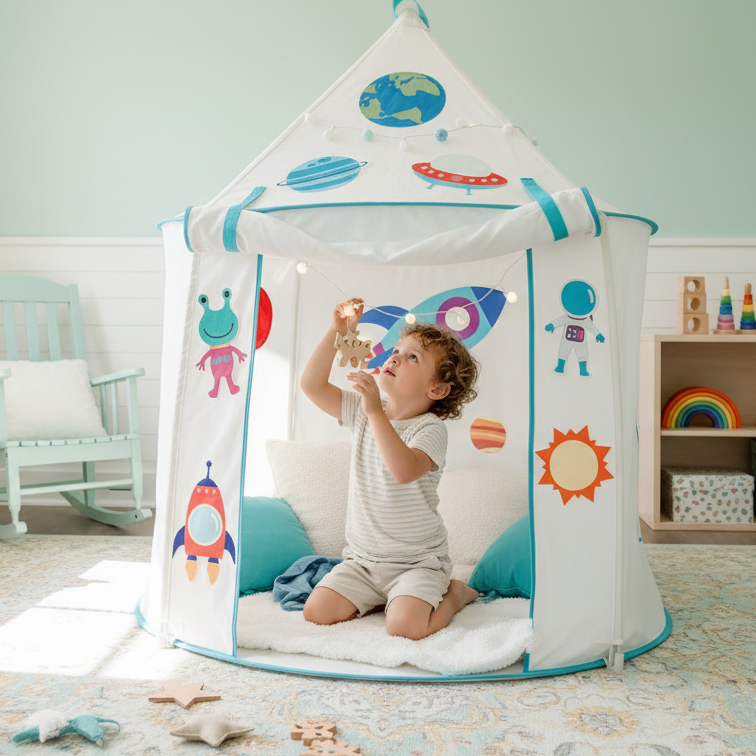
At ZeeZee Adventures, many families intentionally create imaginative indoor spaces that encourage children to slow down, build stories, and engage independently during long indoor days. Instead of relying entirely on overstimulating entertainment, these environments invite children to create experiences from their own imagination.
Importantly, imaginative play often begins quietly. Children may initially resist slower forms of engagement because their brains are accustomed to rapid digital stimulation. However, once they become immersed in creative play, many children experience calmer moods, stronger focus, and deeper emotional engagement.
The Importance of Quiet Spaces Inside the Home
Many modern homes are filled with constant stimulation.
Background television.
Notifications.
Bright lights.
Noise.
Clutter.
Continuous activity.
Children’s nervous systems can quickly become overwhelmed in these environments, particularly during long indoor periods.
This is why calm spaces inside the home matter.
Children benefit from areas that visually and emotionally invite slower engagement. A cosy reading corner, soft blankets, warm lighting, creative stations, or imaginative play tents can completely change how children experience indoor time.
Quiet spaces do not need to be large or expensive.
Often, the smallest environmental changes create the biggest emotional shifts.
Low-stimulation spaces help children regulate emotions, settle into creative play, and experience calmness without constant external input.
Many parents are surprised by how differently children behave once the home environment becomes more emotionally supportive rather than constantly stimulating.
How Indoor Days Affect Focus and Attention
One overlooked challenge of indoor days is their impact on focus.
Modern children are already growing up in highly distracted environments. Notifications, multitasking, fast-paced entertainment, and rapid digital content make it increasingly difficult for children to practice sustained attention.
When indoor days revolve entirely around screens or constant stimulation, children may struggle to remain engaged in slower activities.
However, focus is not simply something children naturally possess.
Focus is a skill developed through practice.
Children strengthen concentration when they become deeply absorbed in meaningful activities such as reading, drawing, building, puzzles, storytelling, and imaginative play.
This immersive state, often referred to as deep play, helps children develop persistence, emotional regulation, creativity, and independent thinking.
Indoor days can actually become ideal opportunities for deep play because children are not constantly rushing between external commitments.
The challenge is allowing enough uninterrupted time for children to move beyond boredom and into meaningful engagement.
Why Parents Feel Pressure to Constantly Entertain
Modern parenting culture often creates unrealistic expectations around indoor days.
Social media frequently presents highly curated versions of childhood filled with endless activities, educational setups, crafts, and organised entertainment. Parents may feel guilty if children complain about boredom or become restless indoors.
But children do not need constant entertainment to thrive.
In fact, over-entertainment can sometimes reduce opportunities for creativity and independent growth.
Children benefit from learning how to direct their own attention and create experiences independently.
Some of childhood’s most meaningful memories emerge from simple indoor moments:
Building forts.
Baking together.
Reading stories.
Listening to rain.
Creating imaginary worlds.
Dancing in the living room.
Watching films under blankets.
Parents do not need to create perfect indoor days.
They simply need to create enough opportunities for connection, movement, creativity, and calm.
Practical Ways To Create Healthier Indoor Days
One of the most effective approaches to indoor days is creating a gentle rhythm rather than a rigid schedule. Predictability helps children feel emotionally secure, particularly during long periods indoors.
A balanced indoor day may include:
Movement time in the morning.
Creative activities during quieter periods.
Independent play opportunities.
Reading or storytelling.
Sensory activities.
Family connection.
Quiet wind-down routines.
Importantly, indoor days should not revolve around nonstop productivity. Children also need downtime, rest, and slower moments where imagination can emerge naturally.
Parents should also avoid trying to fill every moment with structured activities. Over-scheduling indoors can become just as overwhelming as overstimulation from screens.
Sometimes, the healthiest thing parents can do is step back and allow children enough space to create their own experiences.
What Parents Should Avoid During Long Indoor Days
Many indoor struggles become worse when parents unintentionally rely on constant stimulation as the only solution.
Some common mistakes include:
Using screens to eliminate every moment of boredom.
Replacing one activity immediately with another.
Over-scheduling the entire day.
Expecting children to sit still for long periods.
Ignoring the importance of movement.
Maintaining a constant background noise throughout the home.
Creating pressure for “perfect” indoor experiences.
Children do not need endless entertainment.
They need balanced environments that support emotional regulation, creativity, focus, and connection.
Final Thoughts
Indoor days are inevitable in family life.
There will always be rainy weekends, illnesses, busy seasons, and long stretches where children cannot spend enough time outdoors.
But being indoors does not have to mean endless boredom, emotional chaos, or constant screen dependence.
Indoor days can become opportunities for creativity, imagination, focus, emotional growth, and meaningful family connection.
Children do not always need louder toys, more entertainment, or nonstop stimulation.
Often, they simply need calmer spaces.
More movement.
More imagination.
More opportunities to create.
More emotional connection.
Even within four walls, childhood still needs room for wonder.
And sometimes, the most meaningful memories are created not through elaborate activities, but through ordinary moments where children feel safe enough to imagine, explore, and simply be children.
FAQ Section
How can I keep my child entertained indoors without too much screen time?
The best approach is balancing movement, creativity, and quiet engagement. Activities such as imaginative play, reading, building forts, storytelling, drawing, puzzles, dancing, and sensory play help children stay engaged without relying entirely on screens.
Why do children become more emotional after staying indoors too long?
Children naturally regulate emotions through movement, exploration, and sensory experiences. Long indoor periods combined with overstimulation or limited physical activity can overwhelm the nervous system, leading to irritability and emotional outbursts.
Is boredom indoors actually healthy for children?
Yes. Moderate boredom can encourage creativity, imagination, problem-solving, and independent thinking. When children move through boredom naturally, they often begin creating their own games and experiences.
How much screen time is acceptable during indoor days?
There is no universal rule for every family, but balance matters. Screens become problematic when they completely replace movement, creativity, sleep, emotional connection, or independent play.
What are the best indoor activities for improving focus?
Reading, puzzles, building projects, storytelling, drawing, sensory play, and imaginative roleplay are excellent for strengthening concentration and sustained attention.
Why is imaginative play important indoors?
Imaginative play supports creativity, emotional intelligence, language development, social understanding, and problem-solving skills. It also helps children process emotions while encouraging independent engagement.
How can parents create a calmer indoor environment?
Small changes make a big difference. Soft lighting, organised play areas, cosy reading spaces, imaginative corners, calming routines, and reduced background noise all help children feel more emotionally regulated indoors.
What should parents do if children constantly say they are bored?
Parents should avoid rushing to solve boredom immediately. Often, boredom is the transition phase before creativity begins. Giving children time and space to create their own activities helps strengthen independence and imagination.
Can indoor days still be meaningful without expensive toys or activities?
Absolutely. Children often gain the most developmental value from simple experiences such as storytelling, blanket forts, conversations, dancing, reading, drawing, and imaginative play.
Why do children struggle with slower indoor activities at first?
Modern children are highly accustomed to fast-paced digital stimulation. Slower activities like reading or imaginative play require an adjustment period before children fully engage. With time and consistency, many children begin enjoying deeper forms of play naturally.
- Baby Registry
- Baby Shower
- Best gifts
- best play tent
- Best toys
- Best toys 2025
- Best toys 2026
- birthday gift ideas for 3 year old
- birthday gift ideas for 4 year old
- birthday gift ideas for 5 year old
- birthday gift ideas for 6 year old
- birthday gift ideas for 7 year old
- Blog
- calming toys
- child development
- children
- christmas gift ideas
- customizable play tent
- gift for kids ages 3–8
- Holidaygiftguide
- jeanpiaget
- kids play tent
- Montesoori
- montessori
- Montessori Gifts
- Montessori play
- open-endedplay
- openendedplay
- parenting
- parents
- play tent
- Play Tents
- playroom inspo
- pretend play
- sahm
- Sensory Play
- sensory play gifts
- teepee play tent
- toddler toys
- tonies
- toyclutter
- toys
- ZeeZee
- ZeeZee Adventure
- ZeeZee Adventure Tent
- ZeeZee Adventures






Comment (0)