

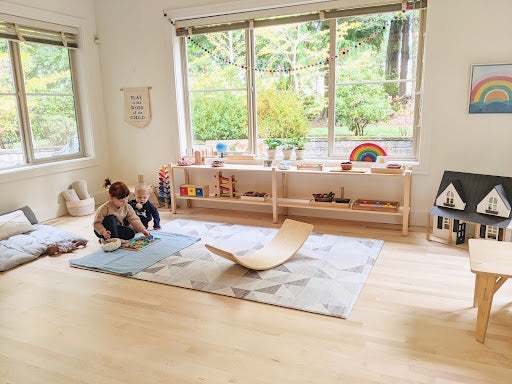
Why Daily Rhythms Help Children Feel Safer, Calmer, and More Independent
There’s a moment most parents know well.
You say it’s time to leave, clean up, or move on—and suddenly, everything feels harder than it should.
It’s easy to think it’s resistance. But more often, it’s uncertainty.
For young children, the world can feel unpredictable. And one of the simplest ways to make it feel manageable is through rhythm.
What Is a Daily Rhythm?


A daily rhythm isn’t a rigid schedule.
It’s a familiar flow to the day—where things happen in a predictable order:
-
Wake up
-
Play
-
Eat
-
Rest
-
Play again
-
Wind down
The timing can shift. The order stays recognizable.
And that’s what children hold onto.
Why Predictability Feels Like Safety
Children don’t control much in their day.
So when things feel unpredictable, it can lead to:
-
Anxiety
-
Resistance
-
Emotional outbursts
But when patterns repeat, something shifts.
They begin to trust what’s coming next—and that sense of predictability creates calm.
It Reduces Power Struggles


Many daily struggles aren’t about the activity itself—they’re about the transition.
When transitions are predictable, they stop feeling abrupt.
Instead of sudden changes, children begin to expect the flow of the day. And when expectations are clear, resistance softens.
It Builds Independence Naturally
With repetition, children begin to internalize the rhythm.
You might notice:
-
They start cleaning up without reminders
-
They move toward the next activity on their own
-
They feel more confident navigating their day
Independence doesn’t need to be taught directly—it grows through familiarity.
It Supports Emotional Regulation
Rhythm creates emotional anchors throughout the day.
Children begin to associate certain moments with calm, quiet play, rest, or winding down.
A cozy, enclosed space—like a ZeeZee-style play tent—can naturally become that safe place. A spot where things feel predictable, quiet, and manageable again.
How to Start a Simple Daily Rhythm
You don’t need to overhaul your day.
Start with a few anchor points:
-
Morning: wake → breakfast → play
-
Midday: lunch → rest → quiet activity
-
Evening: dinner → calm play → bedtime
Consistency matters more than perfection.
Small Shifts That Make a Big Difference
-
Use consistent phrases for transitions
-
Keep environments calm and uncluttered
-
Allow play to come to a natural pause
Final Thoughts
A daily rhythm doesn’t just organize your day.
It changes how your child experiences it.
When life feels predictable, children feel safe.
And from that place, independence and emotional balance naturally follow.
-
Avoid rushing between activities
Children respond to patterns—not precision.
FAQs
What’s the difference between a schedule and a rhythm?
A schedule is time-based. A rhythm focuses on order and flow, making it more flexible.
How long does it take for rhythm to work?
Many children begin responding within a few days to a couple of weeks.
Can rhythm reduce tantrums?
Yes—especially those triggered by transitions or unpredictability.
What if our days aren’t consistent?
Even a few predictable anchors (like meals or bedtime) can help.
Do older kids benefit from rhythm too?
Absolutely. The structure evolves, but predictability still supports emotional stability.






Comment (0)