
Why Independent Play Feels So Hard (And How to Make It Easier)
Here’s a moment many parents know well.
You sit down for a second—and almost immediately hear:
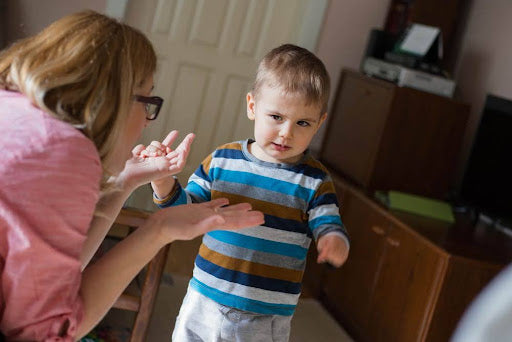
“Play with me.”
And it’s not just once. It’s constant.
It can feel like your child doesn’t know how to play without you.
But that’s not quite what’s happening.
The Pattern That Builds Over Time
Most children aren’t born dependent on adult attention.
They learn it.
We respond quickly (because we care), we engage often, and over time, that becomes the expectation.
Not intentionally—just naturally.
Why It Feels Hard to Step Back
When you try to step away, it can feel uncomfortable.
For them—and for you.
There might be frustration. Maybe even a meltdown.
But that reaction isn’t a failure.
It’s part of the adjustment.
What Happens If You Give It a Little Time
If you resist stepping in right away, something subtle happens.
They pause.
They look around.
They start.
Not instantly—but gradually.
And that moment, when they initiate play on their own, is where independence begins.
The Environment Matters More Than You Think
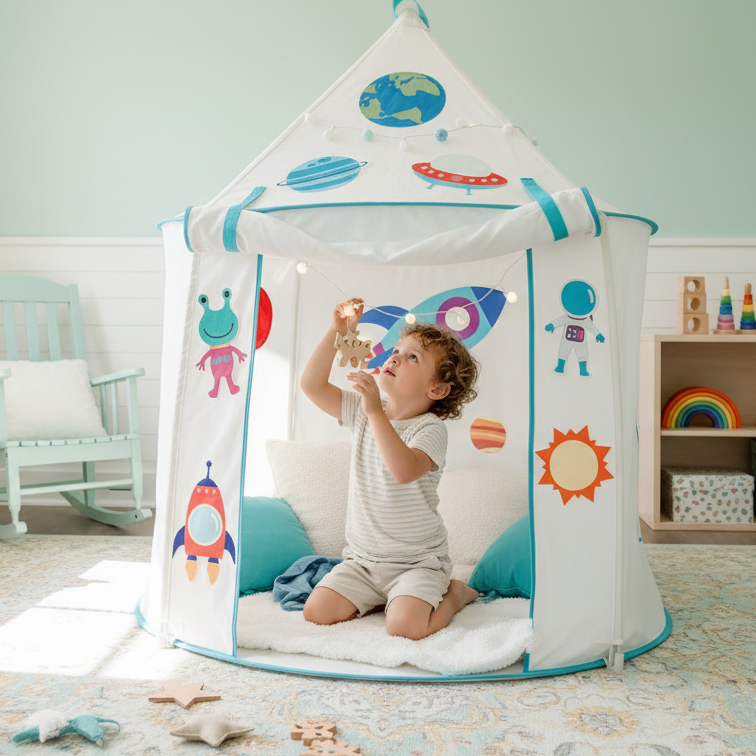
Some spaces invite play.
Others overwhelm it.
When there’s too much noise—too many toys, too many options—children often disengage.
But in a calmer space, with fewer choices, something shifts.
They focus.
The First Few Minutes Are the Hardest
There’s usually a gap between “I’m bored” and actual play.
That gap can feel uncomfortable.
But it’s also where the transition happens.
If we fill it too quickly, we interrupt the process.
If we let it play out, something else takes over.
Where to Start
You don’t need to change everything.
Just try:
-
Staying nearby, but less involved
-
Letting your child lead
-
Waiting a little longer before stepping in
Small shifts create space for bigger changes.
Final Thought
Independent play doesn’t happen all at once.
It builds slowly, quietly, almost unnoticed.
Until one day, you look over—and your child is fully engaged in something they started on their own.
And that’s when you realize:
They didn’t need more help.
They just needed space.
FAQs
Why does my child always want me to play with them?
Because they’re used to interaction. It becomes a learned pattern over time.
Is independent play something kids learn?
Yes—it develops gradually with practice and the right environment.
How long should I wait before stepping in?
Even a few extra minutes can make a difference.
What if my child gets upset when I step away?
That’s normal. Stay calm and consistent—it improves with time.
Does independent play help development?
Absolutely. It supports focus, creativity, and confidence.





Comment (0)