
Why Kids Play Longer in Some Rooms Than Others
Introduction
Have you ever spent hours designing the perfect playroom, only to find your child happily playing beneath the dining table instead?
Or perhaps you've noticed your child barely touches the toys in their bedroom but can spend an entire afternoon turning the living room into a jungle, spaceship, or castle.
If so, you're not alone.
Parents often assume that children play the longest where there are the most toys. Surprisingly, child development research and everyday observation suggest something quite different.
Children don't choose play spaces based solely on what's available.
They choose spaces based on how those environments make them feel.
A room's lighting, layout, noise level, familiarity, comfort, flexibility, and even its emotional atmosphere influence how long children remain engaged in play.
Some spaces naturally encourage imagination.
Others unintentionally interrupt it.
Understanding why this happens helps parents create environments that support deeper concentration, richer storytelling, and longer periods of independent play without needing more toys or expensive renovations.
The encouraging news is that meaningful changes are often surprisingly simple.
Sometimes moving a bookshelf, reducing clutter, creating a cozy corner, or simply allowing children ownership over one small area can transform the way they play.
In this guide, we'll explore the science behind children's preferred play spaces, the psychology of environmental design, and practical ways to create rooms that invite creativity rather than distract from it.
Key Takeaways
Before we explore the details, here are the most important ideas to remember:
-
Children respond to environments just as much as toys.
-
Cozy, predictable spaces often encourage longer imaginative play.
-
Too many toys can reduce engagement instead of increasing it.
-
Lighting, noise, clutter, and layout all influence attention.
-
Children play longest where they feel emotionally safe.
-
Open-ended environments encourage creativity better than highly structured ones.
-
Small changes to a room can have a significant impact on independent play.
-
The goal isn't creating the "perfect playroom," but creating spaces that inspire curiosity.
Why Environment Shapes Children's Play
Children Experience Rooms Differently Than Adults
Adults often evaluate a room based on appearance.
Is it tidy?
Stylish?
Well-organized?
Children notice something entirely different.
They experience a room through movement, curiosity, comfort, and possibility.
They instinctively ask questions such as:
-
Can I build here?
-
Can I move freely?
-
Does this space feel safe?
-
Can I leave my project unfinished?
-
Does this place belong to me?
These questions are rarely spoken aloud, yet they influence where children naturally choose to spend their time.
A beautifully decorated room filled with delicate furniture may impress adults but discourage exploration.
Meanwhile, a quiet corner with a few cushions and blankets may invite hours of imaginative play.
The Environment Becomes Part of the Story
For adults, a room is simply a location.
For children, it often becomes another character in their imagination.
A hallway becomes an airport.
The staircase transforms into a mountain.
The dining table becomes a hidden cave.
A reading nook becomes a secret library.
The more flexible an environment feels, the easier it becomes for children to transform it into something entirely new.
This ability to reinterpret surroundings is one of the defining features of imaginative play.
Every Room Sends Invisible Messages
Without realizing it, every environment communicates expectations.
A formal dining room suggests:
"Be careful."
A cozy reading corner suggests:
"Relax."
A cluttered room quietly says:
"There's too much happening."
A calm, open play area communicates:
"You have space to explore."
Children constantly interpret these environmental cues.
The spaces where they play longest usually communicate freedom rather than restriction.
The Psychology of Safe Spaces
Feeling Safe Encourages Exploration
Before children can become deeply imaginative, they first need to feel secure.
Psychologists often describe this as having a "safe base."
When children feel emotionally and physically comfortable, they become more willing to:
-
experiment
-
solve problems
-
invent stories
-
take creative risks
-
play independently
If an environment feels stressful, noisy, or unpredictable, children naturally spend more energy monitoring their surroundings than exploring their imagination.
Why Children Love Small Spaces
One fascinating observation appears across cultures.
Children consistently enjoy creating small enclosed spaces.
Think about:
-
blanket forts
-
cardboard boxes
-
reading tents
-
pillow forts
-
treehouses
-
playhouses
-
spaces beneath tables
These environments share common characteristics.
They're cozy.
Predictable.
Sheltered.
Easy to understand.
Inside these spaces, children often experience a stronger sense of ownership and control.
That feeling encourages longer periods of focused play.
Ownership Changes Everything
Children naturally invest more attention in places they feel belong to them.
Ownership doesn't require giving children an entire room.
Even one shelf.
One reading corner.
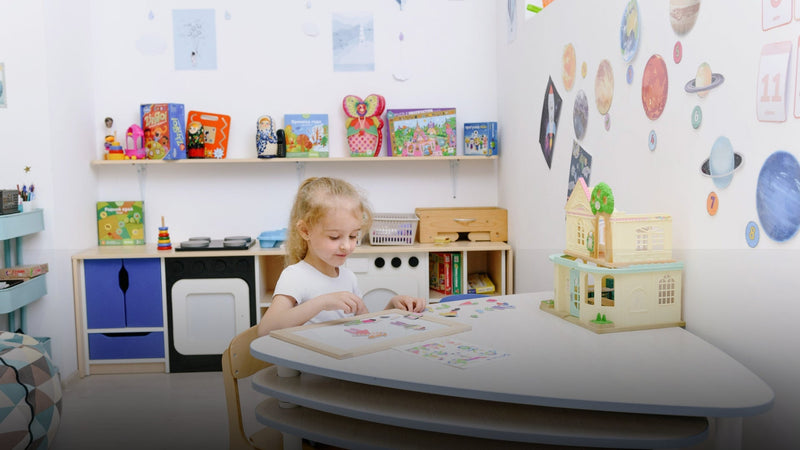
One art table.
One imaginative play area.
These small spaces communicate:
"This is your place."
When children feel ownership, they become more likely to:
-
return repeatedly
-
organize materials
-
continue unfinished projects
-
invent ongoing stories
Ownership transforms a space from somewhere they visit into somewhere they create.
Why Familiar Spaces Encourage Longer Play
Novelty is exciting.
Familiarity is comforting.
Children need both.
Highly stimulating environments may capture attention briefly.
Familiar spaces, however, often support deeper engagement.
Imagine reading your favorite book in a comfortable chair.
The chair itself isn't exciting.
Its predictability allows your attention to remain on the story.
Children experience something similar.
When they know exactly where materials are located and understand the environment, they spend less mental energy adjusting to the room and more energy imagining within it.
This helps explain why children often revisit the same favorite corner of the house even when many other options exist.
Why Bigger Isn't Always Better
Parents sometimes assume larger playrooms automatically create better play experiences.
Not necessarily.
Very large spaces can sometimes feel overwhelming, especially for younger children.
Smaller, clearly defined play areas often encourage greater concentration because children understand the boundaries of the environment.
This doesn't mean children should be confined.
Rather, thoughtfully designed zones help reduce distractions.
For example:
-
a reading corner
-
an art station
-
a building area
-
a pretend play space
Each area gently communicates its purpose while still allowing flexibility and creativity.
The Emotional Atmosphere of a Room
Children don't only respond to physical environments.
They also respond to emotional ones.
A room associated with:
-
family conversations
-
bedtime stories
-
laughter
-
shared games
-
comforting routines
Often feels more inviting than a room associated with stress, constant correction, or interruptions.
Parents sometimes focus on decorating spaces while overlooking the emotional experiences connected to them.
In reality, positive memories become part of the environment itself.
Children naturally return to places where they feel calm, connected, and accepted.
Why the Best Play Spaces Feel Flexible
One reason children lose interest in certain rooms is that the environment tells only one story.
A room permanently designed around a single theme may eventually limit imagination.
Flexible spaces encourage reinvention.
Today, the fort is a pirate ship.
Tomorrow it's a wildlife rescue center.
Next week, it becomes a rocket launch station.
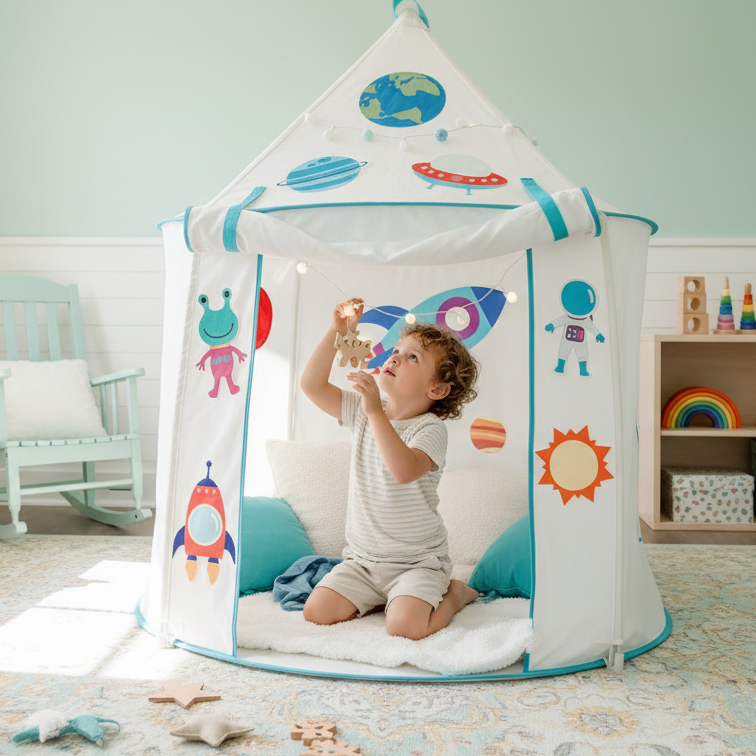
Many families discover that adaptable play environments naturally support this kind of evolving storytelling. Rather than replacing themed toys whenever interests change, spaces that can transform alongside a child's imagination remain engaging for much longer. This design philosophy is reflected in ZeeZee Adventures, where interchangeable StickeeZ themes allow one familiar play tent to become countless imaginative worlds, encouraging children to return with new ideas instead of searching for new toys.

How Light, Sound, Clutter, and Layout Shape Children's Play
If you've ever wondered why your child happily spends an hour building in one corner of the house but loses interest within minutes somewhere else, the answer often has less to do with the toys and more to do with the environment.
Children are constantly responding to sensory information.
Without consciously realizing it, they notice:
-
how bright a room feels
-
whether it's noisy or peaceful
-
How easy it is to move around
-
whether the space feels organized
-
If there are too many choices competing for attention
These environmental factors influence concentration, creativity, and the length of time children remain engaged in play.
Let's explore how each element affects the way children experience a room.
Lighting Has a Bigger Impact Than Most Parents Realize
Light influences more than visibility.
It affects mood, attention, comfort, and even energy levels.
Adults experience this every day. A bright office feels different from a cozy café. Children respond in much the same way.
Natural Light Encourages Exploration
Rooms with natural daylight often feel inviting and calming.
Sunlight creates gentle variations in brightness throughout the day, making spaces feel alive without becoming overstimulating.
Children frequently prefer playing near:
-
large windows
-
glass doors
-
sunlit reading corners
-
bright family rooms
Natural light also makes it easier to notice colors, textures, and small details, encouraging closer observation during imaginative play.
When possible, arrange play areas where children can enjoy daylight rather than relying solely on artificial lighting.
Soft Lighting Creates a Sense of Comfort
While bright daylight supports active play, softer lighting can encourage quieter activities.
Reading.
Drawing.
Building.
Pretend play.
Warm lamps or soft indirect lighting often make children feel relaxed, especially during the late afternoon or evening.
Many parents notice that bedtime stories become more enjoyable when the environment feels calm rather than brightly illuminated.
The goal isn't dimness.
It's comfort.
Noise Can Interrupt Imagination
Children don't simply hear noise.
They work to process it.
Television in the background.
Kitchen appliances.
Multiple conversations.
Traffic outside.
Notifications.
Every sound competes for attention.
For some children, especially those who are more sensitive to sensory input, constant background noise makes sustained play much more difficult.
Quiet Spaces Support Deeper Concentration
Children often remain engaged longer when they can hear themselves think.
This doesn't require complete silence.
Gentle household sounds are perfectly normal.
The important factor is reducing unpredictable interruptions.
Consider placing imaginative play areas away from:
-
constantly running televisions
-
loud household appliances
-
busy entryways
-
frequent foot traffic
Even moving a play corner a few feet away from the main household activity can noticeably increase focus.
Music Can Influence Play
Background music isn't always distracting.
Soft instrumental music may support calm activities such as drawing or reading.
Highly energetic music, however, often shifts children's attention toward movement instead of sustained imaginative thinking.
Matching the environment to the activity helps children remain engaged for longer periods.
Why Too Many Toys Can Shorten Play
This surprises many parents.
Children don't necessarily play longer when surrounded by more toys.
In fact, research and observation suggest the opposite can happen.
Choice Overload Is Real
Imagine entering a restaurant with a menu containing 500 different meals.
Instead of feeling excited, you might feel overwhelmed.
Children experience something similar.
When dozens of toys compete for attention, deciding what to play with becomes difficult.
Rather than becoming deeply engaged, children often move rapidly from one toy to another.
Nothing holds their attention for very long.
Fewer Choices Encourage Deeper Play
Many child development specialists recommend displaying fewer toys at one time.
This doesn't mean getting rid of everything.
Instead, rotate toys regularly.
When only a carefully selected group of toys is available, children tend to:
-
focus longer
-
explore materials more deeply
-
Invent new ways to use familiar toys
-
revisit unfinished ideas
Sometimes less truly becomes more.
Clutter Creates Invisible Distractions
Adults often underestimate how visually stimulating a room can become.
Bright colors.
Overflowing shelves.
Open storage bins.
Busy wall decorations.
Flashing toys.
Children process all of this simultaneously.
The result can be cognitive overload.
Organized Spaces Invite Creativity
Organization doesn't mean creating a perfectly minimalist home.
It means making materials easy to understand.
Children benefit when:
-
Books are grouped together
-
Art supplies have one home
-
Building materials stay together
-
Costumes remain in one basket
Predictability reduces mental effort.
Instead of searching for materials, children begin creating immediately.
Clear Floors Encourage Movement
Children naturally move while playing.
They crawl.
Build.
Stretch.
Dance.
Pretend.
Rooms crowded with unnecessary furniture or overflowing storage can unintentionally limit these movements.
Open floor space gives children freedom to:
-
spread out projects
-
construct larger creations
-
move between activities naturally
-
collaborate with siblings
Sometimes removing one unused piece of furniture creates more play value than buying several new toys.
The Power of Defined Play Zones
Children often concentrate better when rooms include clear but flexible areas for different types of play.
These zones don't need walls or expensive furniture.
Simple arrangements work beautifully.
For example:
A Reading Corner
A comfortable chair.
Soft cushions.
A small bookshelf.
Good lighting.
Children immediately understand that this area invites quiet exploration.
A Building Zone
Blocks.
Magnetic tiles.
Construction materials.
Large floor space.
Children know they can leave projects standing and continue later.
An Art Area
Paper.
Markers.
Paint.
Scissors.
Glue.
Keeping creative supplies together encourages spontaneous artistic expression.
A Pretend Play Area
Dress-up clothes.
Stuffed animals.
Puppets.
Simple props.
Open-ended materials.
This becomes the place where imagination takes the lead.
Why Children Love Flexible Spaces
One reason children often ignore highly themed rooms is that those environments already tell a complete story.
A room permanently designed as a pirate ship leaves little room for imagination.
Children become passengers in someone else's story.
Flexible environments invite authorship.
Today the space becomes a bakery.
Tomorrow a veterinary clinic.
Next week an underwater research station.
The same environment supports countless adventures because children decide what happens next.
Color Influences Mood More Than We Realize
Bright colors certainly attract attention.
However, too many bold colors competing within one room can become visually overwhelming.
Many educators and child development specialists prefer balanced environments using softer tones with carefully chosen colorful accents.
This approach allows children's artwork, toys, and creations to become the visual focus instead of competing with the room itself.
The objective isn't creating a perfectly neutral space.
It's creating one where imagination has room to stand out.
The Best Play Spaces Continue Evolving
Perhaps the biggest difference between rooms children briefly visit and rooms where they happily remain for hours is flexibility.
Great play spaces never feel finished.
Children continually add ideas.
Move furniture.
Build larger worlds.
Introduce new characters.
Expand old stories.
This sense of ongoing possibility encourages repeated visits because each play session becomes different from the last.
Many parents discover that adaptable play environments naturally support this process. Instead of encouraging children to move on after the excitement of a new toy fades, flexible spaces evolve alongside their imagination. This principle is reflected in ZeeZee Adventures, where interchangeable StickeeZ themes transform one familiar play tent into countless imaginative settings. A child might spend one weekend exploring a dinosaur jungle, the next navigating outer space, and another relaxing in a cozy reading nook, all within the same trusted environment.
Why Cozy Spaces Inspire Imagination and How to Design Better Play Environments
By now, it's clear that children don't choose where to play based only on the number of toys available.
They choose spaces that make them feel comfortable, curious, and free to explore.
Interestingly, many of the places children naturally gravitate toward aren't elaborate playrooms at all.
They're blanket forts.
Reading nooks.
Corners behind the sofa.
Spaces beneath the dining table.
Treehouses.
Cardboard boxes.
These small environments share something important.
They make children feel safe enough to imagine.
Why Kids Love Cozy Spaces
Think about the places children build on their own.
They rarely construct enormous open areas.
Instead, they create enclosed spaces with blankets, cushions, chairs, and pillows.
This isn't accidental.
Children are naturally drawn to environments that feel sheltered and manageable.
Small Spaces Feel Safe
Large rooms contain many distractions.
There is more movement.
More noise.
More visual information.
Smaller spaces reduce those distractions.
Inside a blanket fort or reading tent, children often feel protected from the busy world around them.
That sense of security allows the brain to focus on imagination rather than constantly monitoring the environment.
Cozy Spaces Create Ownership
Children love spaces that feel like their own.
Even if it's only a small corner of the house, having a place where they decide:
-
what happens
-
who visits
-
how it's decorated
-
What stories unfold
create a powerful sense of independence.
Ownership encourages responsibility.
Children often return to these spaces repeatedly because they feel connected to them.
Enclosed Spaces Reduce Sensory Distractions
Children process enormous amounts of sensory information every day.
Movement.
Voices.
Bright lights.
Televisions.
Household activity.
Small enclosed play spaces naturally reduce some of this sensory input.
For many children, especially those who become overwhelmed by busy environments, this creates ideal conditions for focused play.
Instead of reacting to everything happening around them, they become immersed in the world they've created.
Why Blanket Forts Never Go Out of Style
Blanket forts have remained a childhood favorite for generations.
Not because they're expensive.
Not because adults designed them.
Because children create them.
The building process itself becomes part of the adventure.
First comes planning.
Which chairs should we use?
How will the roof stay up?
Where should the entrance go?
Then comes problem-solving.
The blanket keeps slipping.
The walls aren't tall enough.
The roof needs more support.
Every challenge encourages experimentation.
By the time the fort is finished, children are already deeply engaged before the actual play even begins.
Sensory-Friendly Spaces Encourage Longer Play
Not every child experiences environments the same way.
Some children enjoy lively, energetic spaces.
Others thrive in quieter surroundings.
Understanding your child's sensory preferences can dramatically improve independent play.
Visual Calm Matters
Busy rooms filled with bright decorations, overflowing toy bins, and flashing electronic toys constantly compete for attention.
Children may struggle to focus because their brains continue processing everything they see.
Creating visual calm doesn't mean removing color or fun.
Instead, it means reducing unnecessary visual competition.
Simple storage.
Organized materials.
Clear floor space.
A few carefully chosen decorations.
These changes often help children remain engaged for longer periods.
Comfortable Seating Invites Staying
Adults naturally spend more time in comfortable environments.
Children are no different.
Adding:
-
floor cushions
-
bean bags
-
soft rugs
-
cozy blankets
-
child-sized chairs
Encourages children to settle into activities instead of constantly moving elsewhere.
Comfort supports concentration.
Familiar Routines Strengthen Play
Children often begin playing more quickly when they know what to expect.
Perhaps every Saturday morning begins with books inside the reading corner.
Every rainy afternoon starts with building forts.
Every evening includes quiet drawing time.
Predictable routines help children transition into imaginative play with less effort.
Common Playroom Mistakes Parents Make
Parents work hard to create wonderful spaces for their children.
Sometimes, however, good intentions unintentionally reduce engagement.
Mistake 1: Displaying Every Toy
Many parents believe all toys should remain available at once.
Unfortunately, too many options often shorten attention spans.
Instead of becoming absorbed in one activity, children jump rapidly between choices.
Toy rotation keeps environments feeling fresh while encouraging deeper exploration.
Mistake 2: Decorating for Adults Instead of Children
Beautiful playrooms certainly have their place.
But children care less about stylish furniture and more about possibilities.
Ask yourself:
Can my child move things?
Can they rearrange materials?
Can they create something new?
Rooms designed around flexibility usually outperform rooms designed primarily for appearance.
Mistake 3: Expecting Perfect Tidiness
Creative play is naturally messy.
Projects spread across the floor.
Blocks become cities.
Art supplies migrate across the table.
Pretend kitchens expand into restaurants.
While basic organization remains helpful, expecting constant perfection can interrupt creativity.
Sometimes leaving an unfinished project overnight encourages children to continue building the next day.
Mistake 4: Interrupting Deep Play
Children often require twenty to thirty minutes before reaching their deepest level of imaginative engagement.
Frequent interruptions for snacks, photos, cleaning, or transitions can reset this process.
Whenever possible, allow uninterrupted periods where children remain fully immersed in their ideas.
Designing a Play Space That Grows With Your Child
Children's interests naturally evolve.
Today's dinosaur enthusiast may become tomorrow's astronaut, chef, veterinarian, or storyteller.
Instead of redesigning an entire room each time interests change, create a flexible foundation.
Neutral furniture.
Movable storage.
Open-ended materials.
Adaptable decorations.
This allows the environment to evolve alongside your child rather than becoming outdated after a few months.
Encourage Storytelling Through the Environment
Every great play space quietly asks a question.
"What adventure will happen here today?"
Instead of filling every corner with predetermined themes, leave room for imagination.
A simple play scarf might become:
-
a superhero cape
-
a river
-
a royal flag
-
butterfly wings
-
a magic carpet
A cardboard box may transform into:
-
a bakery
-
a submarine
-
a rocket
-
a castle
-
a time machine
The fewer assumptions the environment makes, the more opportunities children have to invent their own stories.
Flexible Spaces Create Endless Possibilities
One reason children often return to the same cozy corner is that it never has to stay the same.
Today's reading nook becomes tomorrow's explorer's camp.
The blanket fort becomes a veterinary clinic.
The pretend kitchen becomes a television studio.
This ongoing transformation keeps curiosity alive because every visit offers something new.
Many families intentionally choose adaptable play environments for exactly this reason. Rather than providing one fixed experience, flexible spaces invite children to reinvent them repeatedly. ZeeZee Adventures was designed around this principle. With interchangeable StickeeZ themes, a single play tent can become a magical forest, an underwater expedition, a prehistoric world, or a peaceful reading retreat. Instead of directing children's stories, the environment supports whatever adventure they imagine next, encouraging longer periods of independent, creative play.
The Best Play Spaces Feel Alive
Children don't remember rooms because they looked perfect.
They remember how those rooms made them feel.
Safe enough to dream.
Comfortable enough to stay.
Curious enough to explore.
Confident enough to invent.
The most successful play environments aren't the ones with the most toys or the biggest budgets.
They're the ones that quietly invite children to become explorers, builders, artists, scientists, storytellers, and problem-solvers.
Creating Play Spaces That Inspire Longer, Happier, and More Imaginative Play
By now, one idea should stand out:
Children don't stay engaged because a room is filled with toys. They stay engaged because the environment supports the way they naturally play.
The most memorable play spaces aren't necessarily the biggest, newest, or most expensive.
They're the ones that make children feel safe enough to explore, comfortable enough to focus, and free enough to imagine.
Fortunately, creating that kind of environment doesn't require a major home renovation.
Small, thoughtful adjustments often make the biggest difference.
Room-by-Room Tips to Encourage Longer Play
Every home is different, but almost every family can create spaces that encourage deeper engagement.
The Living Room
Many parents are surprised that children often prefer the living room over their own playroom.
Why?
Because it's where life happens.
Children enjoy being close to their parents, even when they're playing independently.
Rather than moving every toy into a separate room, consider creating a small play corner within the family space.
A basket of books.
A few building toys.
An art tray.
A cozy rug.
Children often play longer when they feel connected without needing constant interaction.
The Bedroom
A child's bedroom should be more than a place for sleeping.
It can also support quiet, independent activities.
Keep this space calm rather than overcrowded.
Consider including:
-
a reading nook
-
a soft rug
-
a small shelf with favorite books
-
simple open-ended toys
-
a comfortable chair or floor cushion
Bedrooms work particularly well for imaginative storytelling and quiet creative projects.
Outdoor Spaces
Children often play differently outdoors.
Nature provides materials that constantly change.
Leaves.
Sticks.
Stones.
Mud.
Flowers.
Clouds.
Unlike many manufactured toys, natural environments have no single purpose.
One stick may become:
-
a fishing rod
-
a magic wand
-
a horse
-
a flagpole
-
a telescope
Outdoor spaces naturally encourage divergent thinking because children decide what each object represents.
Small Homes Can Inspire Big Imaginations
Parents sometimes worry that limited space prevents meaningful play.
In reality, children rarely need large rooms.
They need adaptable ones.
Even a small apartment can include:
-
a reading corner
-
a blanket fort
-
an art station
-
a building basket
-
a pretend play box
Imagination depends far more on possibility than square footage.
Frequently Asked Questions
Why does my child ignore their playroom?
This is extremely common.
Children often prefer environments where they feel emotionally connected to the rest of the family.
A playroom that feels isolated may receive less use than a cozy corner in the living room.
The answer isn't necessarily buying more toys.
Sometimes it's simply bringing play closer to where everyday family life happens.
Do children need a dedicated playroom?
Not at all.
Many children thrive without one.
A thoughtfully designed corner of a shared room can provide everything needed for meaningful play.
The quality of the environment matters much more than its size.
Why does my child play longer with household objects?
Open-ended objects invite imagination.
A cardboard box doesn't tell children what it should become.
Neither does a blanket or a wooden spoon.
Because these materials have no fixed purpose, children naturally invent one.
That creative process keeps play interesting.
Should I rotate toys?
Yes.
Rotating toys is one of the simplest ways to encourage deeper engagement.
Instead of displaying every toy simultaneously, keep a smaller selection available.
Every few weeks, introduce different materials.
Children often rediscover familiar toys with renewed enthusiasm.
What colors work best in a play space?
There isn't one perfect color palette.
However, many child development specialists recommend balanced environments.
Soft wall colors with colorful toys, books, and artwork often create an inviting atmosphere without becoming visually overwhelming.
The goal is to support attention rather than competing for it.
Does my child need expensive educational toys?
No.
Children learn remarkably well through simple, flexible materials.
Blocks.
Art supplies.
Dress-up clothes.
Books.
Natural objects.
Recycled materials.
The richest play experiences often come from items that encourage children to supply the imagination themselves.
Simple Changes You Can Make This Week
Transforming a play environment doesn't require a complete makeover.
Start with one or two intentional improvements.
Reduce Visual Clutter
Store some toys out of sight.
Leave only a manageable selection available.
Children often become more focused when there are fewer choices.
Create One Cozy Corner
Choose a quiet area of your home.
Add:
-
cushions
-
a blanket
-
favorite books
-
soft lighting
-
a basket of open-ended toys
This small retreat may quickly become your child's favorite place to play.
Rotate Materials
Swap building toys for art supplies.
Replace puzzles with dress-up clothes.
Introduce natural objects collected during family walks.
Small changes create fresh opportunities for imagination.
Protect Uninterrupted Play Time
Try setting aside at least forty-five to sixty minutes when children can play without unnecessary interruptions.
Avoid stepping in unless your child asks for help.
Many of the richest stories appear after the first twenty minutes of play.
Observe Before Changing
Spend one weekend simply watching.
Notice:
-
where your child naturally chooses to play
-
Which materials hold attention the longest
-
What causes interruptions
-
How lighting changes the room
-
when imagination seems strongest
Often, your child will show you exactly what kind of environment they need.
Why Flexible Play Spaces Continue Inspiring Creativity
Children rarely return to environments that tell the same story every day.
They return to places where the story can change.
A cozy corner becomes a pirate ship.
The pirate ship becomes a research laboratory.
The laboratory becomes a magical castle.
The castle becomes a veterinary clinic.
The environment stays familiar.
The imagination keeps evolving.
This flexibility is one reason adaptable play environments often remain engaging far longer than highly specialized toys. Rather than offering one fixed experience, they encourage children to reinterpret the same space again and again. ZeeZee Adventures was created with this understanding of child development. Through interchangeable StickeeZ themes, children can transform one familiar tent into countless imaginative settings, from exploring outer space and ancient dinosaur worlds to creating peaceful reading retreats. Instead of limiting creativity, the environment grows alongside the child's changing interests and stories.
The Science Points to One Simple Truth
Research in child development consistently suggests that children's environments influence how they think, feel, and play.
The spaces that encourage the longest, richest play often share common characteristics.
They are:
-
calm rather than chaotic
-
organized without being rigid
-
flexible instead of fixed
-
comfortable rather than overwhelming
-
inviting without being overstimulating
These qualities support the conditions where imagination naturally flourishes.
Children don't need perfect rooms.
They need rooms that leave space for possibility.
Final Thoughts
Every child is different.
Some love building elaborate cities from blocks.
Others disappear into books.
Some spend hours pretending to care for stuffed animals.
Others transform the backyard into an archaeological dig.
What they all have in common is this:
Their imagination needs an environment that welcomes it.
As parents, it's easy to believe the answer lies in buying another toy or creating the perfect Pinterest-worthy playroom.
More often, the answer is much simpler.
A little less clutter.
A little more comfort.
A little more freedom.
A little more time.
Because when children feel safe, curious, and in control of their surroundings, something remarkable happens.
They stop asking,
"What should I play?"
And start asking,
"What could this become?"
That's the moment a room stops being just another room.
It becomes the beginning of an adventure.





Comment (0)