
Why Some Kids Need More Quiet Play Than Others (And Why That's Completely Normal)
Have you ever noticed your child leave a busy birthday party only to spend the next hour quietly reading, drawing, or building with blocks?
Or maybe after a fun day at school, they retreat to a cozy corner with a favorite book instead of asking for more excitement.
If you've ever wondered,
"Why does my child seem to need so much quiet time?"
You're certainly not alone.
In a world that often celebrates outgoing personalities, packed schedules, and constant activity, children who naturally gravitate toward quieter forms of play can sometimes seem different. Parents may wonder whether their child is shy, antisocial, or missing out on important experiences.
The reassuring truth is this:
Some children genuinely need more quiet play than others.
And in many cases, that isn't a weakness.
It's simply how they're wired.
Every child has a unique temperament, sensory profile, and way of recharging. For many children, quiet play isn't about avoiding people. It's how they process experiences, regulate emotions, spark creativity, and restore their energy.
Understanding that difference can help parents support their child with greater confidence instead of unnecessary concern.
Quick Answer
Some children naturally need more quiet play because of differences in temperament, sensory processing, and emotional regulation. Calm, independent activities help them recharge, focus, process experiences, and build creativity. A preference for quiet play is usually a normal developmental difference—not a sign that something is wrong.
The Core Problem: We Often Expect Every Child to Play the Same Way
Modern childhood is often associated with:
- Busy activities
- Team sports
- Loud toys
- Group play
- Constant stimulation
- Full schedules
These experiences can be wonderful.
But they aren't equally enjoyable for every child.
Some children thrive in energetic environments.
Others become mentally and emotionally exhausted by them.
The challenge is that quieter children are often compared with more outgoing peers, leading parents to wonder whether something is wrong.
In most cases, there isn't.
The child is simply interacting with the world in a different way.
What Child Development Experts Want Parents to Know
Every child is born with a unique temperament.
Temperament influences how children respond to:
- New experiences
- Social situations
- Sensory input
- Change
- Excitement
- Quiet moments
Some children naturally seek novelty and stimulation.
Others prefer predictability, observation, and slower-paced experiences.
Neither temperament is better.
They're simply different ways of experiencing the world.
Understanding this helps parents respond to their child instead of comparing them to someone else's.
Why Some Children Crave Quiet Play
They Process More Sensory Information
Busy environments often include:
- Loud sounds
- Bright lights
- Multiple conversations
- Constant movement
- Unexpected changes
For some children, these experiences feel exciting.
For others, they require significant mental energy.
Quiet play provides time for the brain to recover from that sensory input.
Quiet Play Supports Emotional Regulation
Children often use calm activities to process emotions after stimulating experiences.
Activities such as:
- Reading
- Drawing
- Building
- Storytelling
- Pretend play
Help many children slow down and regain emotional balance.
Rather than avoiding the world, they're making sense of it.
They Think Deeply
Children who enjoy quiet play often become fully absorbed in what they're doing.
They spend longer:
- Building
- Imagining
- Reading
- Creating stories
- Solving problems
This sustained attention supports deeper learning and creative thinking.
What Quiet Play Teaches Children
Quiet play isn't passive.
In many ways, it's some of childhood's most productive work.
Focus and Attention
Calm environments allow children to concentrate on one activity without constantly shifting attention.
Creativity
When distractions fade, imagination often grows.
Children invent characters, create worlds, and solve imaginary challenges.
Problem-Solving
Independent play encourages children to experiment, make decisions, and work through challenges without relying on adults.
Emotional Intelligence
Quiet play creates space for children to reflect on experiences and better understand their own emotions.
Confidence
When children direct their own play, they learn to trust their ideas and abilities.
Every successful experience strengthens independence.
Quiet Play Is Not the Same as Social Withdrawal
One of the biggest misconceptions is that children who enjoy quiet play don't like people.
The reality is often very different.
Many children enjoy social interaction.
They simply need quiet time afterward to recharge.
Think about adults.
Some people leave a party feeling energized.
Others enjoy the exact same event but need a peaceful evening afterward.
Children recharge differently, too.
A preference for quiet play usually reflects energy management—not loneliness.
Practical Ways to Support a Child Who Loves Quiet Play
Respect Their Play Style
Avoid encouraging constant high-energy activities simply because they seem more social.
Balance matters.
Create Cozy Spaces
Children who enjoy quiet play often thrive in environments that feel:
- Comfortable
- Safe
- Predictable
- Free from unnecessary distractions
Protect Downtime
Not every afternoon needs an organized activity.
Quiet, unstructured time allows children to process their day and recharge.
Avoid Comparisons
Success doesn't look identical for every child.
Focus on whether your child is engaged, emotionally healthy, and growing—not whether they play like someone else.
Observe What Restores Their Energy
Pay attention to what your child naturally chooses when they have complete freedom.
Those choices often reveal exactly what they need.
The Power of Environment
Children who enjoy quiet play often benefit from spaces specifically designed to support calm, creativity, and focus.
Cozy environments naturally encourage:
- Reading
- Storytelling
- Building
- Independent play
- Emotional regulation
Sometimes changing the environment is enough to transform how a child plays.
The ZeeZee Solution
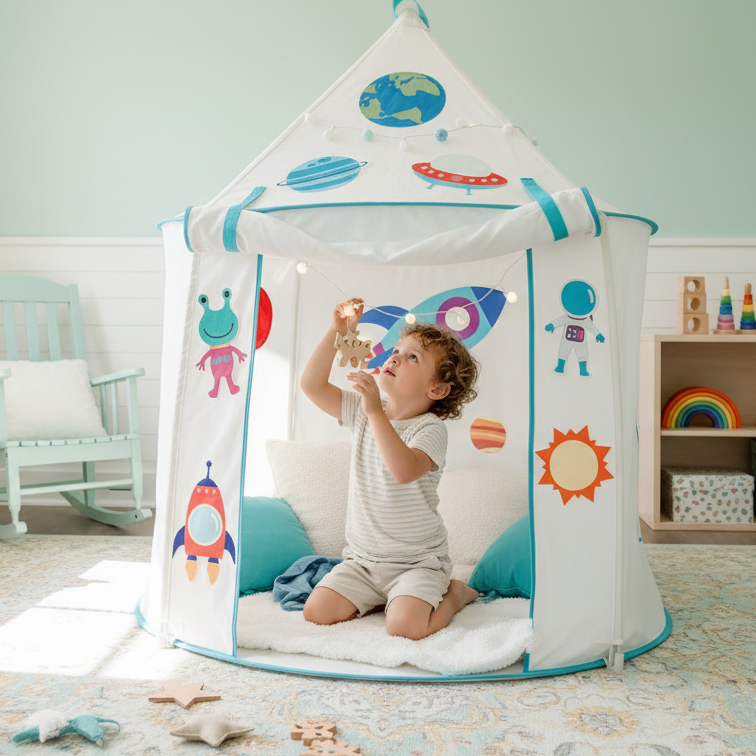
Many children who prefer quiet play benefit from having a dedicated place where they can retreat from everyday distractions while still engaging their imagination.
That's one reason many families choose ZeeZee Adventures.
Rather than creating more stimulation, the adventure tent creates a calm, sensory-friendly environment where children can read, imagine, build stories, or simply enjoy uninterrupted independent play. Its enclosed design offers a sense of security, while interchangeable StickeeZ themes let children transform the same cozy space into magical kingdoms, space stations, explorer camps, or reading hideaways as their interests change.
For children who naturally seek quiet moments, the environment adapts to their imagination without overwhelming their senses.

Conclusion
Not every child is energized by constant activity.
Some flourish in calm, focused environments where imagination has room to grow.
Quiet play isn't something to worry about.
It's often exactly what helps children process experiences, regulate emotions, develop creativity, and build confidence.
When parents understand and respect these differences, children gain something even more valuable than another activity.
They gain permission to grow in the way that's most natural for them.
Frequently Asked Questions
Is it normal for my child to prefer quiet play?
Yes. Many children naturally enjoy quieter activities because of their temperament, sensory preferences, or emotional regulation needs.
Does quiet play mean my child is shy?
Not necessarily. Many children who enjoy quiet play also enjoy social interaction but simply need time to recharge afterward.
How does quiet play help development?
Quiet play strengthens focus, creativity, problem-solving, emotional regulation, confidence, and independent thinking.
Should I encourage more group activities?
Balance is healthy, but children don't need to enjoy every activity equally. Respecting their natural temperament often leads to greater confidence and well-being.
What activities support quiet play?
Reading, pretend play, drawing, puzzles, building, storytelling, sensory activities, and imaginative play all encourage meaningful quiet play.
Author Bio
The ZeeZee Play Experts
The ZeeZee Play Experts combine child development research with practical parenting strategies to help families create environments where every child can thrive. Their work focuses on sensory-friendly, open-ended play experiences that nurture imagination, emotional well-being, and independent growth.






Comment (0)